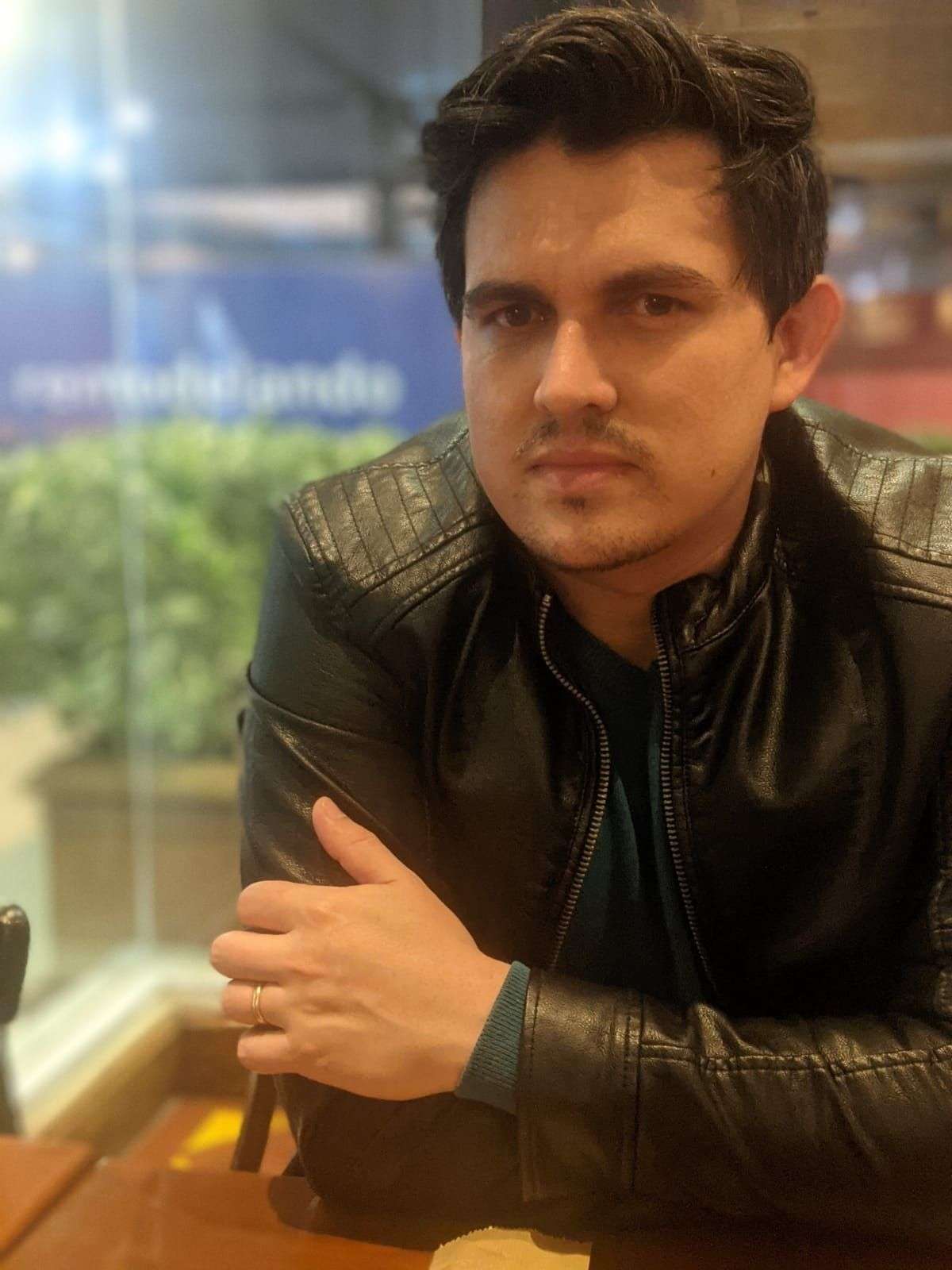
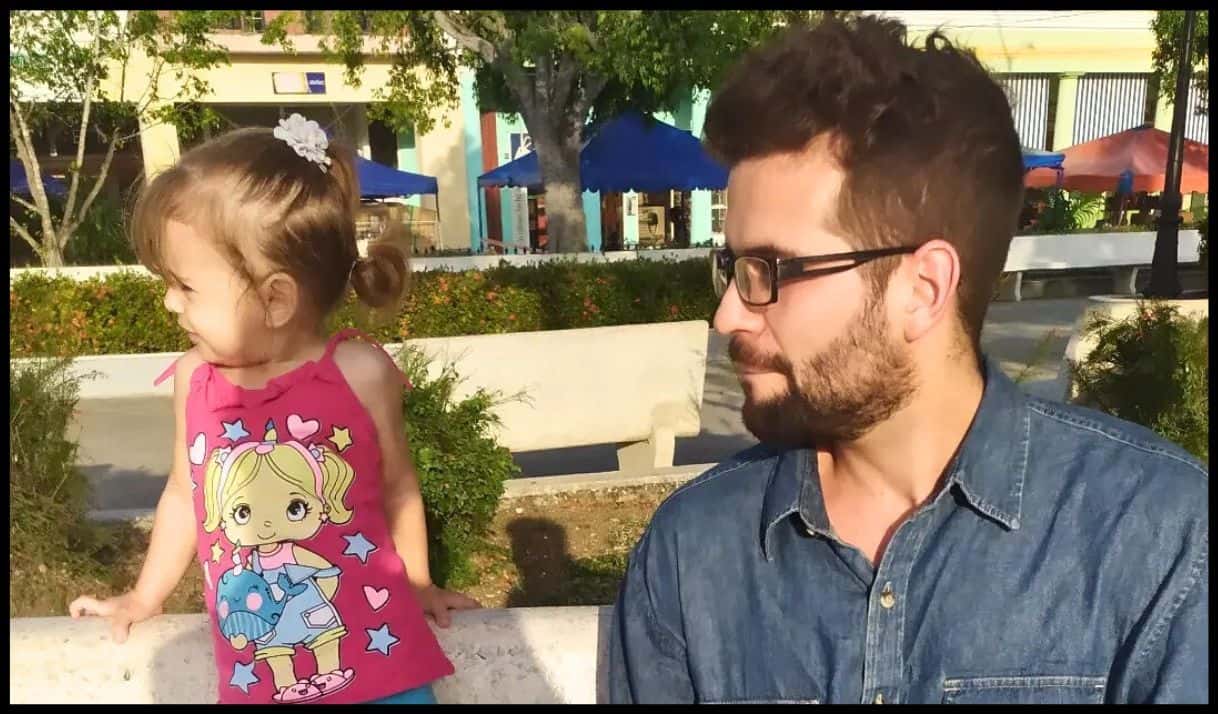
Emma hasn’t seen her father since the morning of February 6, 2026, when he was taken away in handcuffs in a police car for expressing his opinions on social media, as has happened to many other parents in Cuba—although the three-year-old girl does not know that. More than 900 hours have passed without them being able to dance and sing together, 40 days without watching the sunset sitting on the high porch of their home in the city of Holguin, without sharing bites of food like a bird feeding its chick, or doing any of the fun things Emma likes to do with her father, Ernesto Ricardo Medina, also known by an almost childlike nickname: “Tico.”
There is a video on social media showing the little girl playing around her father while he jokes about being president of Cuba: “Tell [the camera] how we’re going to fix the country,” her father invites her as he lifts Emma onto a colorful chair.
“Emma and Ernesto are very close. Sometimes the girl has told me she doesn’t want to eat because she misses him,” Doris Santiesteban, his wife, told El Toque.
Ernesto Ricardo Medina remains imprisoned in the Holguin Criminal Investigation Center, charged along with his friend Kamil Zayas Perez for videos he filmed over the past months in a small room in his home. It was the Cuban government’s response to the popularity gained by these young social media content creators, who posted their critical opinions about current events and Cuban history on the Instagram and Facebook accounts of El4tico (an acronym for “El cuartico,” “the little room”).
After initially commenting on general topics, Ernesto and Kamil’s videos on El4tico became more critical of those in power. Their views and followers also grew exponentially. They spoke to their peers with ease and clarity, from “a dissident space within Cuba,” during one of the worst moments of the ongoing national crisis.
In a video on January 26, 2026, Ernesto Ricardo said phrases such as “Jesus is Lord, not the Cuban Communist Party”; “The day a people wakes up, no system can withstand it. And if you wake up, you are not alone.” On February 3, 2026, he posted a reel in which he stated: “The days of this dictatorship have come to an end, at least as we know it.”
Now the authorities are making Ernesto pay for his words. The dream of a democratic Cuba brought the political police to his door in the Piedra Blanca neighborhood of Holguín. And they took him away.
“The officers said they had a search warrant, but they never mentioned that they would also arrest him,” Doris recalls.
“The child was waking up. I didn’t want her to see anything, but it was unavoidable. She saw everything: when they handcuffed him, when they left in the car. She still asks me, ‘Why did the police take Dad away?’”
His absence has also created financial hardship for Doris and Emma: “He is the breadwinner (…) [and with his detention] the entire functioning of the family broke down, although I have received support from relatives, friends, acquaintances.”
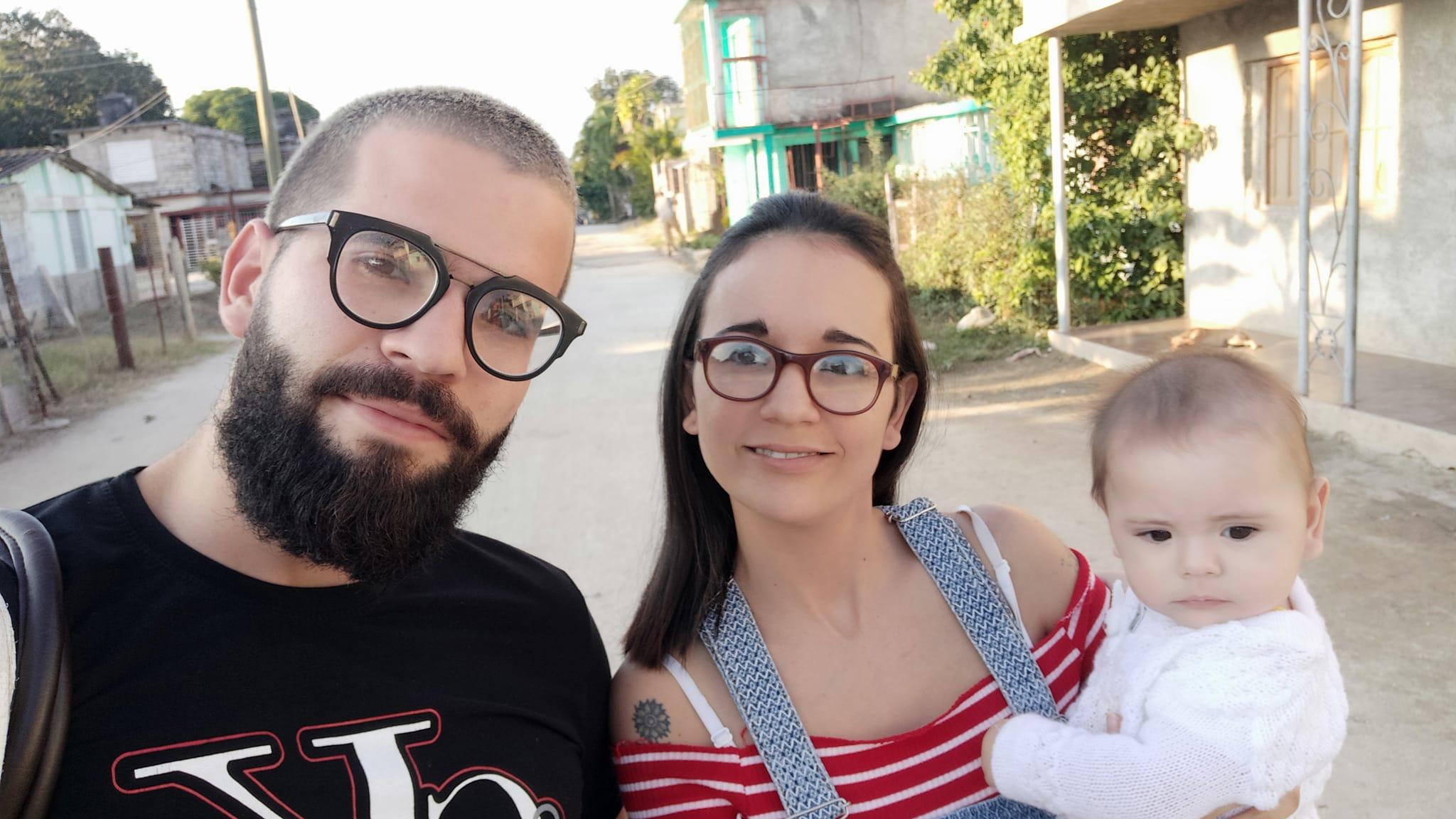
Ernesto Ricardo, his wife and Emma. Photo: Courtesy
Cubalex consideres that the detention of Ernesto Ricardo and Kamil Zayas was “illegal under current national legislation and contrary to international human rights standards.”
According to the independent legal advisory organization Cubalex, agents pressured Ernesto to open the door of his home without showing the alleged “search warrant” they claimed to have, nor did they present witnesses to the police procedure, an “essential requirement” for such actions. Furthermore, the two young men, Ernesto Ricardo and Kamil Zayas, were “held for hours with their whereabouts unknown,” Cubalex reported.
Nearly a week later, the Holguin Provincial Prosecutor’s Office confirmed that they were being held under a “pretrial detention measure,” charged with “propaganda against the constitutional order” and “incitement to commit crimes.” These charges are used by the Cuban Communist Party (PCC) regime to criminalize freedom of expression and could result in sentences of nearly a decade in prison.
According to the Prosecutor’s Office, “from the digital space identified as ‘El4tico,’ publications were made that incite the people, members of the Revolutionary Armed Forces, and the Ministry of the Interior to change the constitutional order of the Republic of Cuba; and that defame the actions of the country’s political and social institutions.”
Amnesty International condemned the detention and criminal proceedings against the El4tico creators: “Speaking, criticizing, and questioning public policies is not a crime. Criticism—even when uncomfortable—is part of the right to freedom of expression.”
According to the international NGO, “using broad criminal charges to imprison content creators sends a message of fear to the entire population.”
Doris Santiesteban says that “they only wanted to express their opinion about the political, social, and economic situation of the country. Their intention was always to encourage critical thinking among people and to look at our country from a more active perspective.”
Ernesto’s wife emphasizes El4tico’s independence in creating its content: “they are studious, well-prepared young men. Whenever they were going to make a video on any topic, they researched it, then wrote the script, and everything came from their own minds, nothing else. Anyone who knows them can confirm what I’m saying.”
She also states that “since Tico arrived in prison, he has not seen Kamil” and believes they are not allowed to communicate with each other.
On March 11, 2026, the Holguin Prosecutor’s Office was supposed to respond to a request filed a week earlier to change the precautionary measure—seeking that the detainees continue the process outside prison. Two days later, on March 13, the families received the news that Ernesto and Kamil would remain behind bars.
“They take their time,” says Doris Santiesteban, aware that Emma’s and her mother’s urgency for Ernesto to be home does not move the authorities.
The detention has also affected Ernesto Ricardo. His wife says that “he is much thinner”; some days he spends “sad, depressed, trying to cope with the situation as best he can.”
Conditions at the Holguin Criminal Investigation Center are precarious and do not guarantee a dignified life, as in the entire prison system—as in the entire country.
“There is irregular water supply, with days when you can’t bathe. The available drinking water is of very poor quality and scarce. There are many mosquitoes, and lighting depends on artificial light. Since we go from blackout to blackout, Ernesto spends many hours in dim light or in darkness.”
Symbols of “Terror”
Since February 2026, Ernesto Ricardo and Kamil Zayas have been among the more than 1,200 political prisoners in Cuba, according to independent estimates, since the State does not recognize them.
Mileidy Machín, Ernesto Ricardo’s mother, describes the judicial process as “rigged” and “dictatorial.” She also reported on Facebook that “each day they are thinner, paler.”
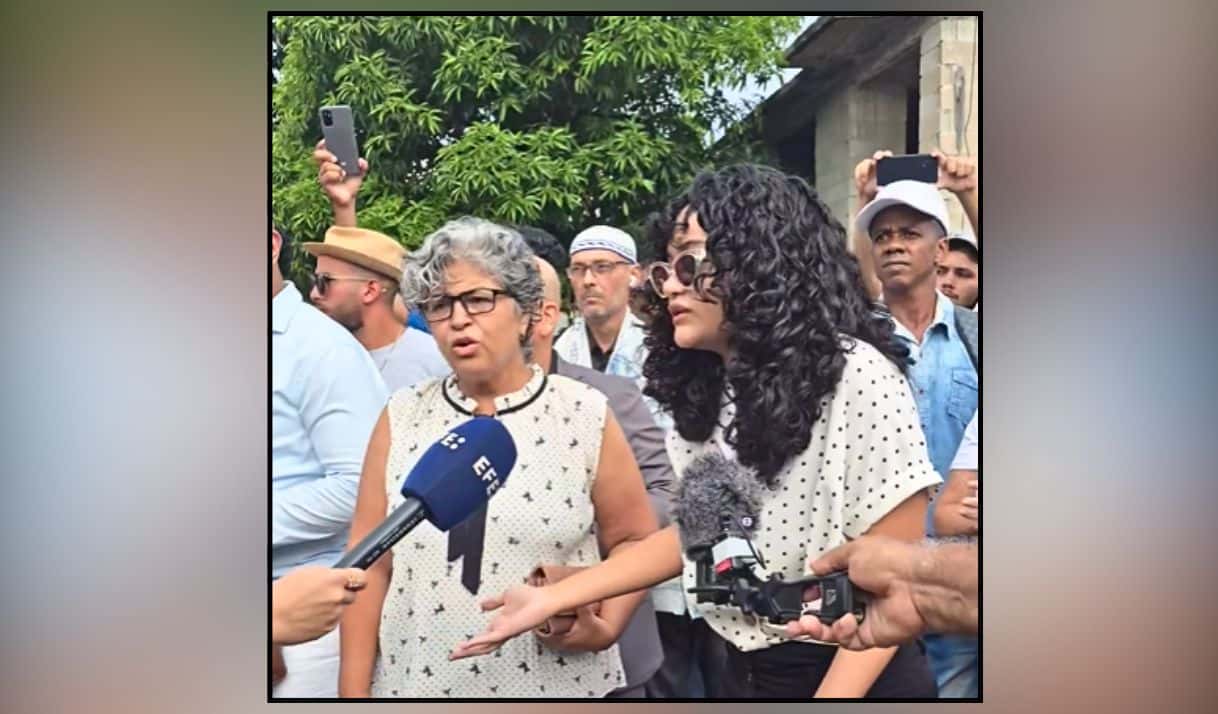
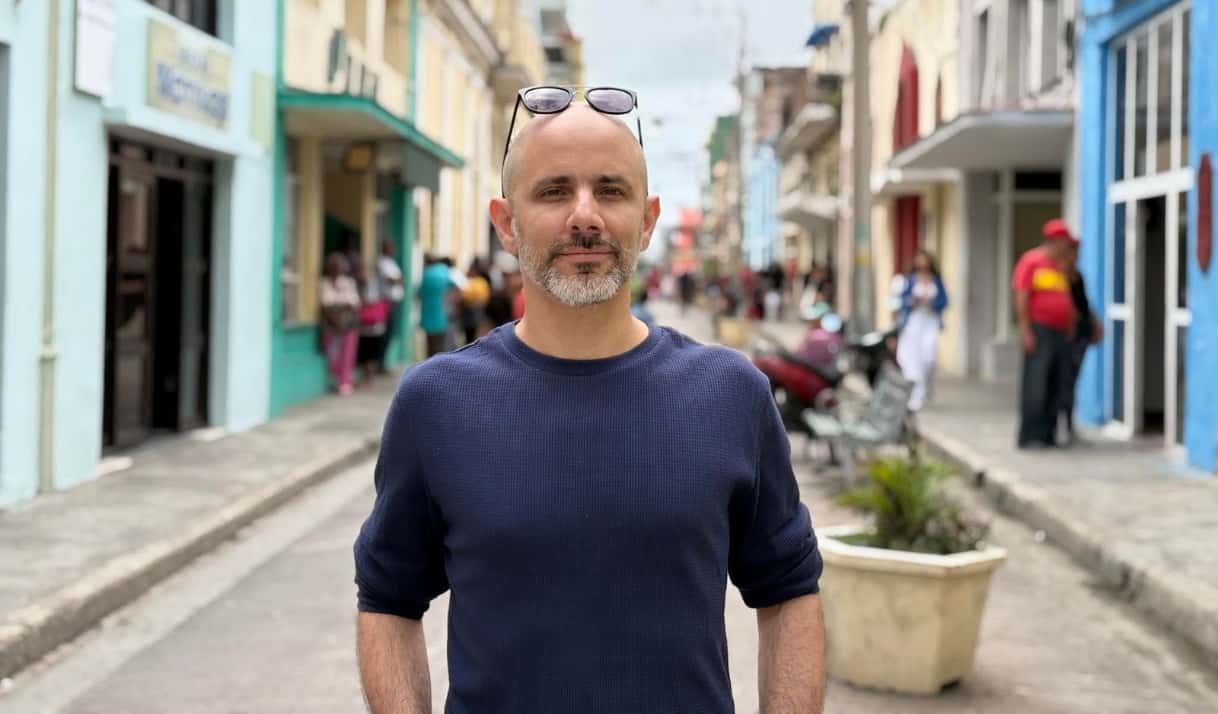
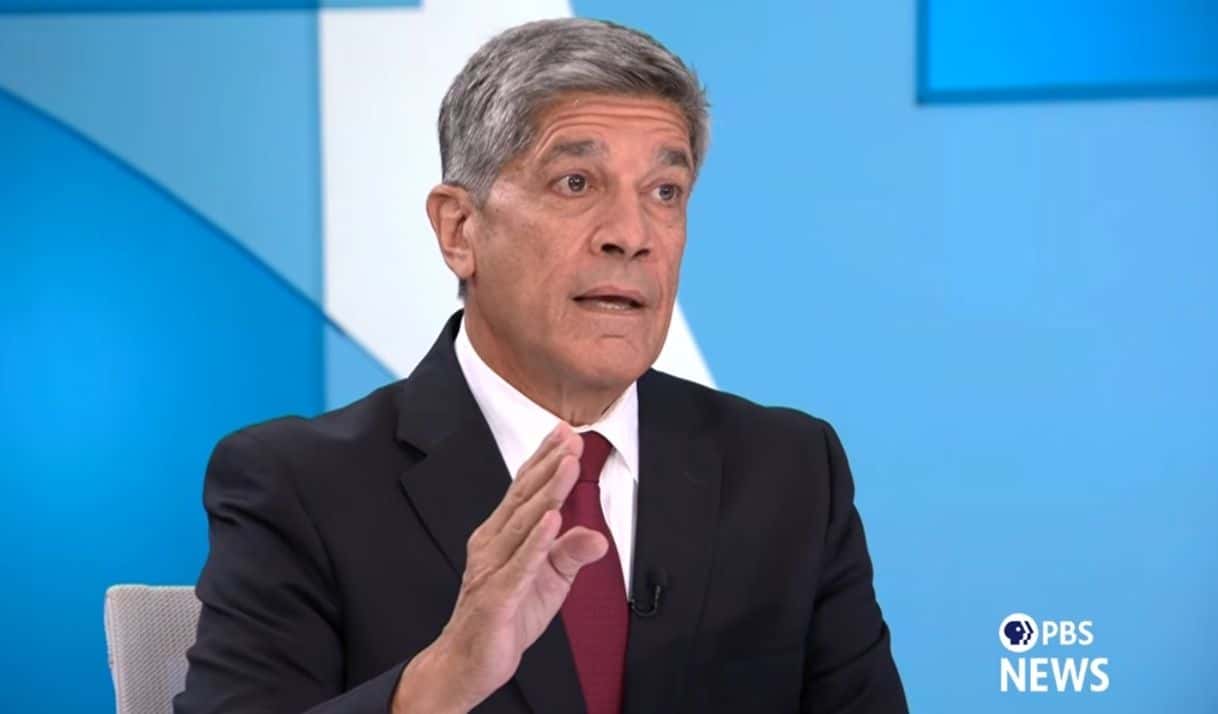
“There is a will on the part of State Security to keep them detained, and they are justifying it with the charges brought by the Prosecutor’s Office. This could change if we apply enough internal and external pressure: the political police may conclude that it is much less effective or convenient to keep them imprisoned than to at least release them,” said Fernando Almeyda, a Cuban lawyer exiled in Serbia, in statements to El Toque.
Paula Amador Lobon, a friend of Kamil, is promoting a petition on Change.org demanding “the immediate dismissal of charges and the release” of the El4tico detainees. The initiative has gathered 1,203 signatures so far.
“Kamil and Ernesto are facing criminal proceedings at the hands of institutions of the Cuban dictatorship for exercising their right to freedom of expression. We want to turn all this support and its international reach into a petition that will be sent to the Attorney General’s Office of the Republic of Cuba (in Havana) and that of Holguin, as a form of pressure on the regime through its institutions,” Paula Amador Lobon explained.
According to Almeyda, also president of the NGO Humanitarian Solutions, “it is very difficult to determine” the possible outcomes of the El4tico case. The jurist recalled that, according to official statements leaked years ago, only between 6% and 8% of criminal cases end in acquittal in the Cuban judicial system.
“That means that once you enter the system, there are very few chances of acquittal,” he said.
However, the human rights defender believes that “if the dictatorship decides—because it sees it as more problematic to keep them imprisoned than to continue repressing them—it has mechanisms to release them.”
Almeyda believes the authorities could apply the principle of opportunity and end the process with an administrative fine, or “bring charges based on a lesser offense” and sentence them to a short term that could be served through corrective labor without incarceration or with restricted freedom (at home).
According to Fernando Almeyda, given the lack of material resources to rachet up repression massively, the regime has opted to “establish key, strategic points, identify specific individuals and figures to repress, and maintain terror” over the rest of the population.
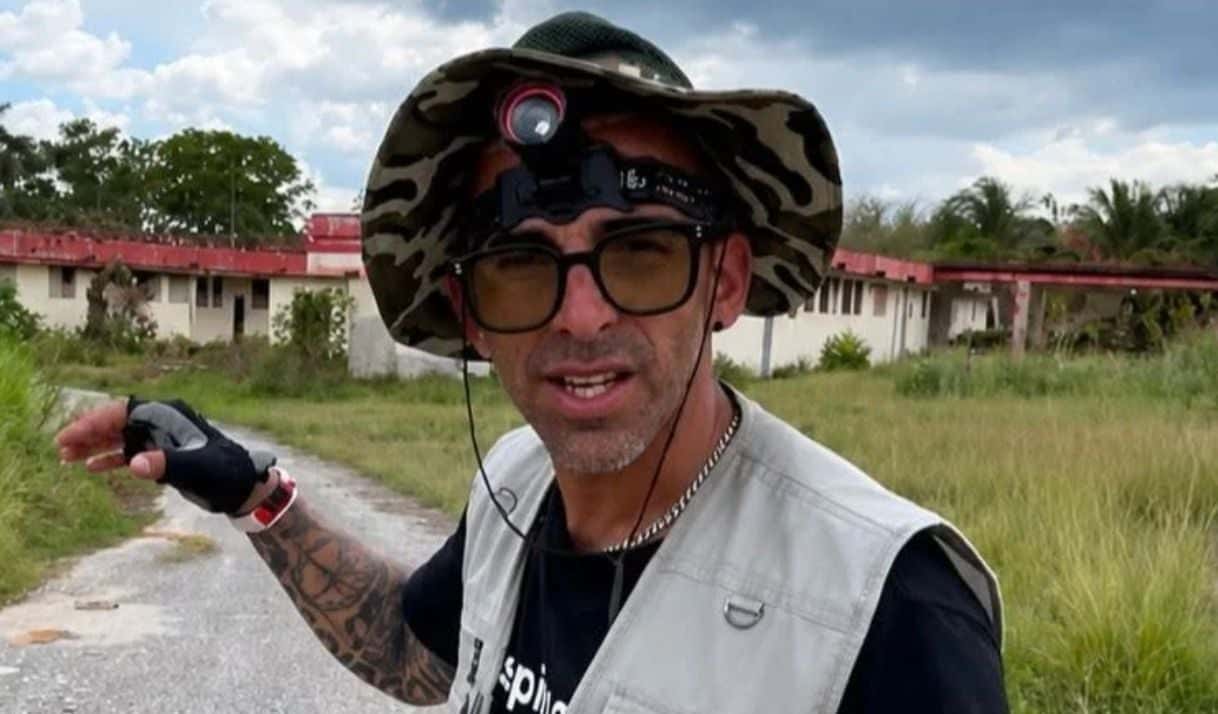
“I believe Kamil and Ernesto were tactically identified so that, through the process against them, the families of other young people who express critical opinions on social media—like those from Fuera de la Caja and content creator Anna Sofia Benitez—will be intimidated.”
The lawyer adds: “There are not enough prisons for so many Cubans, but they seek to create a perception of potential danger for them and their families, aiming to make them lose support and the will to continue creating content.”
In Kamil Zayas’s neighborhood, the threat from the Cuban State has also spread. Activist Amalia Barrera reported that an alleged member or collaborator of State Security “is going around the area, asking questions, investigating, and trying to intimidate” those who know him.
“These practices are the same as always: surveillance, pressure, and fear. The dictatorship cannot tolerate young people thinking, speaking, or creating freely, and that is why it sends its henchmen to snoop around neighborhoods, to sow suspicion and try to isolate those who raise their voices,” Barrera said.
The Inter American Press Association (IAPA) and the Committee to Protect Journalists are among the international organizations that have highlighted the case of Zayas and Medina as an attack on freedom of expression and the exchange of ideas in Cuba.
The Waiting of a Family That Dreams
Doris Santiesteban does not hesitate to describe her husband’s political imprisonment as a “family crisis” caused by the regime. Melancholy and uncertainty have replaced the laughter and atmosphere of hope that once filled their home.
“Our entire routine has been broken; emotionally the family remains united, but this has affected us all. I don’t know what explanation to give the child so she can understand why her father isn’t here,” she told El Toque.
Doris’s message to the authorities—if they are willing to listen “with a hand on their heart”—is that they should pursue the “crime that exists because of all the problems in society,” but not “a father who expressed himself freely as the Constitution says.”
On one of his earliest videos, published in April 2025—when El4tico was still a half-formed idea—Ernesto Ricardo Medina suggested that Emma is the driving force behind his desire for freedom:
“To raise a child well, you need to keep your child safe and be a good person; and if you want to be a good person, please, dream. There are places in the world where people are prevented from having dreams (…) and are forced to leave. We cannot depend all the time on circumstances—overcoming them must become part of the dream.”
This article was translated into English from the original in Spanish.



Comments
We moderate comments on this site. If you want to know more details, read our Privacy Policy
Your email address will not be published. Mandatory fields are marked with *
Erik