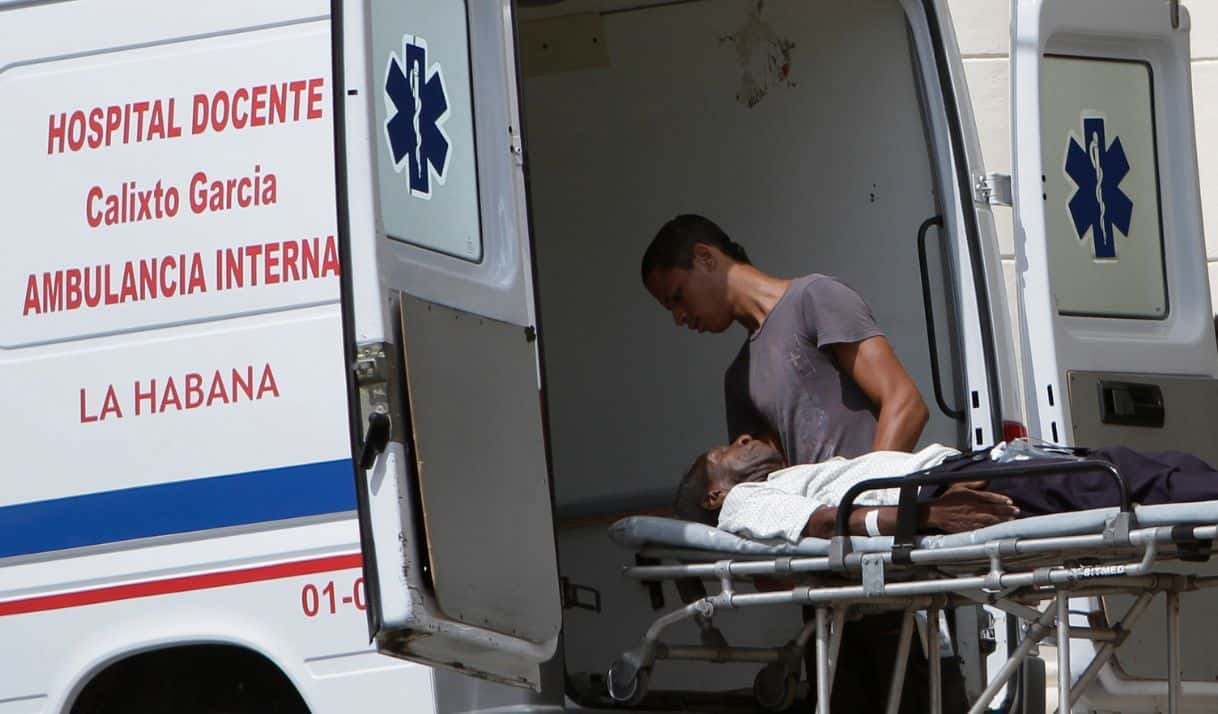
“Babies are born with a vitamin K deficiency, and they are supposed to receive it in a shot. But since there isn’t any, they don’t get anything. Our hearts are shattered. There is no comfort for this pain.” These are the words with which Beba Cabrera recounts the tragedy her family faced after the death of her granddaughter, who lived only three days after being born at the Hijas de Galicia Hospital, in the municipality of Diez de Octubre, Havana
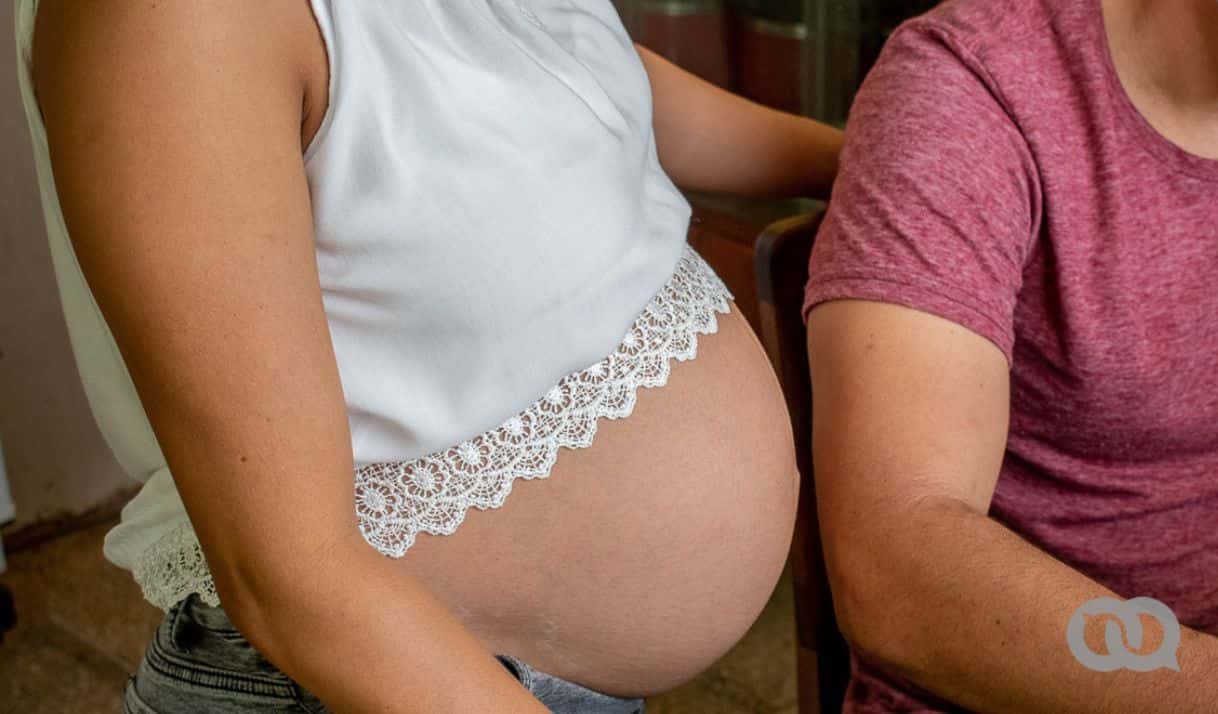
The baby’s mother was admitted on September 27, 2025, to give birth, and the child was born the following day at 1:43 p.m. According to the grandmother’s testimony, after delivery there was no bed available to transfer the mother to the recovery ward. Inside the hospital, she claims, workers asked for 5,000 pesos (an average monthly salary) to guarantee them a bed.
After complaining to the management of the medical center, the family managed to have the mother placed in a room. Shortly afterward, the newborn suffered a severe hemorrhage and was transferred to intensive care, where she was diagnosed with vitamin K deficiency, essential for blood clotting and normally administered to babies at birth through an injection.
The infant received transfusions and mechanical ventilation. On October 1, 2025, she showed slight improvement, but hours later worsened again, according to her grandmother. She died at 5:45 in the afternoon.
Independent organizations are documenting cases like this one, which reveal medicine shortages and the deterioration of Cuba’s healthcare system. In its Eighth Report on the State of Social Rights in Cuba, published in September 2025, the Cuban Observatory of Social Rights stated that only 3% of citizens were able to find the medicines they needed in state pharmacies. Twelve percent could not buy them because of the price, and 13% could not obtain them because of shortages.
For its part, the Cuban Observatory of Human Rights reported on July 16, 2024, that 89% of Cubans surveyed rated the public healthcare system negatively, and 33% were unable to acquire the medicines they needed due to price or scarcity, while only 2% managed to find them in state pharmacies.
The lack of medicines has also caused tragedies among adults. Ana Ivis Suárez, a 26-year-old woman, died on February 7 at 11:30 in the morning at the Provincial Hospital of Camagüey after remaining hospitalized in critical condition for three days.
During that time, she remained intubated while her family desperately searched for norepinephrine, an essential drug in intensive care used to maintain blood pressure in patients suffering shock.
The young woman’s mother visited hospitals and also searched on social media trying to obtain the medicine that might have given her a chance to survive, but the response was always the same: there was none.
Another story that shocked the province of Camagüey was that of Darwin Daniel Sotolongo Cedres, a ten-month-old baby who died on March 4, 2026, after spending four months in intensive care at the Pediatric Hospital of Camagüey.
The baby suffered from grade four tracheal stenosis, an extremely serious congenital malformation that causes critical narrowing of the trachea in the shape of an hourglass, severely compromising breathing.
His mother, Elizabeth Cedres Torres, denounced that doctors and health authorities informed her that the surgery needed to save the child’s life could not be performed in Cuba due to lack of resources and specialists capable of carrying out the procedure. Authorities told her, according to her account, that they would investigate possible agreements with other countries to perform the operation; but help never arrived and the child died.
There is no official entity that records death statistics in Cuban hospitals, making it impossible to know how fatalities in those centers are evolving. A request for an interview was sent to the Ministry of Public Health of Cuba regarding shortages and hospital deaths, but no response was obtained.
Signs of Deterioration
The organization Cubalex has also warned about the deterioration of medical care. In its monthly human rights report corresponding to September 2025, it stated that hospitals across the country are in a dire situation without resources, a crisis directly affecting healthcare.
The Independent Medical College of Cuba, an organization that anonymously groups doctors on the island, has also denounced the decline of the health system. In statements to El Toque, one member of the group said that the Cuban regime maintains a propaganda strategy to project abroad an image of medical excellence that does not correspond with reality.
“The government boasts of the supposed excellence of Cuban medical education, while the healthcare system is going through profound dysfunction,” declared one of the doctors linked to that organization, who asked not to be identified.
“A narrative of high scientific, educational, and healthcare standards is constructed as political propaganda. Statistics are manipulated or presented in ways that appear to show social well-being, although daily reality is completely different,” he warned.
According to them, the lack of resources in hospitals and universities severely limits the practical preparation of students. “The shortage of supplies, diagnostic means, and basic equipment—from thermometers to X-rays, blood pressure cuffs, or stethoscopes—prevents students from receiving quality instruction or acquiring the necessary clinical experience,” he added.
Among the medicines in short supply are basic painkillers such as aspirin, paracetamol, and dipyrone, in addition to antihistamines, anti-anxiety drugs, antidepressants, contraceptive pills, and condoms, according to citizen complaints and consulted doctors. Medicines for chronic illnesses such as diabetes or hypertension are also difficult to find.
The electronic updated edition of the Cuba Health Statistical Yearbook states that the country has 2,180 pharmacies distributed among the 15 provinces and the special municipality of Isla de la Juventud. However, according to complaints, that number does not reflect the real condition of the establishments or whether all remain operational.
Many locations suffer structural deterioration or remain practically empty, which has driven growth in the informal market, such as medicine buying and selling groups on Facebook. In that market, a bottle of ibuprofen can cost around 1,600 pesos, a blister pack of clonazepam close to 900, and one of azithromycin around 500. A full treatment of antibiotics such as cephalexin or amoxicillin can reach between 1,000 and 1,500, almost the equivalent of a monthly pension.
Although Cuban authorities usually attribute shortages to the US embargo, official data from the United States Department of State indicate that medicines and medical supplies have been included among authorized humanitarian exceptions since 2000.
Federal reports indicate that in 2023 medical exports to Cuba worth nearly $900 million were approved, and in 2022 around $800 million. Exported products included medicines such as penicillin and insulin, laboratory reagents, ultrasound equipment, prosthetics, cannulas, and various surgical devices.
In addition, US regulations allow the shipment of humanitarian donations including food, medicines, and medical equipment.
Cuba continues receiving international donations to sustain part of its healthcare system. The state media outlet Radio Cadena Agramonte reported, for example, the arrival of 220 digital X-ray processors for health institutions in the country, along with 13 fixed and portable X-ray machines, 12 portable ultrasounds, eight molecular biology diagnostic units for bacteriology, 20 ventilators, 30 portable medical suction units, among other equipment. But these aid deliveries appear to be only a small band-aid in the face of growing reports of deaths caused by medicine shortages and hospitals without resources.
This article was translated into English from the original in Spanish.



Comments
We moderate comments on this site. If you want to know more details, read our Privacy Policy
Your email address will not be published. Mandatory fields are marked with *
Todavía no hay comentarios.