

The first time I entered an all-inclusive hotel, I did so neither as a guest nor as an employee. I was 17 and slipped in disguised with my cousin, who was a lifeguard and got me an ID from a friend of his. “He’s our new lifeguard trainee,” my cousin told the guard at the entrance, who, without asking many more questions, let us through.
That reality was so far removed from those of us of my generation that being there was, in fact, little short of a dream. It was 2003, and only two hotels had been built in Cayo Santa Maria, both managed by the Spanish Sol Melia Hotels chain, with Gaviota S.A. as the Cuban counterpart. Around them, however, the beginnings of construction on several other tourist complexes could already be seen.
Until then, I had only heard about the cays, nothing more. People in the area always talked about the natural paradise of the cays off northern Villa Clara, but few had seen them with their own eyes. Construction of the Caibarien-Cayo Santa Maria causeway had been trumpeted in the media as a national feat, but to me it all sounded very, very far away, even though geographically it wasn’t.
Walking through the hotel door that morning, even though it was only the employees’ entrance, was like stepping through a portal into a parallel universe, a reality that for Cuban families was, until those years, as inaccessible as international airport terminals. When I left that afternoon, I thanked my cousin and put the whole matter aside so it wouldn’t become an obsession, never suspecting that a few years later that hotel would become my first workplace and would forever shape the course of my life.
In the summer of 2008, by chance, I began my professional internship at that hotel as a second-year Foreign Languages student at the Central University of Las Villas. Having lived with so many shortages, it didn’t take me long to understand that this was the best path I could choose for my future. Entering as a student rather than as a direct employee of Gaviota — a company belonging to the military conglomerate GAESA, which managed all the hotels on the cays — gave me certain freedoms. When, a year later, I was offered the opportunity to work full-time as a hotel entertainer, despite the conflicts the issue caused within my family and within myself, I didn’t think about it for long and accepted. I was leaving behind a nearly completed university degree and everything that entailed.
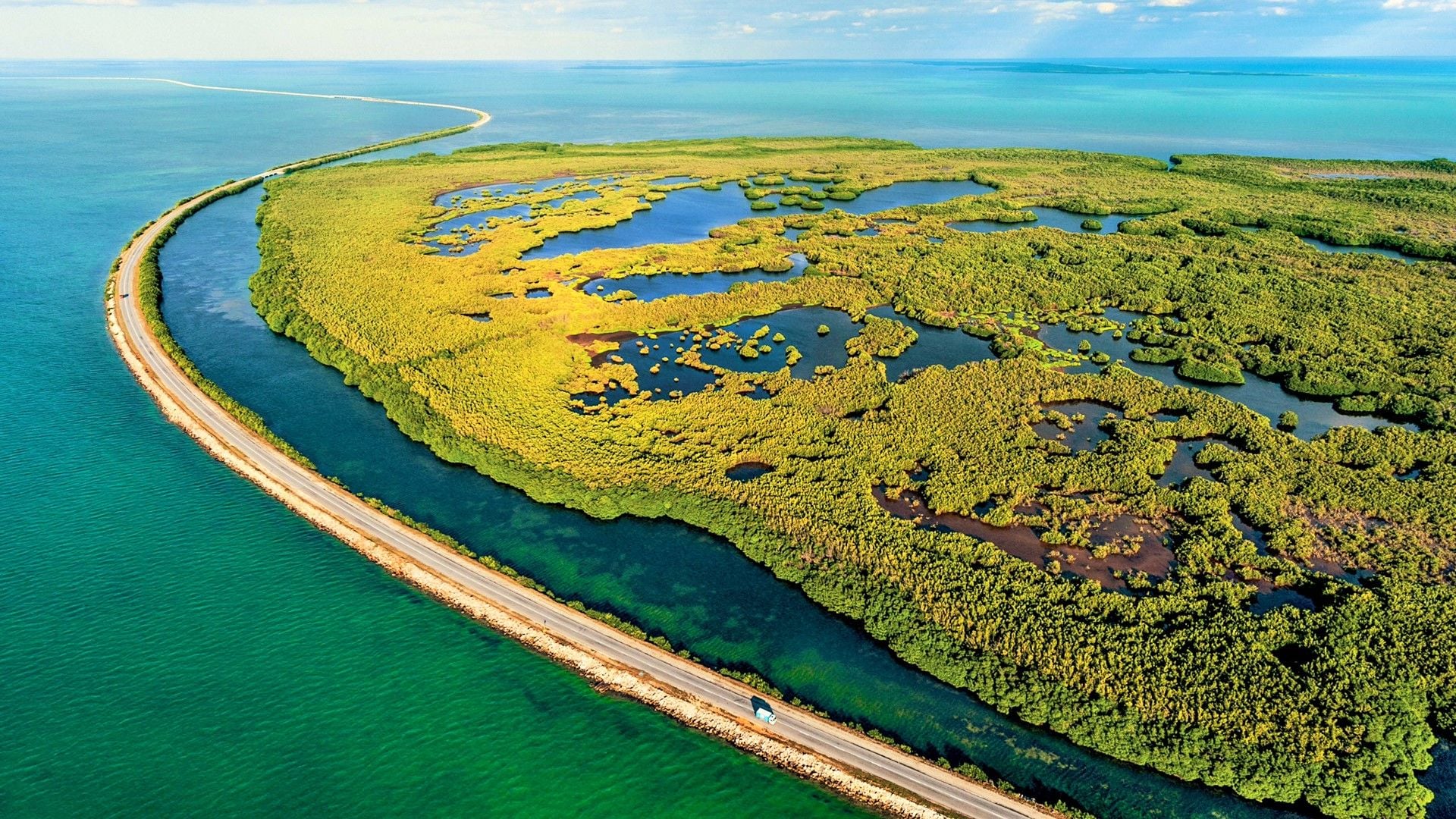
The Caibarien-Cayo Santa Maria causeway / Photo: EcuRed.
Working in the hotels on the cays was the only possible way to have something of my own. I could have finished my degree and then tried to get a job in tourism, but the road would have been much longer. At the time, being an entertainer in exclusively international tourism was a highly coveted opportunity. Although the usual route into the system was through courses organized by Gaviota S.A., a shortcut opened up for me, and I managed to get in through the Turarte S.A. Artistic Entertainment Agency, which, together with the Provincial Music Center, were the only companies outside the hotel sector authorized to hire entertainment staff for hotels.
I had skipped several steps and, on top of that, I wasn’t a direct GAESA employee. I didn’t understand what that meant until I was working at the hotel full-time. A few months were enough for me to understand the machinery of power behind the country’s most powerful tourism structure. And behind it all, like an all-powerful entity stood, the Army.
In 2008, ordinary Cubans still did not have access to the cays. Only privileged people and workers could pass through the checkpoint guarded by uniformed police officers. From the checkpoint to the northeastern tip of the cays, everything was a monopoly managed by GAESA: the military construction company responsible for building hotels and facilities; TransGaviota, the company that handled tourist transportation; Gaviota Tours, the travel agency; Gaviota S.A., which managed the hotels and the Cuban employees; Cupet-Cimex, responsible for fuel and hotel shops; and others I can’t remember now.
Right next to the room where we entertainers practically lived during the week was the office of the CIM (Military Counterintelligence), the body responsible for monitoring not only any suspicious tourist who visited the hotel but, above all, making sure that employees did nothing outside the rules. Relations between employees and tourists were strictly monitored by the many eyes of the CIM, whose officers alone were authorized to observe and roam freely through every corner of the facility without having to explain themselves.
Every GAESA company always had a Military Counterintelligence office. That was the most obvious similarity between the hotels and the military units of the Armed Forces; except that here, of course, they didn’t wear military uniforms. But just as in units of the FAR and the Interior Ministry, they could be recognized by their characteristic Suzuki motorcycles and their typical striped polo shirts or plaid shirts.
I especially remember the constant fear of the CIM and of what they might think or say about each employee. I remember the mystery surrounding their movements inside the little room next to ours. Outside it, they were — or pretended to be — friendly. They talked and smiled at everyone, and everyone smiled back, but always with fear of the mysterious reports contained in the folders they carried with them. During the years I lived in the hotel — beautiful years, but ones involving great sacrifice — I remember several cases of expulsions that, depending on their seriousness, did or did not reach the Military Prosecutor’s Office. I remember the succession of general managers on the Gaviota side and other department heads who had to answer to the CIM and to Gaviota’s inspections and audits. Gaviota, for its part, answered only to GAESA, and GAESA answered to no one.
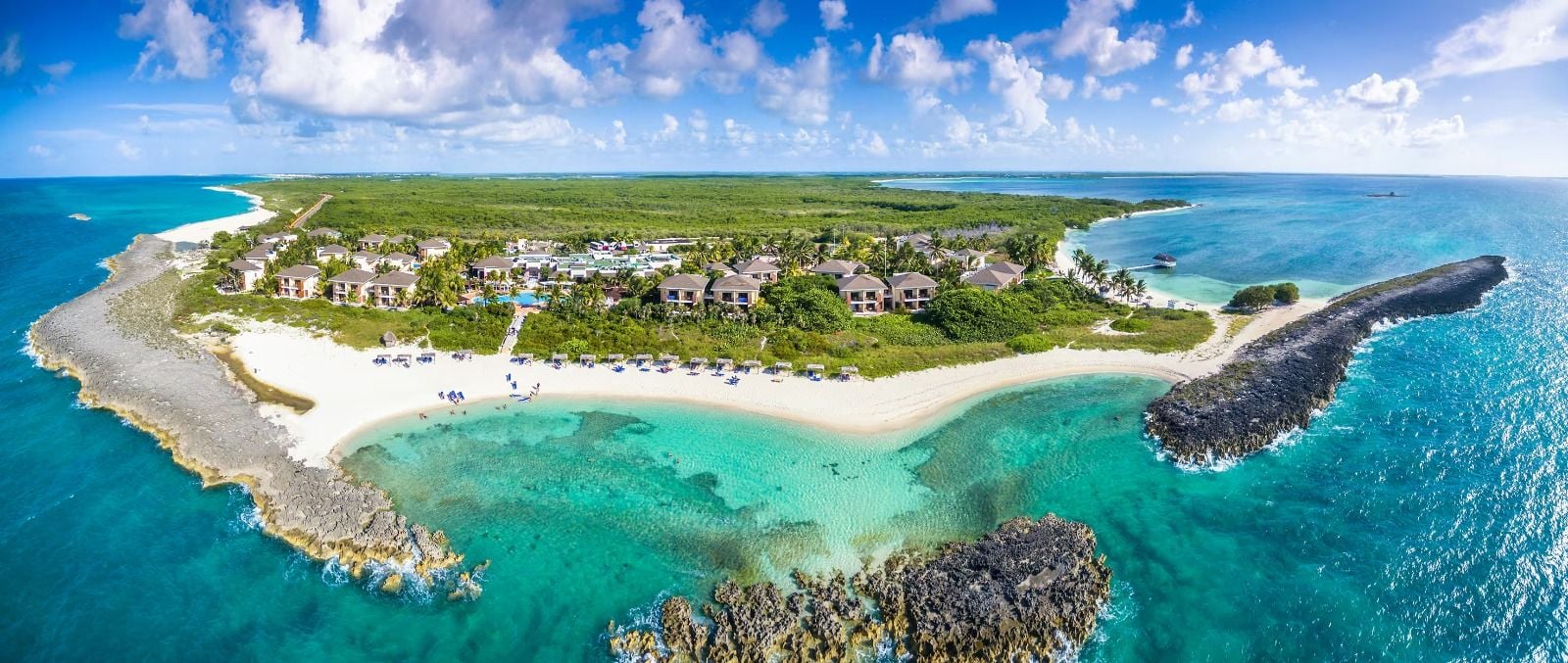
The Northern Cays of Villa Clara / Photo: taken from System Travel.
Years later, when I moved to the Gaviota Tours travel agency as a tour guide — and became an official GAESA employee — I learned that the CIM investigated every person who tried to join any of its companies. They carried out an exhaustive investigation of each individual, which included making inquiries in every neighborhood and at every previous workplace or educational institution, especially about the “revolutionary” attitude the person had maintained; in other words, whether they had ever stepped outside the box. They could thus approve or reject anyone at will, like any other sinister censorship body known from the history of totalitarian governments. I can attest to this, because the only time I entered that small CIM office was during the investigation they conducted before I became a Gaviota Tours guide.
One morning, I was summoned by the officer in charge of the Cayo Santa María facilities — I knew him from several years of daily interaction at the hotel. He told me that I most likely would not be approved because their investigation had revealed that my father had spent some time in prison. To have any chance, I had to explain and justify in great detail that the only thing I had inherited from my father was his surname, because I had never lived with him and had nothing to do with him other than my genes.
I explained that the father figure in my family had been my maternal grandfather, who had been deeply committed to the ideals of the “Revolution.” Only after making a lengthy case was I finally able to officially enter the system. They knew me from my years working at the hotel, so that morning, when they called me into the office, they had given me an opportunity to explain myself. I can’t imagine how many people were rejected without any right to explain their circumstances.
During my years as an entertainer, I remember one episode that illustrated better than any other the arbitrariness of GAESA’s leadership when approving its investments and that today would help explain many of the poor decisions made in planning the government’s economic policies. It was 2009, and they were beginning to devise the construction of what were called “tourist villages,” non-hotel complexes located amid the all-inclusive hotels.
From the beginning, the project was destined to fail, and that was obvious because the services they planned to offer were already available inside the hotels. Around that time, the president of Gaviota S.A. came to Cayo Santa María to meet with hotel entertainers and entertainment managers to “debate the issue.” Obviously, the almost unanimous opinion was that the so-called “villages” would be profitable if they were built near cities, because tourists could already find everything they needed at the hotels; locating them closer to Cubans would make sense because Cubans could also have access to them, while international tourists would have an incentive to be closer to the real Cuba.
The president of Gaviota’s response was unequivocal: “We don’t want Cubans’ money; the money we want is that of international tourists.” And with no further debate, vote, or consideration for the professionals who would have to make the new project work, the decision was made. By 2011, the “villages” had been built and had cost valuable millions that could have been invested more sensibly in more profitable projects or in the well-being of the population.
By then, Cubans were allowed into the hotels, but because of the distance and cost, only a few could afford them. Although beginning in 2010, certain privileged people had started staying at the hotels. Meanwhile, the construction of new and extremely expensive facilities in the northern Villa Clara cays seemed endless.
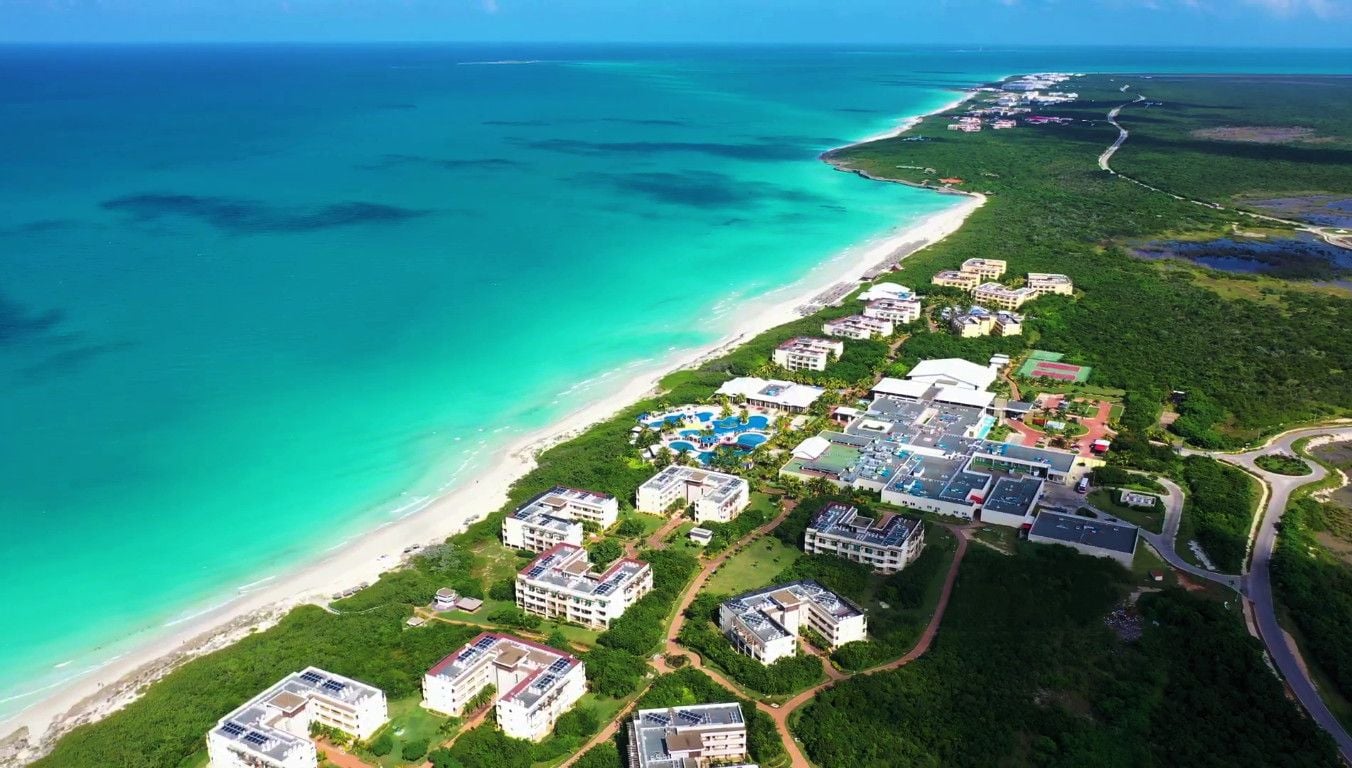
Vista aérea de la mitad oriental de cayo Santa María / Foto: EcuRed.
My years at the hotel were largely successful for me, especially economically. Daily contact with native speakers of English and French was also as valuable as university itself. Yet every day I suffered the contradictions of an unforgiving system that was very far removed from what the government proclaimed in terms of social justice: an enormous amount of food was thrown into the garbage before our eyes every day, including food that had never even been used but that, by law, had to be discarded because it was nearing its expiration date. The enormous salary differences between foreign advisers and managers and their Cuban counterparts were almost unbelievable. A foreign general manager — on the Melia Hotels side — could earn as much as US $5,000 or $6,000 a month, while his Cuban counterpart, the deputy manager, might earn just over 1,000 CUP (US $40). The same thing happened in every department.
Workers’ salaries in general were laughable, even after working more than 15 hours a day if travel time was included. Cuban hotel employees earned the equivalent of between US $10 and $30 a month. Obviously, we all worked for the extras we could receive, whether gifts or tips from guests, most of whom were Canadian. Depending on their position at the hotel, a worker could earn up to 100 times their salary in tips. That might sound satisfactory, but it provided no security whatsoever, because if something happened to that employee — illness or an accident, for example — the extras disappeared, and they received only their regular salary, which was enough for a couple of kilos of meat and little more.
Working in tourism, especially within GAESA, was, “contradictorily,” the clearest example of raw capitalism within the island’s supposed egalitarian socialism. Not to mention the divisions created inside the hotels and among workers. Although my own experience was not the worst — and I still have very good Cuban friends and friends from other countries from those days — the hotels were enormous factories of hatred and envy among Cuban employees.
During the years I worked as a guide, the situation was no different. The contradictions became even more apparent before my eyes as I came to know more of the country. Gaviota, however, expected us to be very careful about how we presented Cuba. Every so often, preventive meetings were held to warn us about what information we were supposed to convey to visitors. It was a prewritten script that, of course, few of us followed very closely. And watch out for jokes that exposed the shortcomings of “our invincible system”!
In fact, I could cite several examples of punishments and dismissals for failing to behave in the politically correct manner dictated by Gaviota’s rules. Such was the case of a colleague and friend who was disgracefully fired for making jokes during a tourist transfer about the police officers guarding the tollbooth at the entrance to the cays and for failing to refer to “Commander Ernesto Guevara in the best possible way” while Che’s daughter was traveling incognito among the tourists visiting the hotels. There was no consultation or analysis whatsoever; the decision, like so many others, was made according to Gaviota’s version of “justice.”
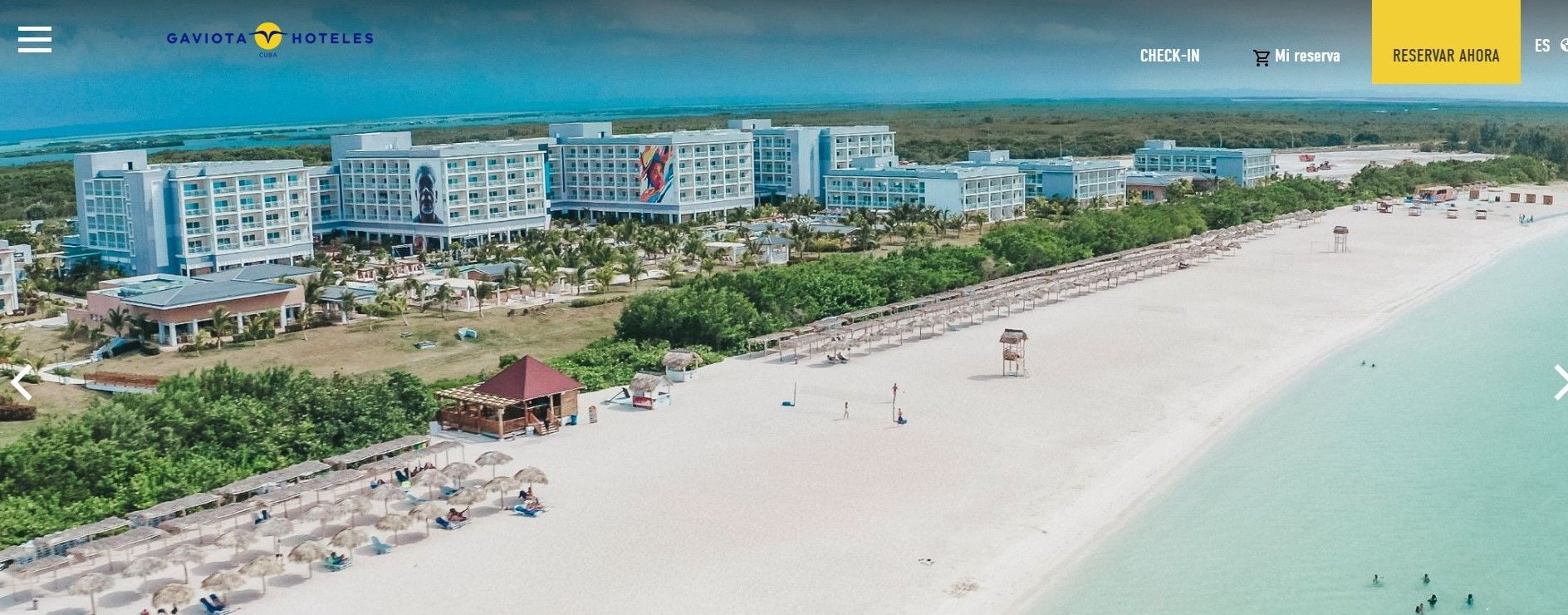
Screenshot / official The One Gallery website.
“Don’t forget that even though we aren’t dressed in military uniforms, we are civilian employees of the Army,” was a phrase repeated countless times during my years working in tourism under GAESA. The rules within the system took shape according to the political climate in the country, although their rigid essence never disappeared. By 2016, my last year working in tourism in Cuba, many things had changed on the island; nevertheless, certain rules remained just as strict within Gaviota.
During that period, I experienced the years of supposed economic opening thanks to the policies approved during Barack Obama’s presidency; I saw thousands of businesses open across the island, all revolving around tourism, and their boom was made possible by the arrival of millions of US American tourists. To distinguish itself, during that period Gaviota asked us to be even more cautious and maintained rules that set us apart from the many other tourism agencies making their way through all that frenzy.
While working, I had met my current wife, a foreigner who worked as a tour leader for a renowned Polish tourism company. We had to keep our relationship secret for several months; had my superiors found out, I would automatically have been removed from the system. During that final year, I experienced one of the most significant events in Cuban history in several decades: the death of Fidel Castro. The mourning period and temporary ban on alcohol also extended to the tourism sector for several days.
Even in 2020, several years after I had left Gaviota and the country, my name was still being mentioned at official meetings of Gaviota Tours guides in Cayo Santa María. Friends told me that they were warned not to follow me on social media, much less react to my Facebook posts, simply because I had published a couple of poems critical of the situation in Cuba. For that reason, I was accused of betraying revolutionary principles.
After the pandemic, the situation in the northern cays — as in the rest of the country — deteriorated considerably, but hotel construction did not stop. In 2023, the opening of The One Gallery was promoted as the latest major development: a five-star hotel filled with works of art created by contemporary artists from Cuba and other Caribbean countries. From the beginning, the hotel was closely associated with the Santa María Music Fest, a project headed by Boris Arencibia, a Cuban-American businessman and music producer connected to several reggaeton singers from the island and the Caribbean.
Because it was a project originating in the United States, Gaviota drew on its chameleon-like ability to distance itself from its military origins. For a time, they erased every visual sign connecting them to GAESA: they changed uniforms and bus decals and even stopped calling themselves Gaviota in front of visitors. The show did not last long, because the aforementioned individual was arrested by U.S. authorities on several charges related to the illegal trafficking of medicines and money laundering, and the project failed. As on so many other occasions, not the slightest explanation was given to the Cuban people about what had happened.
Today, The One Gallery, like more than 20 other hotels in the most important tourist destination in central Cuba, remains closed. Billions of dollars in investments sit completely unused while the population struggles amid blackouts and shortages of every basic necessity. Luxury hotels stand closed while hospitals, schools, and thermoelectric plants fall apart, and agriculture and food are nowhere to be found.
The latest major mention of the Villa Clara cays came in an equally surprising piece of news stemming from remarks by Deputy Foreign Minister Carlos Fernández de Cossío: Cuba has not dismissed the idea proposed by Emirati businessman Abdullah Bin Haidar of transforming the tropical paradise of the cays into a Trump Island. To accomplish this, it would not rule out investment even by the family of the US president.
To anyone else, that might sound like surreal news, but not to Cubans, who have become accustomed to living for decades in a constant and brutal surrealism. Anything is possible for a government that clings to power with everything it has, and for a family determined to perpetuate itself for centuries upon centuries, whatever the consequences.
This article was translated into English from the original in Spanish.