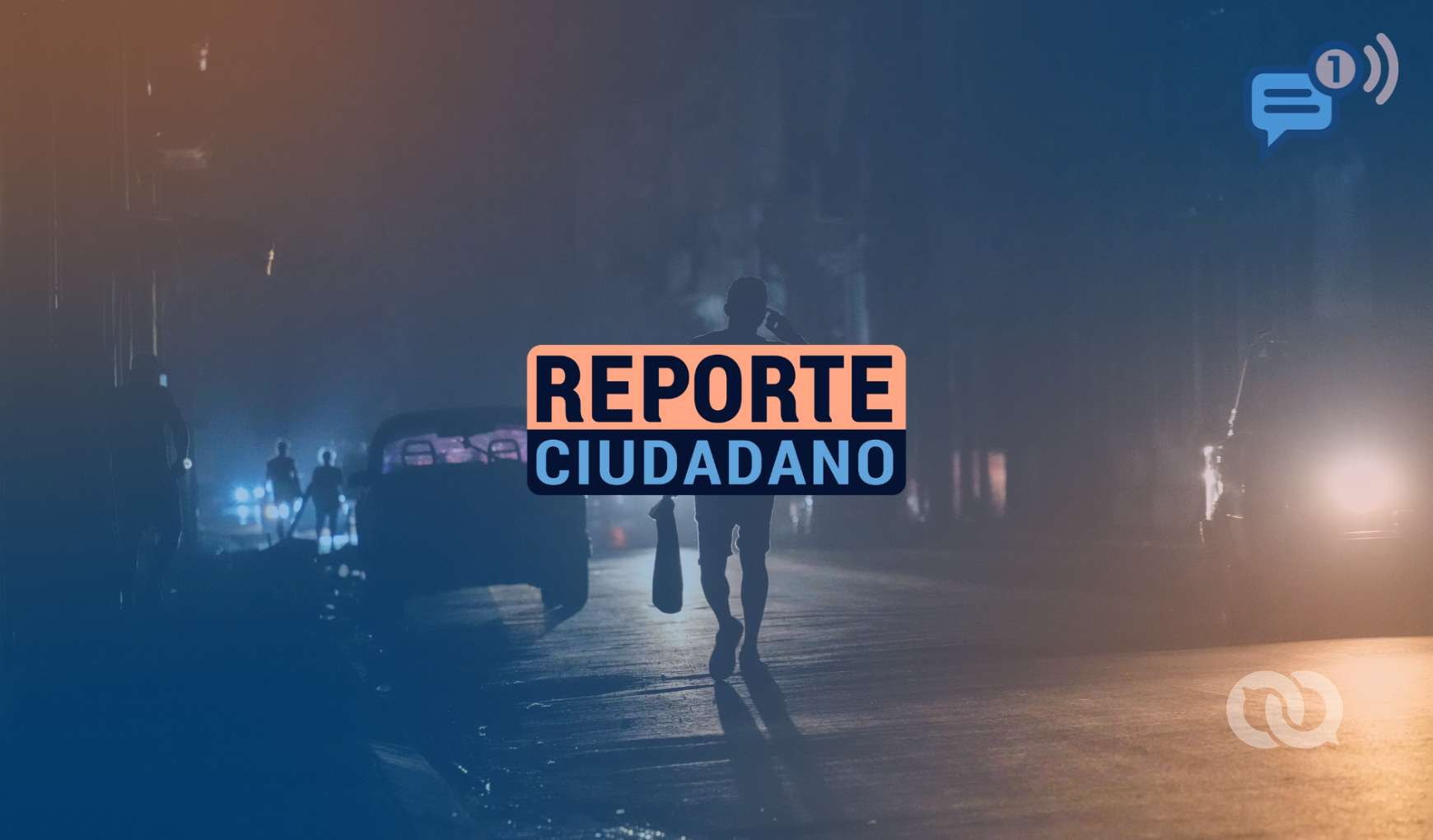
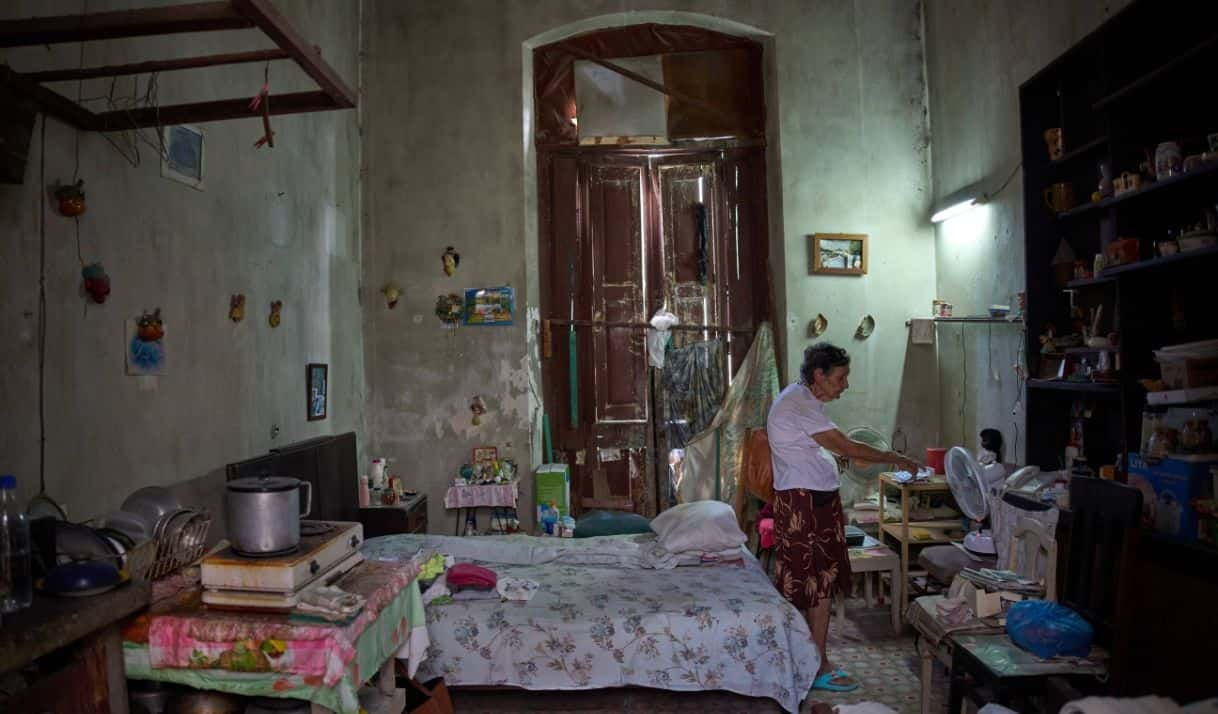
Tulipan, in Cienfuegos, is a neighborhood in darkness, like the rest of the province and the country. Calling it a neighborhood in darkness is not just a descriptive expression. It means a whole lot of people who are fed up and beaten down by their inability to lead even a halfway normal life, forced to live in the 21st century as though they were in a cave during the Paleolithic era. Literally. No electricity. No water. Practically having to “hunt” for food. In the end, the Spanish words Cuba and cueva (cave) sound somewhat alike, and the two have much more in common than one might imagine.
From Tulipán, one family reports that scheduled power outages, complaints, and rights mean very little when a transformer breaks down on your block. That’s when another kind of hell begins. First, you have to call the Electric Company (UNE) and get someone to answer. The company says it is overwhelmed by demand, so it takes an extremely long time to respond — and even when it does, nothing gets resolved.
When residents finally managed to get through, they were told they “had to wait,” that no vehicle could be sent to assess the damage to the transformer. They were assured that theirs was “complaint number 16,000 this month,” and that the UNE had only two vehicles available to handle emergencies throughout the city.
Twelve days after the problem was reported — 288 consecutive hours without electricity — a vehicle from the electric company finally arrived in the neighborhood. The linemen climbed up, inspected the transformer, touched it in three places, and declared, “This can’t be repaired.” They put it back where it was, told residents they would have to wait for another crew to come and take it down because they couldn’t do it themselves, and left without saying anything else.
During another complaint call to the Cienfuegos electric company, residents questioned the absurdity of the linemen not removing the transformer while they were there. They were told that it would have to be transported to Santa Clara for repairs, pushing any solution even further into the future.
Residents are still waiting in darkness for that transfer to take place. The company cannot install a new transformer because none are available, nor can it repair the damaged one in Cienfuegos, known as the Pearl of the South. During the call, residents were also told: “We can’t give you a minimum or maximum timeframe for a solution because demand is very high.”
According to the experience of other residents whose transformer had exploded a few blocks away, the company told them that replacing it would take between 30 and 50 days. Saying “50 days” is easy. Living through them in complete darkness is another matter.
Explosions, Transfers, and Protests
Transformers exploding in Cuba no longer seem to be news. Unfortunately. A calamity should always be newsworthy. In Havana, according to the official Cubadebate, an average of 25 transformers break down every day, although on some days the number has exceeded 60. On October 30, 2026, Matanzas had 162 damaged transformers, according to the state-run newspaper Girón. The situation in the rest of the country must be just as bad, if not worse.
Public protests over broken transformers that nobody repairs have also become recurrent. On October 16, 2026, 45 families in Vertientes, Camagüey, had gone 51 days without electricity because of a transformer failure. Only after they protested publicly was another transformer installed. And on September 21, 2026, residents of El Condado, in Santa Clara, had to block the street to get the authorities’ attention after spending 36 hours without power following a transformer breakdown.
Nor is the Electric Company’s undeclared strategy of forcibly moving transformers from one location to another, without explanation, anything new. Several protests have also erupted for this reason. On July 29, 2026, for example, residents of La Gallega, in Guanabacoa, Havana, took to the streets to prevent authorities from removing transformers from their neighborhood.
The state-run press has reported on the establishment of workshops in certain locations, such as Holguín, to “restore” transformers. However, in Matanzas, Alejandro Rodríguez Azpeitía, director of the Provincial Electric Company, acknowledged that the province’s transformer factory was “practically shut down because it has no oil.”
Who Is Responsible for Transformer Explosions in Cuba?
An impoverished and obsolete electrical system is compounded by the overload transformers experience when power is restored after hours and hours of blackouts. The Havana regime has turned something inevitable into yet another problem: people rushing to plug in and charge their devices. Are they going to ask people not to do that, too?
Government specialists explain that “the simultaneous demand for electricity after prolonged hours without power” is what damages transformers and “other infrastructure in the distribution networks.” Luis Rodriguez, technical director of Havana’s Electric Company, told Canal Caribe that high temperatures were also part of the problem. Meanwhile, the director of the Matanzas Electric Company said that overloads were caused not only by storm damage but also by “the equipment people use for lighting (EcoFlow devices and portable power stations).”
But whatever causes the overload and eventual explosion of a transformer, responsibility lies with the Electric Company, the agency charged with preventing repeated system failures.
We spoke with a telecommunications and electronics engineer about the causes of transformer explosions on the island. The specialist confirmed that the main causes are, of course, overloads, extreme voltage spikes resulting from operations on the electrical grid, aging equipment, and the deterioration or lack of insulating oil. Both voltage spikes and overloads can heat the oil, cause it to evaporate, and ultimately lead to explosions.
Another phenomenon reflecting the extremes to which Cuba’s socioeconomic crisis is pushing people is the theft of transformer oil, which the regime classifies as sabotage. According to the engineer we consulted, the cooling oil extracted from transformers is “very clean” and “can be used as fuel for cars and motorcycles,” although he does not rule out the possibility that people are using it to cook food.
“Transformers consist of a laminated iron core designed to isolate eddy currents and coils, or windings, made of varnished copper wire. That copper is extremely expensive in the industry,” the engineer explained. For that reason, he doubts that the Cuban government has access to the amount of copper needed to repair so many transformers.
How quickly a transformer can be repaired depends on the extent of the damage. If it has not exploded, its “core and metal tank” might be reusable. Another major obstacle to repairs is rewinding the coils or windings — copper conductors wrapped around the iron core. This process must be carried out using specialized machines, known as winding machines, which require electricity to operate.
Importing transformers from abroad, which could be another solution, also seems impractical. In Mexico, for example, a pole-mounted transformer can cost between 60,000 and 100,000 Mexican pesos (approximately US$3,000 to $6,000), depending on its voltage rating. Just imagine: if Cuba cannot repair transformers consistently enough, how much money would be needed to import them from a nearby country like Mexico and replace the hundreds upon hundreds of broken transformers across the island?
Meanwhile, residents of Tulipán — along with those on dozens of other blocks and in other neighborhoods — remain in darkness, with no solution in sight.





Comments
We moderate comments on this site. If you want to know more details, read our Privacy Policy
Your email address will not be published. Mandatory fields are marked with *
Todavía no hay comentarios.