

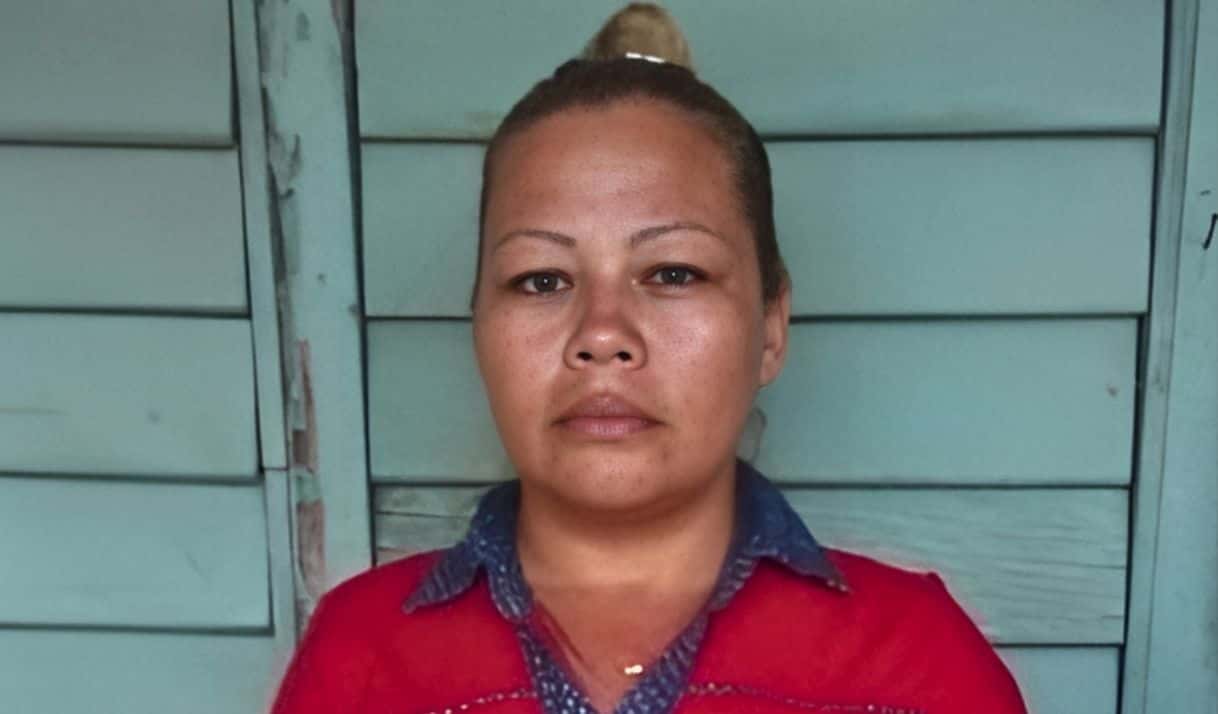
Yamilka Lafita Cancio, an activist known for her humanitarian work in Havana and other parts of Cuba, reported that she was the victim of a burglary at her home in the early hours of June 21, 2026. Later, when she attempted to file a police report, she says she was assaulted, transferred between two Ministry of the Interior (Minint) stations, and threatened with charges of “contempt of authority,” according to statements she made to El Toque.
“In the blink of an eye, you go from victim to perpetrator, because in a country without the rule of law, where you are marked for the way you think, you simply stop being a citizen,” Lafita wrote on social media, where she is known as “Lara Crofs,” just hours after the incident.
The Burglary
According to Lafita’s account to El Toque, everything began around 4:00 a.m. when she heard a loud noise coming from the garage of her home in the Guiteras neighborhood (Habana del Este municipality), where she was staying with a friend. A power outage had disabled the home’s alarm system just minutes earlier.
“We stayed completely still, afraid to look because everything was pitch black,” Lafita recalled. When they finally went outside around 5:30 a.m., they found the front gate open and the garage lock cylinder forced from the outside. The burglars had also entered the backyard, possibly via the rooftop, which Lafita believes suggests they were familiar with the layout of the house.
“They obviously knew what was in the garage and came specifically to steal the humanitarian aid supplies,” she said.
She explained that the thieves made off with three bags and four boxes, each weighing about 120 pounds—containing nonperishable food, medicines, clothing for elderly people, and school supplies intended for the independent humanitarian assistance she organizes.
They also stole three wheelchairs, two walkers for senior citizens, a baby walker, and a propane gas cylinder.
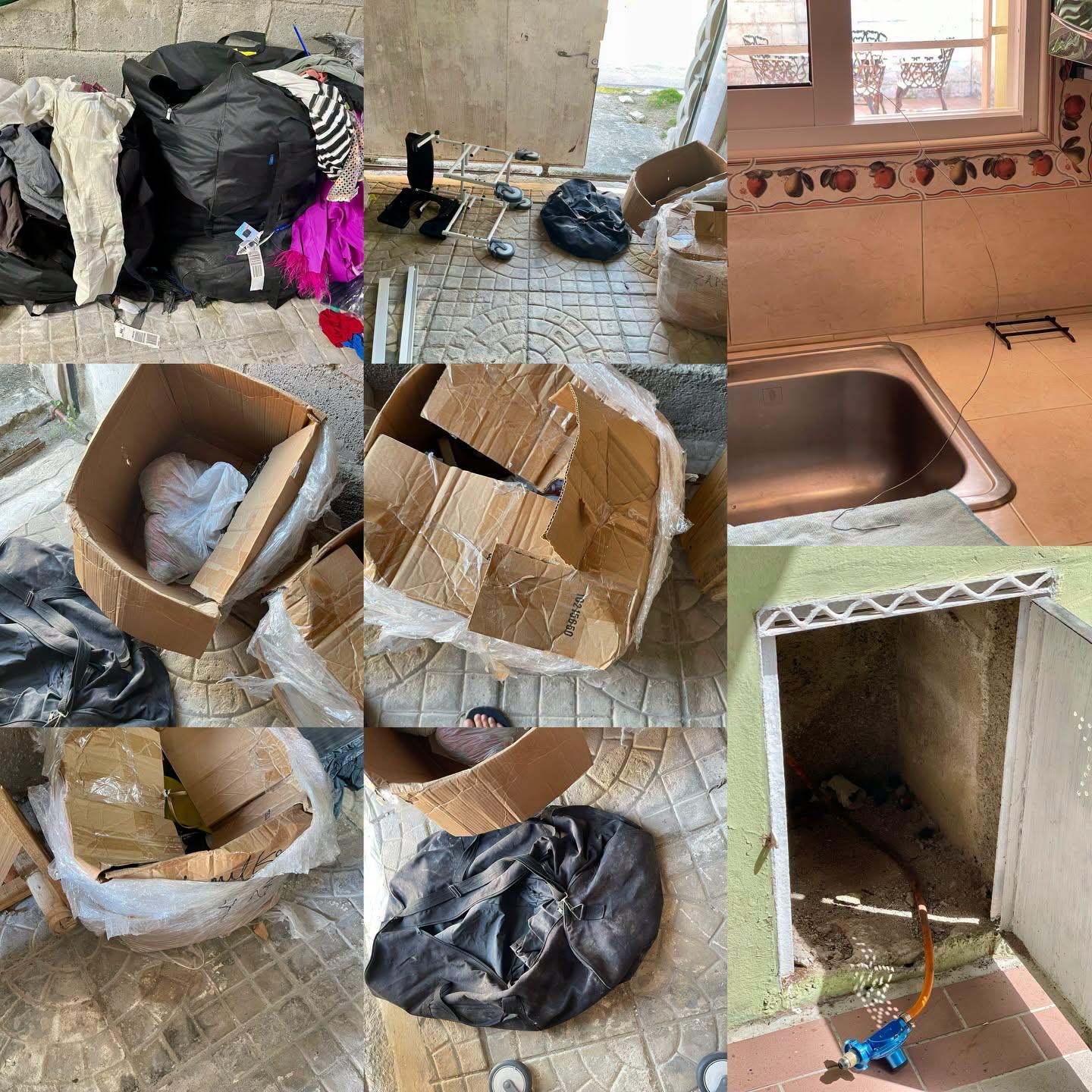
Photos of the ransacked property were later posted by Lafita on Facebook.
Through a window that had been forced open with a hook, the burglars also removed two bags containing documents, cash, and electronic devices belonging to both Lafita and the friend, who requested that her identity not be disclosed in public reports about the incident, the activist said. Among Lafita’s stolen belongings were her passport, cash (US dollars and Cuban pesos), and a necklace of sentimental value inherited from her mother.
“They literally left us without food for the humanitarian aid. (…) Something like this is deeply discouraging and painful because you don’t know how you’re going to start over,” she said, referring to the impact the theft has had on her relief work.
From Filing a Report to Being Assaulted
The activist said she repeatedly tried to contact her local National Revolutionary Police (PNR) station without success until an official informed her that she would have to appear in person so that forensic investigators could be dispatched to examine the scene.
She went to the Cojímar PNR station that morning. While waiting with two other people who had also reported burglaries in the area, a man in civilian clothes informed her that her case would be handled by counterintelligence officers.
When she questioned both the delay and the reassignment of her case, three women in civilian clothing—who did not identify themselves as law enforcement officers—intervened. One of them ordered her to be quiet and grabbed her by the shoulders to force her into a chair. Lafita reacted physically, and during the ensuing struggle she sustained an injury that resulted in a corneal abrasion, according to the medical diagnosis she later received.
“I can’t say for certain that they were police officers, but I have no doubt they belong to some security agency,” Lafita said of the three women, whom she associated with a style of dress and behavior—hair tied back, some wearing scarves, tight-fitting clothes, no jewelry, and an authoritarian demeanor—that she has observed among female Minint plainclothes agents used to repress women dissidents and human rights defenders.
Following the incident, she was transported first in a police patrol car and later in a van to the detention center at 100 and Aldabo (Boyeros municipality). An officer identified as “Major Jorge” questioned her, and after about three hours she was allowed to leave and reunite with family members and friends.
She was warned that she could face charges of contempt of authority pending a comparison of her version of events with that of the three women.
Lafita never managed to file the burglary report; the process was interrupted by the altercation.
After being released from 100 and Aldabó, she was treated by the ophthalmology department at Hermanos Ameijeiras Hospital, where doctors diagnosed her with a corneal abrasion consistent with a direct blow. She was instructed to protect the eye from light and use artificial tears to keep it lubricated.
An Isolated Incident or a Pattern?
Lafita says she has no evidence directly linking the burglary to her activism, but she harbors strong suspicions because of several unusual circumstances: the sheer volume and weight of the stolen items—which would have required a motor vehicle to transport without attracting attention—and the fact that her block is, by her account, normally quiet and closely watched by neighbors.
At the same time, she noted that several other burglaries had occurred in the neighborhood in recent weeks, including two committed in broad daylight.
Yamilka Lafita is among a number of activists and dissidents who have been victims of hacking attacks on their accounts across various online platforms in recent months.
In April 2026, she reported that a State Security officer known as “Luisito”—whose real name is Ariel Arnau Grillet—had been harassing her through text messages. She also disclosed what she described as an “investigation” and surveillance campaign in her neighborhood, allegedly ordered by the political police and carried out through there collaborators in an effort to build a case against her.
Despite both the burglary and the subsequent confrontation, Lafita said she has no intention of leaving Cuba.
“I’m not leaving Cuba. They should leave,” she declared, referring to the regime’s repressive apparatus, adding that her decision is tied to her commitment to continue her humanitarian work.
“We have to keep going… Breathe and start over. All of this creates fear, but I’m not a coward,” she concluded.
This article was translated into English from the original in Spanish.




Comments
We moderate comments on this site. If you want to know more details, read our Privacy Policy
Your email address will not be published. Mandatory fields are marked with *
Todavía no hay comentarios.