

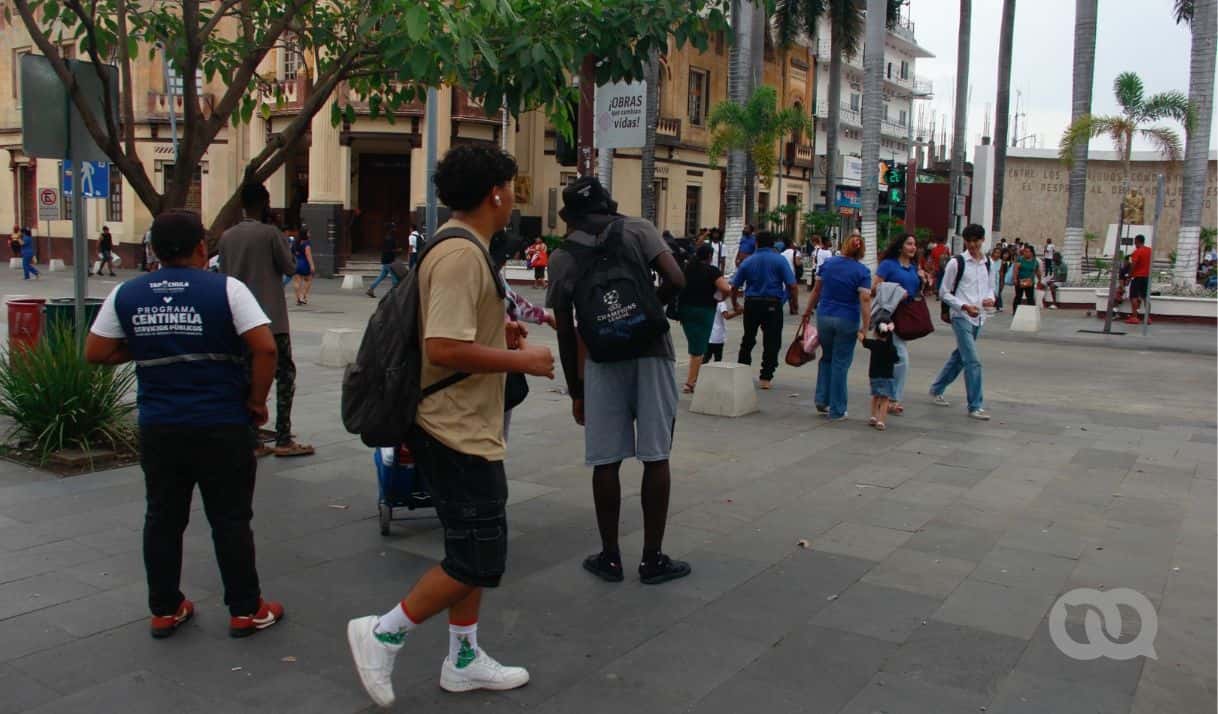
Humberto left Cuba when food shortages and the economic crisis had become part of everyday life. He arrived in Mexico looking for work and a chance to rebuild his life. Today, he is still in Tapachula, the city where he began his immigration process. He measures the passing of time by the number of signatures he has given.
“I’ve been here almost ten months. I’ve already signed in 20 times”.
Those signatures correspond to the appointments migrants must attend at the Mexican Commission for Refugee Assistance (COMAR) to keep their asylum applications active. Each visit means waiting another two weeks in a city where Humberto never expected to remain for so long.
“We can’t travel. They won’t let us leave Tapachula. It’s just waiting and waiting… an incredibly long process with no explanation whatsoever. You simply wait, sign in, and wait again. There’s nothing else”.
Permanent residency has become, in his mind, the key to regaining his freedom of movement.
“We want permanent residency so we can move to another state and work.”
While he waits for an answer, life goes on. Transportation, rent, and food still have to be paid for in a city where immigration procedures routinely last far longer than expected.
“COMAR says it takes 45 business days to issue your documents, but that timeline is completely ignored.”
Humberto’s experience is shared by thousands of migrants stranded in Tapachula. Those seeking refugee status must report regularly to COMAR offices to confirm their presence and keep their cases active. Missing an appointment can be interpreted as abandoning the process, resulting in the cancellation of their application.
Processing times have also grown much longer. According to a transparency response issued by the Commission in October 2025, the average time needed to resolve refugee applications that year had reached 182 days. Organizations that assist migrants report many cases lasting well beyond that.
Joana Vargas, general coordinator of the Hospitalidad y Solidaridad shelter, witnesses the consequences of these delays every day.
“The shelter was designed for short- or medium-term stays—say three to six months—which used to be how long immigration regularization procedures in Mexico took,” she explains.
Today, the situation is very different.
“We currently have people who have been here for as long as a year.”
Vargas attributes much of the problem to institutional overload.
“COMAR is overwhelmed. They simply don’t have enough staff to provide adequate attention, and financially they aren’t in a good position either.”
The prolonged procedures have transformed facilities originally intended for short-term accommodation. They have also changed the experience of people who arrive in Tapachula expecting to stay only a few weeks but instead spend months in the city.
The origins of this prolonged wait are clear. Miguel Hernández, head of the Tapachula office of the Coalition for Humane Immigrant Rights (CHIRLA), traces the turning point to January 2025. Donald Trump’s return to the US presidency and the cancellation of programs such as CBP One left thousands of migrants stranded in southern Mexico after they had gathered there hoping to obtain appointments to enter the United States.
“Nobody knew what was going to happen,” Hernández explains, recalling how the concentration of migrants and the collapse of those initial hopes turned Tapachula into what he calls a true “prison city.”
Before the CBP One app disappeared, Rodney, a young Cuban who arrived in late 2024 after crossing Central America alone, decided to begin an immigration process in Mexico.
“I figured, ‘If they eliminate CBP One, at least I’ll already have started a process here.'”
Miguel Hernández says this reflects the reality of migration procedures that are physically and emotionally exhausting.
“They can take an extremely long time—and not just that, they’re incredibly draining.”
Many newcomers arrive with no information and no support networks. Some spend their first days homeless, especially in downtown Tapachula, an area Hernandez describes as “quite hostile” because of criminal groups, police surveillance, and local enforcement operations.
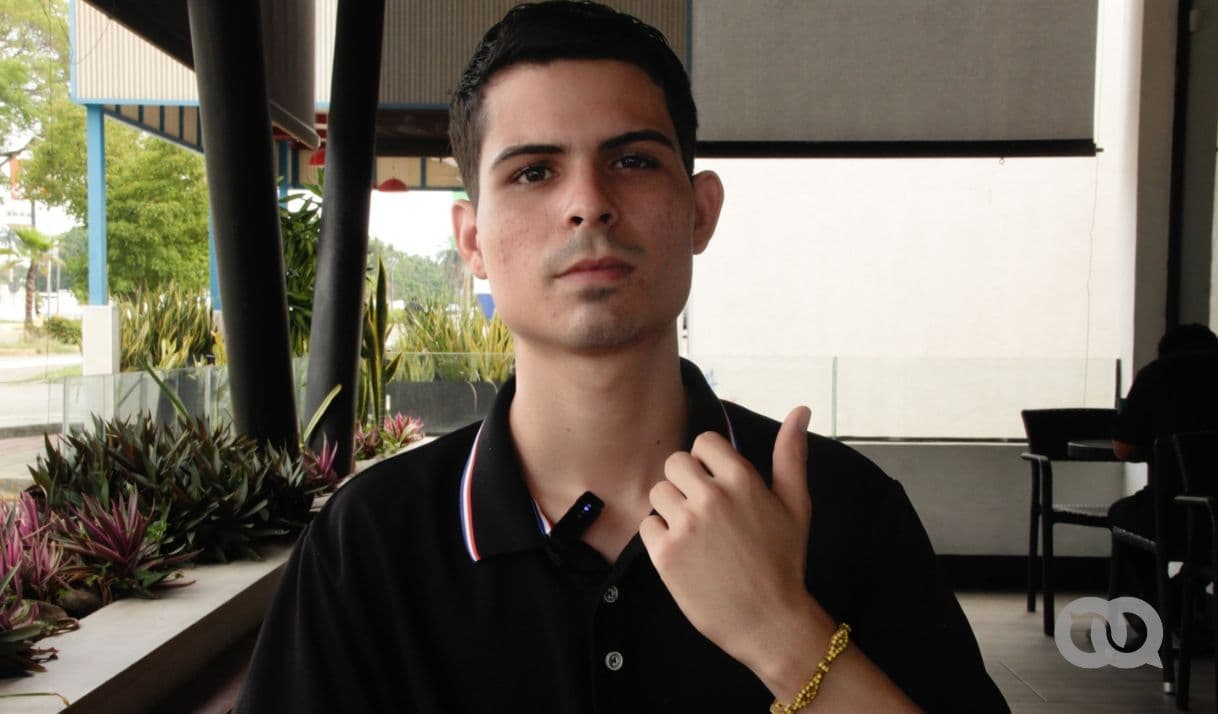
Rodney, joven cubano de 20 años que llegó solo a México a finales de 2024. Tras soportar extenuantes jornadas en la informalidad para costear habitaciones compartidas, logró obtener la residencia permanente, aunque la discriminación local sigue cerrándole puertas laborales.
Administratively, many migrants receive only “a ten-day permit issued by the National Migration Institute,” a temporary document allowing them to remain in Mexico while attempting to begin some form of regularization process.
The lack of proper immigration documents deepens other vulnerabilities.
“To get a job, they ask for immigration papers,” Hernández notes.
The combination of lengthy waits, lack of employment, obstacles to legal status, and security risks leaves many migrants in extremely fragile circumstances.
“The more vulnerabilities people face,” Hernández concludes, “the more defenseless they become.”
Living Off Migrants’ Waiting in Southern Mexico
The lengthy immigration procedures do more than keep thousands of people in Tapachula for months. They have also transformed how migrants survive, work, and live in the city.
Miguel Hernández describes a local economy that offers limited opportunities even for Mexican residents.
“There really isn’t much industry here,” he explains.
Most economic activity revolves around agriculture, construction, services, and the informal economy. In that context, finding work is especially difficult for migrants arriving without support networks, sufficient resources, or permanent legal documentation.
Rodney encountered that reality almost immediately after arriving in Tapachula. He had left Cuba alone. He had no relatives in Mexico or the United States and knew nothing about the city.
“I had to learn everything on the streets,” he recalls.
He learned how to get around by shared vans, which neighborhoods offered the cheapest rooms for rent, and how to navigate immigration procedures he had never encountered before. He also discovered that finding work would take much longer than expected.
For weeks he visited businesses searching for a job. Some employers demanded documents he did not yet possess. Others preferred not to hire foreigners because they assumed they would quit as soon as they found a way to continue on to the United States.
Meanwhile, reality could not be postponed: rent, transportation, and food all had to be paid for. Waiting also has a geographical dimension.
Miguel Hernandez explains that many migrants feel Tapachula functions like a form of administrative confinement. Immigration checkpoints scattered along highways throughout southern Mexico frighten those whose immigration status remains unresolved.
“People feel trapped,” he says. “Leaving can be very difficult.”
That feeling comes up repeatedly in conversations with migrants. Permanent residency, refugee recognition, or any document that grants greater freedom of movement quickly becomes an immediate goal.
Meanwhile, life remains centered in Tapachula. Humberto began noticing this after several months.
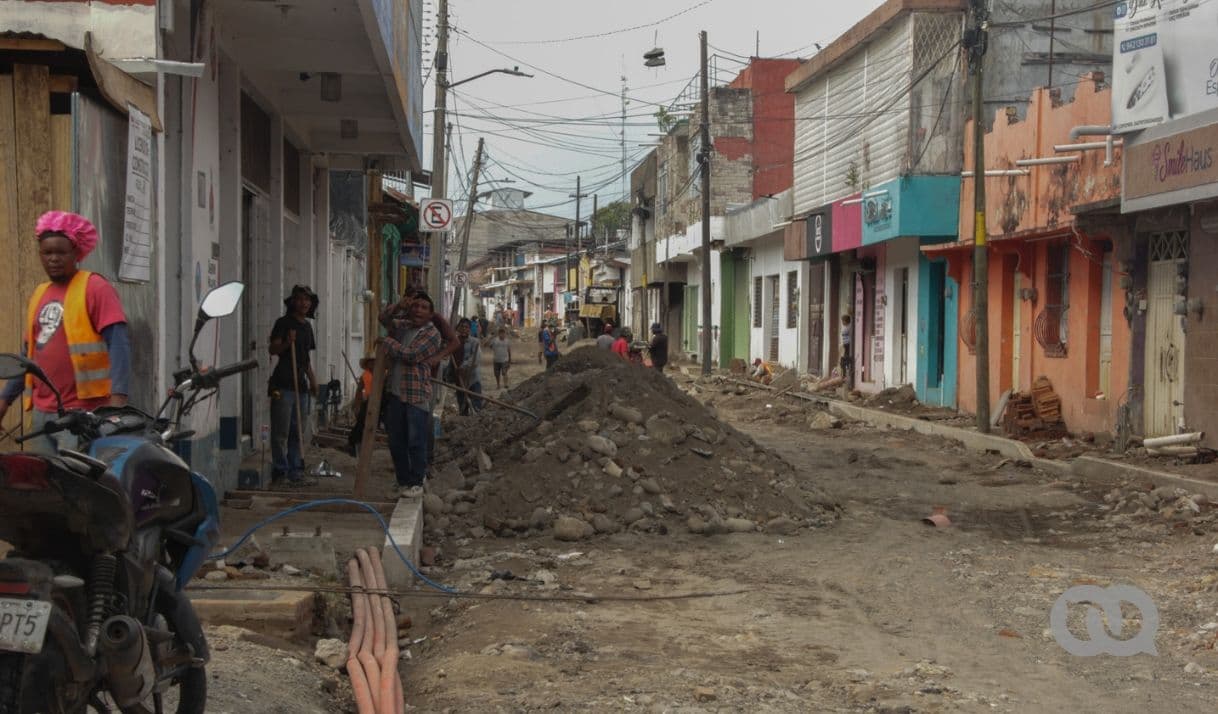
Obras viales y trabajadores en las calles de Tapachula. Ante la falta de industrias formales y redes de apoyo, la construcción y el trabajo eventual se convierten en las pocas vías de supervivencia diaria para los migrantes retenidos en la ciudad.
When he first arrived, he knew nothing about the city’s transportation routes or fares. He remembers paying exorbitant prices for relatively short trips.
“For just a short distance, they’ll charge you 100 pesos (about US$6) or more.”
Over time, he realized that much of the local economy connected to rentals, transportation, lodging, and food depended on the thousands of migrants waiting in the city for their immigration cases to be resolved.
“We’re the ones paying their bills here.”
This observation appears repeatedly in migrants’ testimonies. People who expected to stay only a few weeks ended up becoming regular customers of rental rooms, inexpensive eateries, public transportation, internet cafés, and small businesses that make up Tapachula’s everyday economy.
Housing represents one of the hardest expenses to sustain when immigration procedures drag on for months. Rodney remembers crowded shared rooms occupied by numerous migrants.
“Some places had 9, 10, even 11 people sharing one rental.”
Each person contributed around 2,500 Mexican pesos (US$143) per month toward the rent.
The arrangement reflected economic necessity more than personal choice. Sharing rooms reduced expenses in a city where stable employment was difficult to find.
Without relatives in the United States able to send him money, Rodney depended entirely on whatever income he could earn. The administrative wait advanced in lockstep with his financial obligations.
Iraín arrived in Tapachula in October 2025. He is 60 years old.
In Cuba, he had spent years working in construction. Upon arriving in Mexico, he tried to continue in the same trade.
“There are so many people looking for work, all competing for the same jobs.”
Competition intensified as the migrant population in the city grew, including many people deported from the United States who were also looking for employment.
During a telephone interview, Iraín explained that he shared a room with another Cuban who had been returned from the United States. Both had just come back from working under the scorching sun on a rooftop in Tapachula.
Their exhaustion was obvious throughout the conversation. At times, one of them could barely stay awake.
In just over six months, Iraín had already held eight different jobs. Each one eventually ended. Then the search always began again.
Unlike many migrants who still hope to reach the United States, Iraín says he would like to remain in Mexico.
“I’d like to stay here. I like it—especially because of the language.”
His stability, however, still depends on an immigration decision that has yet to arrive.
Several months after reaching Tapachula, Rodney found work as a motel housekeeper. He accepted because he desperately needed income. His shifts lasted 12 hours, and he received one day off only after working 11 consecutive days.
“I could never say no.”
He repeats the phrase several times during the interview.
“I had to pay rent. I had to eat. I had to survive.”
The job enabled him to support himself through much of his stay in Tapachula, but it did nothing to eliminate the uncertainty surrounding his immigration case. His application remained unresolved.
The bills kept coming. Time continued to accumulate through signatures, mandatory appearances, and documents awaiting approval.
After more than a year, he finally obtained permanent residency. The document solved only part of the problem. Finding employment continued to present obstacles.
“Even if you have permanent residency, companies here in Tapachula still don’t want to hire you.”
His words summarize the experience of many migrants: obtaining legal documents is necessary to gain better employment opportunities, but it is not always enough.
For those trapped in Tapachula for months, waiting is far more than an immigration file. It determines how they work, where they live, and how much money they must earn each week simply to keep going while waiting for an answer.
Compounding all of this is the deteriorating security situation throughout the region.
Miguel Hernández of CHIRLA recalls that in recent years both organizations and migrants have increasingly identified “serious security problems and the growing presence of criminal groups.”
He also mentions direct attacks against human rights defenders, including incidents targeting the Fray Matías de Córdova Human Rights Center, events that have heightened concerns among those working with migrants.
“That fear is always there,” Hernández says.
“We know we ourselves can become targets.”
This hostility has also taken the form of an urban redesign intended to make the migration phenomenon less visible.
Joana Vargas recalls that Tapachula underwent dramatic physical changes with that goal in mind.
“There was a massive cleanup. They remodeled the central park. We used to be accustomed to seeing encampments outside the immigration office and COMAR, and they simply disappeared.”
The Cuban migrants trapped in Tapachula seem to matter to no one.
While the world keeps turning, they remain there—motionless—in the southern Mexican city that has become an open-air prison.
This article was translated into English from the original in Spanish.