
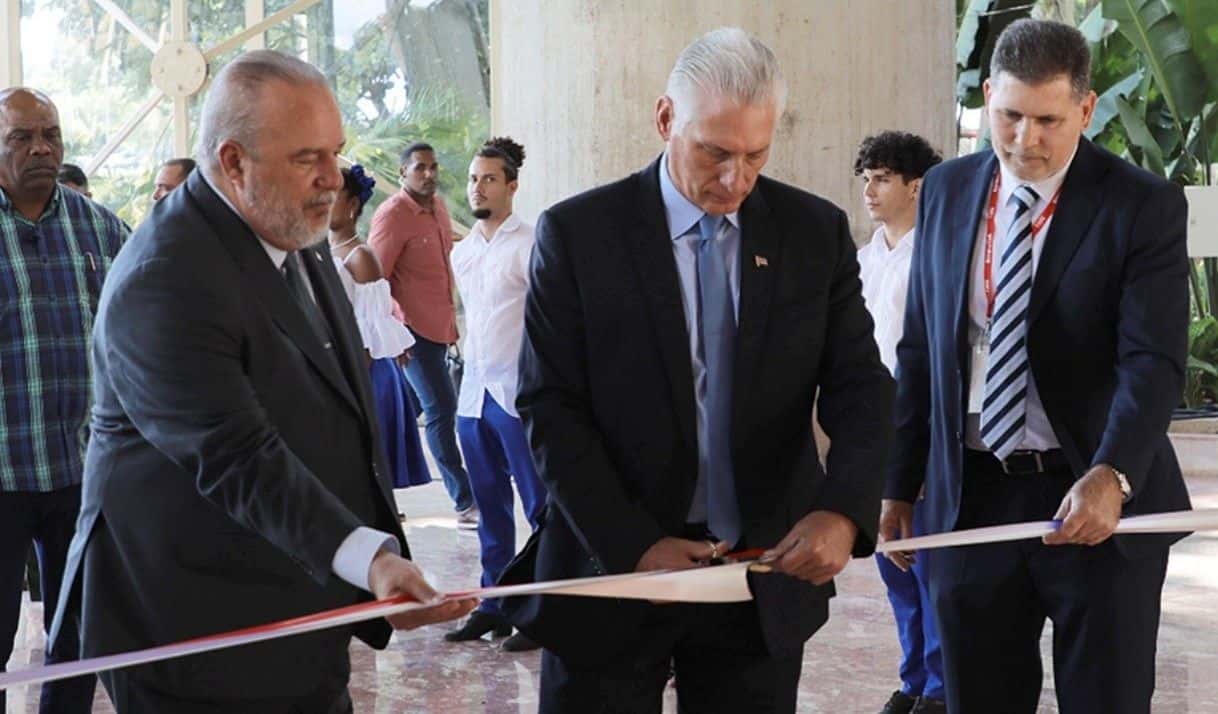
On May 5, 2026, the Cuban regime finally published in the Official Gazette a package of regulations formalizing the immigration status of “Investors and Businesspersons” for Cuban citizens residing abroad “who apply for it and participate in the country’s economic model.” The three legal measures took effect immediately upon publication.
The Cuban State declared it necessary to implement the change immediately, after being frozen for nearly two years.
Procedure to Obtain the Status and the Tax on Documents
Decree 150/2026 regulates the procedure for obtaining investor and business immigration status. Cubans whose migratory status is Resident Abroad or Emigrant may apply for the status. Applications may be submitted at Cuban diplomatic and consular offices abroad or at Ministry of the Interior processing offices when the interested person is in Cuban territory.
There are two requirements: submitting a written application explaining the grounds for the request and providing certification from the agency, Central State Administration body, or Cuban entity with which commercial or business relations are maintained.
Once the application is received, the corresponding consulate has three working days to evaluate it and forward it to the Immigration Authority if it meets the requirements. The Immigration Authority has 30 working days to issue a decision and an additional seven working days to notify the applicant.
The decree distinguishes between two channels depending on the type of activity. Applications linked to private management models are submitted at the Ministry of the Interior office in the territory where the project has been presented. Those related to foreign trade and foreign investment are processed at the corresponding unit of the Directorate of Identification, Migration, and Immigration.
Once obtained, the immigration status remains valid as long as the person maintains the circumstances under which it was granted. If the commercial or business relationship that justified the certification disappears, the immigration status may be revoked, although the regulation does not detail the procedure through which this would occur.
In theory, those holding the new immigration status are considered equal, regarding the exercise of their rights, to Cuban citizens residing in national territory, “while they are in Cuba and hold this immigration status.”
The document tax established by the Ministry of Finance and Prices for applying for the Investors and Businesspersons immigration status is 3,500 Cuban pesos (just under $7 USD). The regulation does not specify whether this payment is a one-time fee or must be periodically renewed, nor whether it also applies to applications that are denied.
In mid-March 2026, the Government announced measures to facilitate the participation of the diaspora in the economy. It came at a time of pressure from the Trump Administration for Cuba to advance economic reforms. The speed of the decree — approved in April and published today — contrasts with the nearly two years of immobility surrounding the 2024 Immigration Law.
The creation of a specific immigration category offers a framework of legal certainty that previously did not exist. At the same time, dependence on institutional certification and the discretion involved in resolving applications suggest that access to this status will be, at least in its initial stage, selective rather than massive.
Economist Pedro Monreal has warned that without basic legal guarantees capable of generating trust, many emigrants will prefer to continue sending remittances rather than investing directly.
This article was translated into English from the original in Spanish.





Comments
We moderate comments on this site. If you want to know more details, read our Privacy Policy
Your email address will not be published. Mandatory fields are marked with *
Todavía no hay comentarios.