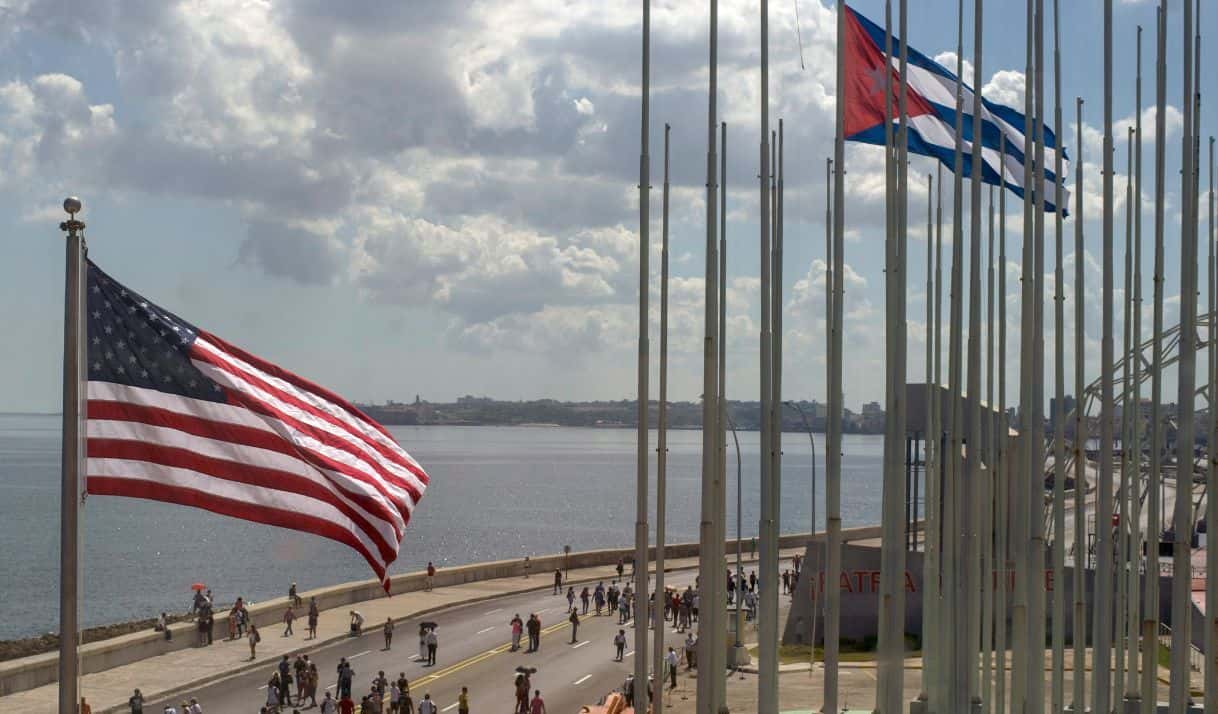
On May 1, 2026, US President Donald Trump signed a new executive order expanding sanctions against the Cuban regime. The decision is consistent with the national emergency declared by the US government on January 29 regarding the island, whose policies it considers “an unusual and extraordinary threat” to its national security and foreign policy.
According to the US government, the actions of the Cuban government “are not only designed to harm the United States, but are also repugnant to the moral and political values of free and democratic societies.”
Based on this premise, the order establishes concrete mechanisms of prohibition and punishment that will allow, going forward, the blocking of assets, restriction of access to the international financial system, and denial of entry into the US for officials, military personnel, and individuals linked to human rights violations in Cuba.
Conduct subject to sanctions
The Secretary of State and the Secretary of the Treasury may block the property and interests in property—within US territory or under the control of US persons—of any foreign individual who meets the following criteria:
• Operating or having operated in the energy, defense and related materials, metals and mining, financial services, or security sectors of the Cuban economy, or in any other sector determined by the Secretary of the Treasury.
• Being owned, controlled, or directed by the Government of Cuba, or having acted on its behalf, directly or indirectly.
• Controlling any person designated under this order.
• Having provided material, financial, or technological assistance, or supplied goods or services to the Government of Cuba or to sanctioned individuals.
• Being or having been a leader, official, senior executive, or board member of the Government of Cuba or blocked entities.
• Being a political subdivision, agency, or instrumentality of the Government of Cuba.
• Being responsible for or complicit in serious human rights violations in Cuba, or having participated directly or indirectly in them.
• Being responsible for or complicit in acts of corruption related to Cuba, including the misappropriation of public assets, expropriation of private assets for personal or political gain, or bribery.
• Being an adult family member of a person designated under this order.
No US citizen or entity may carry out transactions, transfers, payments, or donations in favor of those sanctioned. Nor may any operation be executed with “the purpose of evading or circumventing” the prohibitions established by the order. Conspiracies to violate these measures are also prohibited.
Immigration restrictions
The order suspends entry into US territory—whether as immigrants or non-immigrants—of foreign nationals who meet one or more of the designation criteria. An exception is reserved for cases in which the Secretary of State determines that the person’s entry “is in the national interest of the United States.”
Financial institutions
The measure also targets the international banking system. The Secretary of the Treasury is authorized to sanction any foreign financial institution that has “conducted or facilitated significant transactions” on behalf of individuals blocked under the order. Applicable sanctions include:
• Prohibiting or imposing strict conditions on maintaining correspondent or payable-through accounts in the United States.
• Blocking property and interests in property under US jurisdiction or control.
The definition of “foreign financial institution” includes banks, insurance companies, brokerage firms, credit card operators, precious metals dealers, investment funds and their affiliates or subsidiaries, among others.
The new executive order is approved amid rising tensions between the two countries, as negotiations appear to be yielding no results through diplomatic channels.
This article was translated into English from the original in Spanish.



Comments
We moderate comments on this site. If you want to know more details, read our Privacy Policy
Your email address will not be published. Mandatory fields are marked with *
Todavía no hay comentarios.