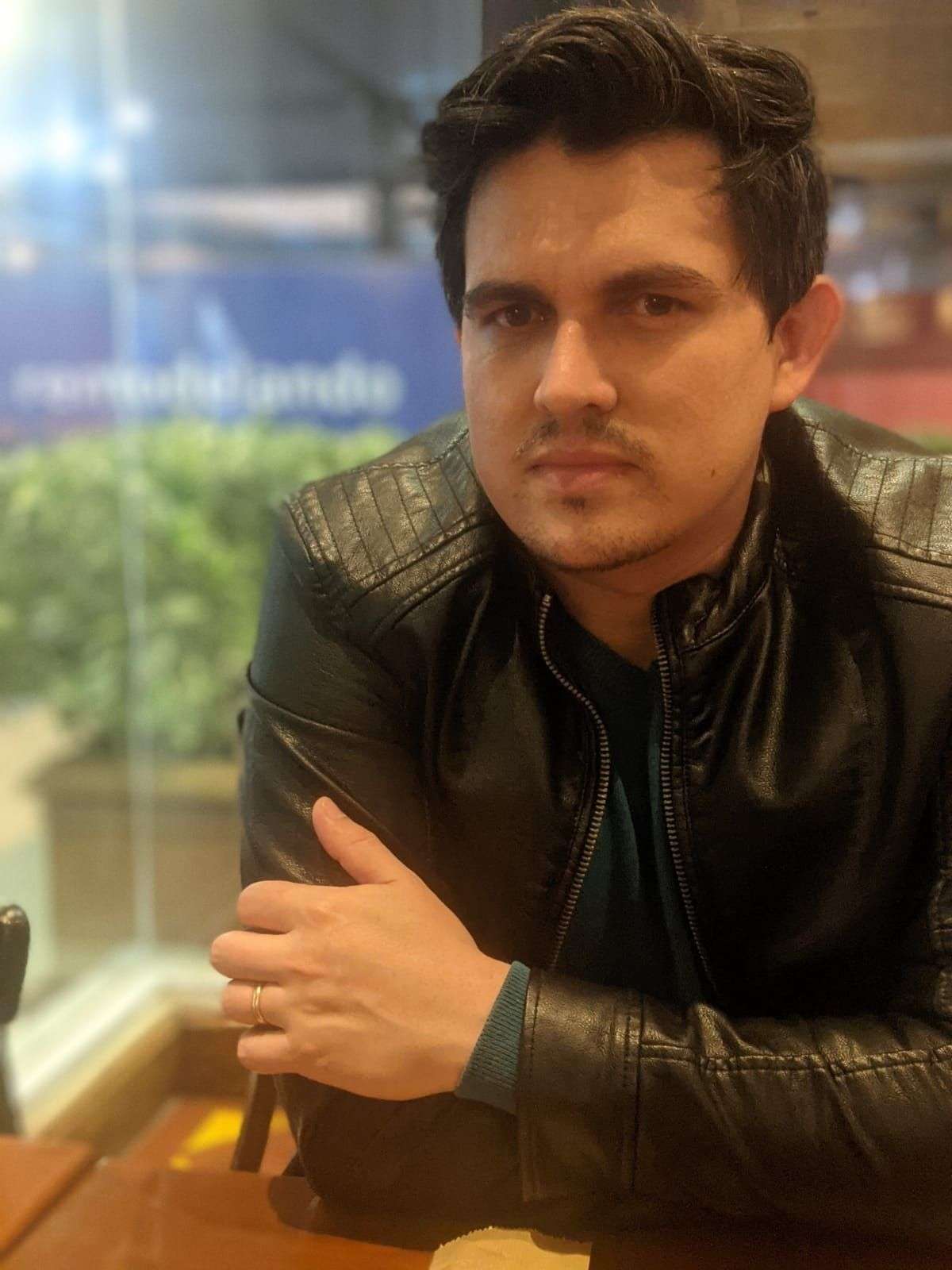

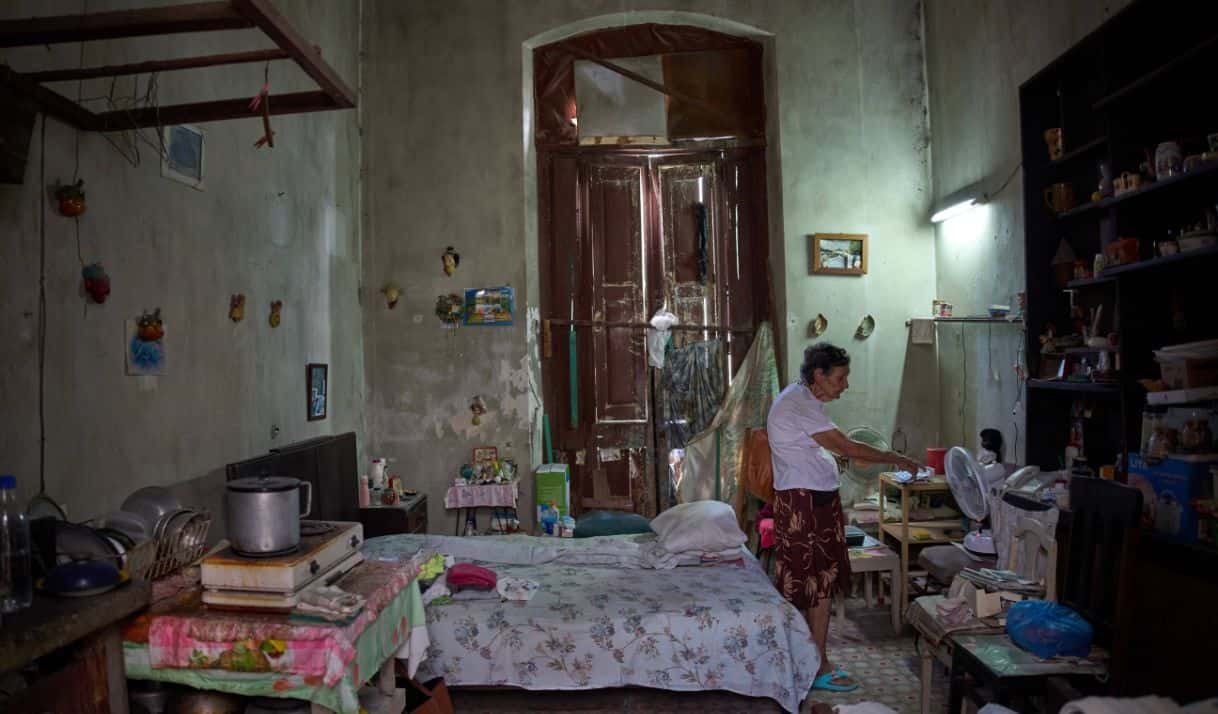
Carmen returns from one of her daily walks through Centro Habana, searching for something to put on the family table. “I went out to buy two pounds of rice they’re selling per person; it’s just little bits at a time,” says the 63-year-old retiree. Sometimes she manages to buy some mincemeat at a small private business, half a dozen eggs, or two or three bread rolls. Other times—most of the time—she comes back with an empty bag.
Her real name is not Carmen. We are protecting her identity because she fears the consequences of appearing in an independent media outlet after 67 years of a dictatorship that promised a future of well-being under “communism,” but today uses its resources to repress dissent and persecute those who denounce the government’s responsibility in the country’s collapse.
Starting in April 2026, Carmen—a former Education employee with a monthly pension of 4,000 CUP, equivalent to less than 8 USD on the informal market—may have to add to her list of hardships losing the few subsidized products that the State still sells through the ration book system, in force since the 1960s.
During a work session of the Municipal Administration Council in Cotorro, attended by Havana’s governor, Yanet Hernandez Perez, authorities reported that starting in April “a new form of distribution of the rations will begin, differentiated, with products that will be controlled, released for sale, but at prices different from the current ones (…),” according to a note published on February 17, 2026, by the newspaper Tribuna de La Habana.
According to the government’s plan, they will “subsidize people and not the product,” although they did not specify the prices they will set, which products will be affected, or who will be able to continue buying somewhat “cheaper” in a country where poverty is growing. For food distribution, “it will be essential what each territory is capable of producing,” according to what was stated at the meeting reported by the state-run outlet.
The discreet revelation by Cotorro, Havana authorities coincides with what ruler Miguel Díaz-Canel had announced on February 5, 2026, during a televised appearance to declare a new period of energy “contingency.” That day, Canel announced changes in the distribution strategy of the basic food basket under the principle of “eating what is produced in each territory,” a decision forced by the lack of fuel for food transportation.
Sociologist Elaine Acosta, executive director of the Observatory on Aging, Care and Rights “Cuido 60,” explains to El Toque that “we are not seeing measures that correspond to the depth and complexity of Cuba’s structural crisis, nor do they take into account the expanding pattern of ‘vulnerability’ that increasingly affects broader sectors of society.”
Acosta, an associate researcher at the Cuban Research Institute of Florida International University (FIU), believes that “the State has not been capable of promoting adequate and sustainable compensatory social policies to reverse the negative impacts of the multiple crises, which affect vulnerable sectors of Cuban society more severely, but which run through society as a whole.”
The current context is not the only moment in the last decade when another nail has been driven into the coffin of “the ration book,” a system that has been turning into an almost empty shell, although it still somewhat mitigates scarcity.
In fact, Carmen says, “they’ve been removing [the ration book] for a long time. They started by cutting a few pounds or grams of certain goods, and then they completely eliminated some products, for example, meat products”
She explains that “months go by without selling processed ham or ground meat. No one even knows how long chicken hadn’t been sold until, at the end of last year, they sold a pittance to the population. Salt is sold sometimes, coffee, beans…”
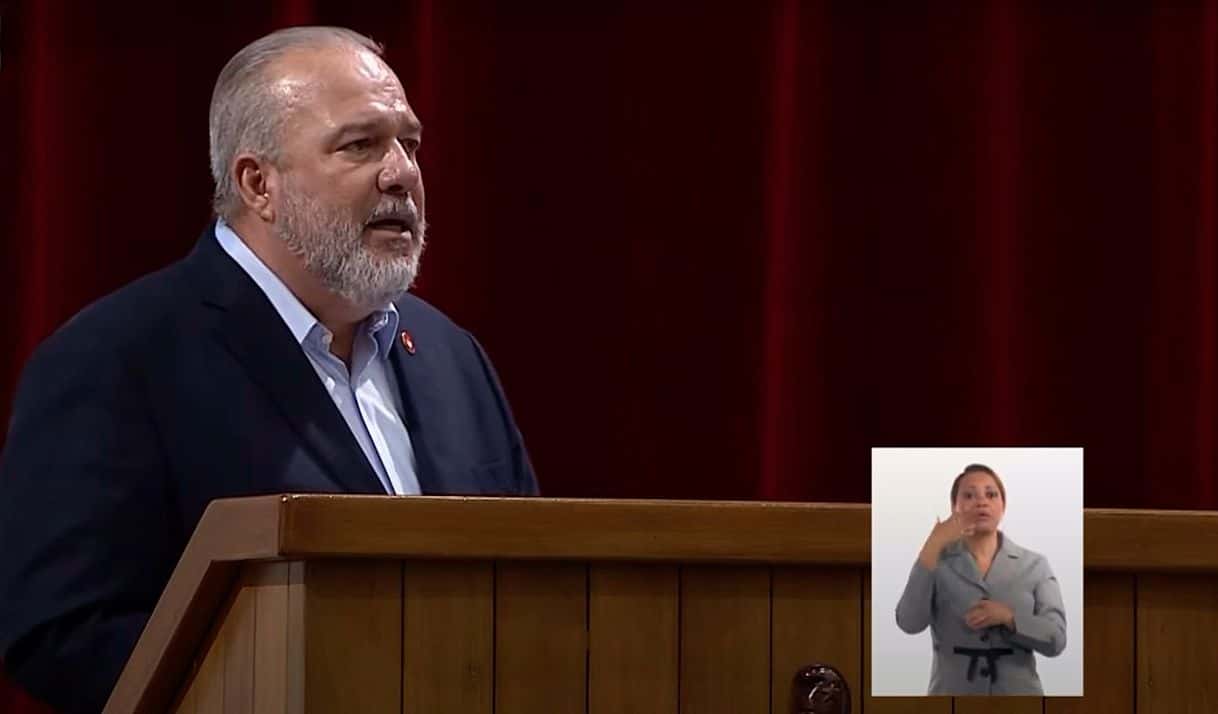
Official data indicate that at least 182,000 Cuban families—around 310,000 people—receive social assistance for being in a “situation of vulnerability,” according to Prime Minister Manuel Marrero in July 2025 before the National Assembly of People’s Power. Although he did not use the word “poor,” Marrero acknowledged that these are not all the people facing economic hardship.
However, official figures are insufficient to grasp the true magnitude of the problem. Elaine Acosta points to the lack of data from public institutions and systematic poverty studies in Cuba: “Without that information it is impossible to have an effective and informed policy to intervene and halt the significant increase in impoverishment affecting increasingly broad sectors of the Cuban population.”
Is delegating responsibilities to the community, the solution?
“Rural, hard-to-reach, isolated or suburban areas” represent another front of social assistance where direct action by the Cuban State is receding. In these places, care for “people in vulnerable situations” will fall to Community Food Homes; centers that, although authorized by local governments and dependent on the availability of resources in each territory, will be managed by private individuals as an “alternative to the Family Care System.”
The Official Gazette published on February 5, 2026, the legal framework for the creation and operation of Community Food Homes in Cuba of the Council of Ministers. Those eligible to benefit include older adults without family support, people with disabilities, vulnerable families, and, exceptionally, pregnant women requiring nutritional reinforcement.
The service will be provided in private homes by self-employed workers previously selected within the community and approved by Municipal Administration Councils. Each home may serve up to ten beneficiaries, provide meals at least Monday through Saturday, and guarantee a minimum intake of 30% of daily nutritional requirements. The maximum price of the menu is set at 50 pesos.
The agreement also defines specific responsibilities for provincial and municipal governments, the Departments of Commerce and of Labor and Social Security, as well as governors and mayors, including service quality control, beneficiary selection, provision of food modules (sold at the state-run store in the community where the home service operates), financing of equipment, and periodic program evaluation. When payment for the service is assumed by Social Assistance and the cost exceeds the authorized amount the difference must be covered by the private provider “as part of their social responsibility.”
The official press has presented Community Food Homes as a necessary program to “facilitate care for people in vulnerable situations who live in remote areas of the country,” with a total of 325 homes of this type planned, of which 29 have already opened in Guantanamo, Holguin, and Santiago de Cuba.
The idea does not represent a substantial change in the living conditions of the theoretical beneficiaries—barely 3,000 Cubans, confirmed Grettel Portales Pérez, general director of services at the Ministry of Domestic Trade—nor in society as a whole.
Likewise, both the rations and social dining halls face an insurmountable obstacle under the measures announced by the Government: food shortages in communities.
According to economist Pedro Monreal, Cuba in 2026 is “a country weakened by an agricultural crisis far worse than that which existed during the ‘Special Period’ [of the 1990s], with a massive collapse in the national production of crucial foodstuffs.”
The expert explained that the most recent official agricultural data from the Statistical Yearbook (2024) “confirm seven years of agricultural decline since 2017.”
The political authorities do not answer the fundamental question: how will the supply of products to state-run neighborhood stores in cities and rural areas be guaranteed? The issue remains unresolved because the government’s main objective is not to assist the “vulnerable,” but to reduce the public burden of a State that once promised to “leave no one unprotected.”
The Cuban State maintains a formal role as guarantor of social rights, but reduces its direct intervention and delegates operations to private actors and local authorities. This generates insufficient coverage, risks of inequity, and dependence on the availability of local resources. The homes providing meals function more as a palliative patch than as a comprehensive social assistance policy, demonstrating that the guarantee of the right to food is compromised in practice.
Regression of Social Rights
For researcher Elaine Acosta, “instead of expanding and deepening the budget, programs, and mechanisms of protection, social policy in Cuba has behaved in a regressive manner, reducing the State’s participation in social assistance and transferring much of these responsibilities to families, municipalities, and communities. We know that in the Cuban case those local actors cannot assume that responsibility on their own because of the political power structure and the insufficiency of resources.”
She also states that “the elimination of these universal subsidies for basic foodstuffs can be interpreted as a regression of social rights, particularly the right to food.”
The International Covenant on Economic, Social and Cultural Rights obliges States that have ratified it to adopt measures to realize rights such as work, health, education, social security, and an adequate standard of living. It also establishes that these rights must be realized progressively, to the maximum of available resources, and that regressive measures must be justified. However, although Cuba signed the the Covenant in 2008, it has not ratified it.
Within the Cuban Government “there is not even a credible attempt to seek solutions to the problems afflicting people,” Yaxys Cires, director of strategies at the Cuban Observatory of Human Rights, told El Toque in statements for a previous article related to citizen protests.
According to the VIII Study on the State of Social Rights in Cuba, published by the Observatory in 2025, blackouts ranked as the top concern of Cubans (72%), narrowly surpassing the food crisis (71%). Respondents also expressed dissatisfaction with the high cost of living (61%), low wages (45%), and deficient public health care (42%).
In the face of these realities, authorities respond with “piecemeal measures that cannot resolve the crisis of social protection in Cuba,” notes sociologist Elaine Acosta, meaning that “we are facing a crisis of social assistance and of the State’s commitment to guaranteeing people’s rights.”
Acosta clarifies that it is not wrong per se to adopt “a policy of targeting resources toward more vulnerable groups; the problem is that the way it is being implemented in Cuba is incorrect.”
According to the expert, “the adjustment policies the Cuban State has been implementing (reducing its participation in social protection, eliminating subsidies, shrinking food programs, weakening the Family Care System, raising the cost of access to basic products and dollarizing their sale, etc.) have created a state of food insecurity insofar as there is neither a sufficient and stable food supply nor timely economic and physical access.”
Yaxys Cires of the Observatory of Human Rights has told El Toque that “Cuba’s socioeconomic situation is critical and the regime is adopting a dangerous position between immobility and repression. It is as if it deliberately wants people to suffer.”
Elaine Acosta insists that the State tends to “disengage from a responsibility without assuming the consequences, when it should democratically distribute those responsibilities without abandoning what corresponds to it, without retreating from guaranteeing rights.”
Meanwhile, for Cubans like Carmen, in rural or urban areas, the immediate horizon offers no scenario other than survival. “I get very little from the ration book; right now, it saves me from having to buy rice for two or three days, which is very expensive, and that’s something—but after that it’s ‘figure it out however you can.’ If they eliminate it completely, then we’ll see what happens or what we’ll do,” the retiree concludes.
This article was translated into English from the original in Spanish.






Comments
We moderate comments on this site. If you want to know more details, read our Privacy Policy
Your email address will not be published. Mandatory fields are marked with *
Todavía no hay comentarios.