
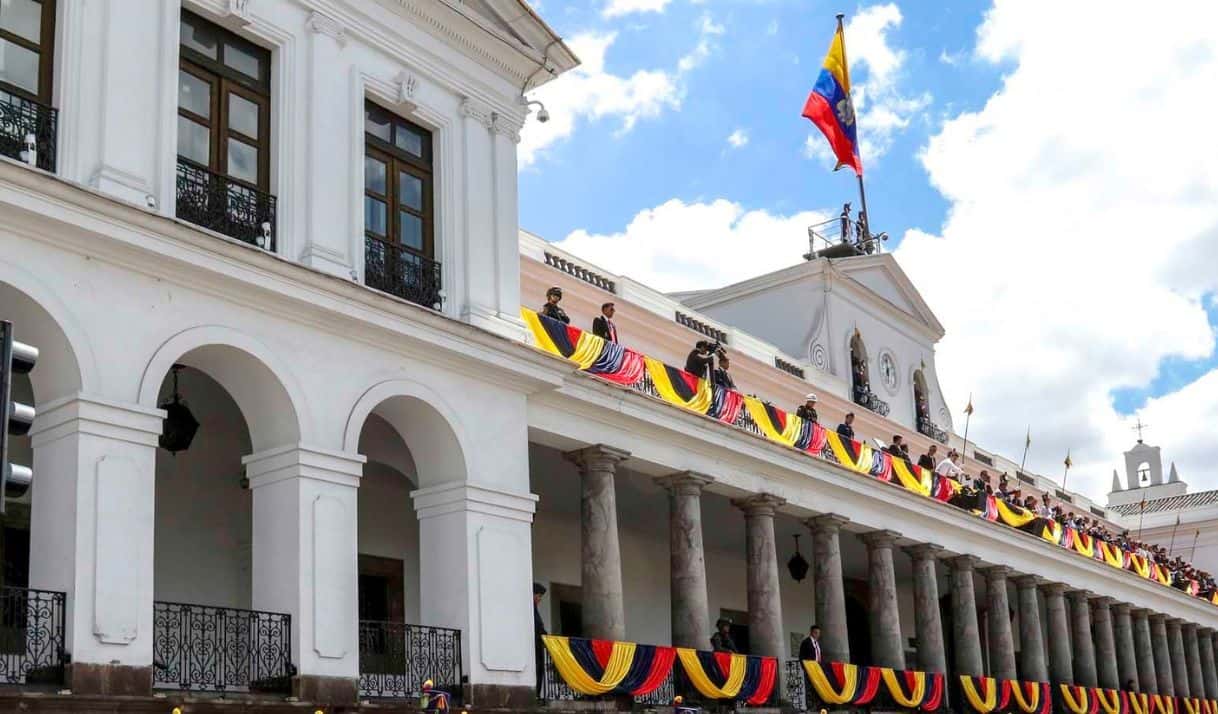
Ecuador declared the Cuban ambassador, Basilio Antonio Gutiérrez García, persona non grata and extended the measure to the rest of the island’s diplomatic mission accredited in its territory.
The decision was announced on March 4, 2026, and is based on Article 9 of the Vienna Convention on Diplomatic Relations, which allows the receiving State to declare the head of a mission or a member of the diplomatic corps persona non grata at any time and without the obligation to explain the reasons.
As part of the measure, the Ecuadorian government granted 48 hours for the ambassador and the 22 officials of the delegation to leave the country, starting from the official notification.
The Ministry of Foreign Affairs and Human Mobility specified that the deadline applies “in accordance with diplomatic practice,” and includes the head of mission and all officials mentioned in the official communication.
Gutierrez had headed the Cuban Embassy in Quito for four years, since September 2021. Before assuming the position of ambassador, he served as deputy chief of mission and worked in the Department of International Relations of the Party’s Central Committee, as well as at the Cuban Institute of Friendship with the Peoples.
In parallel with this decision, President Daniel Noboa terminated the duties of Ecuador’s ambassador in Havana, JoseMaría Borja.
So far, Ecuador’s Foreign Ministry has not issued a statement regarding the expulsion. However, the Cuban government news agency Prensa Latina confirmed the news.
Among those expelled are individuals who had already completed their diplomatic mission in December 2025, according to the embassy’s social media accounts.
The most recent precedent of a Cuban ambassador being expelled occurred in November 2025. At that time, the Peruvian government expelled the Cuban ambassador in that country, Carlos Zamora. According to the statement released by Peru’s Foreign Ministry: “based on what was addressed in that meeting, it is communicated that Ambassador Zamora ended his duties in Peru and definitively left the country,” without offering further details about the specific reasons for the decision.
In the weeks prior, several Peruvian politicians had requested the expulsion of the Cuban diplomat, whom they accused of allegedly being an intelligence agent who maintained contacts with left-wing political and social organizations with the supposed aim of “destabilizing democracy.”
According to the official website of Cuba’s Ministry of Foreign Affairs, the island maintains diplomatic presence with 127 states and international institutions, a figure that is disproportionate considering the country’s size and population. Cuban activists claim that the number of such missions responds more to intelligence purposes than to diplomacy.
For now, it is unknown whether this political move by Ecuador implies a rupture of relations between the two countries.
The Agencia Prensa Independiente published several photographs of the Cuban Embassy in Ecuador. In one of them, a person can supposedly be seen burning documents on the rooftop of the building. Military presence can also be seen at the entrance of the consular headquarters.
Ecuadorian President Daniel Noboa shared a video on the social network X showing staff during the burning.
The Cuban government strongly rejected the decision of its Ecuadorian counterpart in a statement. “This is an unfriendly and unprecedented act, which significantly damages the historic relations of friendship and cooperation between both countries and peoples,” declared the island’s Foreign Ministry. The regime added that its diplomatic representation complied with Ecuadorian laws and did not interfere in the country’s internal affairs.
This article was translated into English from the original in Spanish.






Comments
We moderate comments on this site. If you want to know more details, read our Privacy Policy
Your email address will not be published. Mandatory fields are marked with *
Todavía no hay comentarios.