“Mom, how much longer am I going to be here?” asks Jonathan Muir Burgos, a 16-year-old Cuban Christian and one of the regime’s youngest political prisoners, during early morning phone calls from Canaleta prison in Ciego de Ávila. That question encapsulates the anguish of a generation protesting blackouts, shortages, and the absence of freedom in Cuba. Jonathan’s imprisonment starkly contradicts repeated claims by Cuba’s unelected president, Miguel Diaz-Canel, that there are no political prisoners on the island.
Jonathan was arrested for participating in the March 13, 2026 protests in Moron, Ciego de Ávila. He now faces charges of “sabotage,” a vague and highly politicized offense frequently used to criminalize dissent. He is being held in Canaleta, one of Cuba’s harshest prisons.
Jonathan’s case reflects a broader reality in contemporary Cuba: young people are no longer a pillar of the political system but are increasingly becoming one of the main driving forces behind opposition to the regime.
We have not yet heard Jonathan explain, in his own words, why he joined the protests. Being held in a maximum-security prison leaves him with very little room to speak freely. Yet the injustices he has experienced throughout his short life help explain why he decided to take to the streets.
From an early age, Jonathan was stigmatized because of his Christian faith and his family’s religious beliefs. According to his father, Pastor Elier Muir, teachers mocked and marginalized him. At age 11, school authorities blamed him for the misconduct of other students in the classroom and treated the incident as a “political case.” His story illustrates how education in Cuba can function more as a tool of ideological indoctrination than as a social right.
Some time later, Jonathan’s father lost his job after refusing to collaborate with State Security, while the family became the target of hate rallies after founding the Tiempo de Cosecha church. According to Elier Muir, groups acting under State Security instructions would throw rocks at the family after religious services.
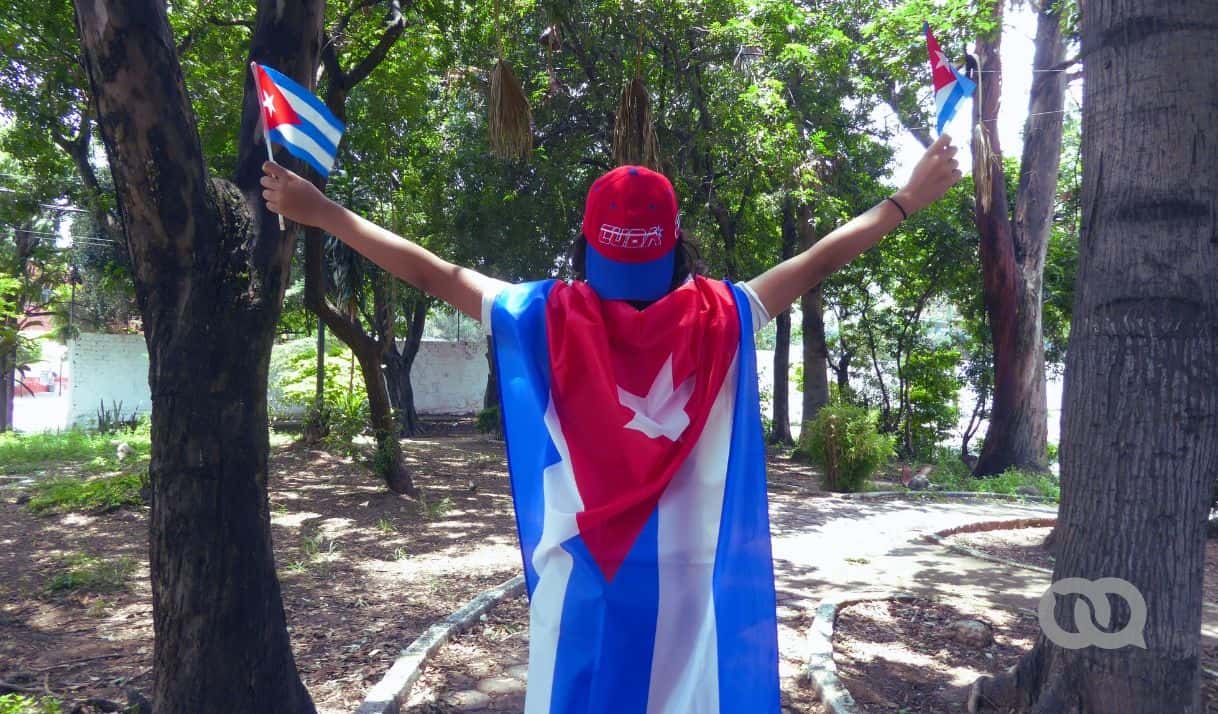
In this context, Jonathan’s participation in the Moron protests was the culmination of years of exclusion and silent resistance. His story unfolds alongside the emergence of a broader culture of protest in Cuba, where artists, students, and ordinary citizens have spent years demanding better living conditions, greater freedoms, democratic change, and the release of political prisoners.
As scholars such as Sidney Tarrow have noted, protest movements develop through shared symbols, collective identities, and recurring repertoires of resistance. In Cuba, a culture of protest has taken shape through the unifying power of the song Patria y Vida, the rise of social media activism following the expansion of internet access, and tactics such as livestreams, pot-banging protests, graffiti, sit-ins, and public denunciations. Together, these methods helped sustain civic mobilization after the July 11, 2021, protests despite severe repression. The Cuban Conflict Observatory has documented thousands of acts of protest and nonviolent resistance over the past six years, further illustrating the emergence of this protest culture.
One defining characteristic of Cuba’s recent protest movement has been the prominent participation of young people and minors, who have also become primary targets of government repression. In July 2022, Justicia 11J and Cubalex reported that of approximately 1,484 detainees linked to the July 11, 2021, protests, 166 were between the ages of 12 and 20, while 566 were between 21 and 35 years old. By April 2026, at least 33 minors were believed to be imprisoned or facing legal proceedings for political reasons, according to Prisoners Defenders.
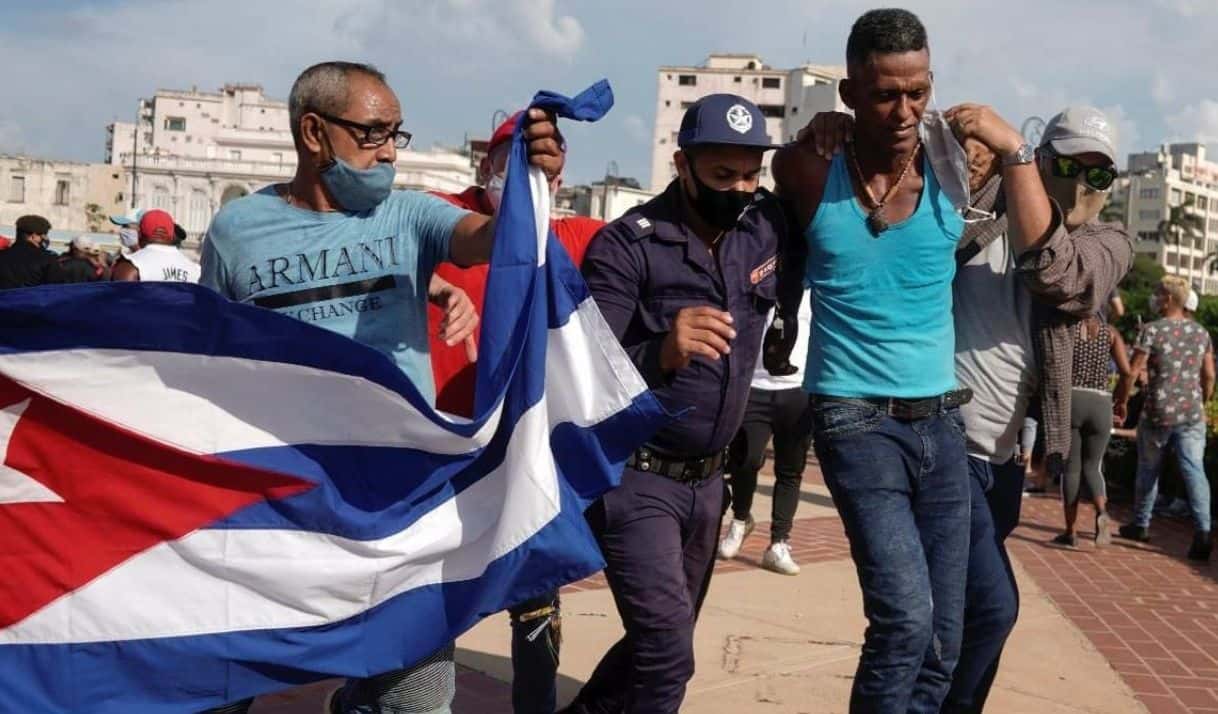
The Moron demonstrations deeply unsettled Cuba’s ruling elite. Led largely by teenagers and, according to recent reports, possibly the largest anti-government protests since July 11, 2021, they drew between 1,000 and 2,000 participants, according to eyewitness accounts. What began as a protest against deteriorating living conditions quickly escalated into a direct challenge to the country’s one-party system and governing ideology.
The protesters marched to the municipal Communist Party headquarters, occupied the building, threw documents and furniture into the street, and lit bonfires outside. The state responded with beatings, tear gas, police dogs, and gunfire. Four teenagers were arrested, along with a total of 16 demonstrators.
More than a spontaneous outburst of anger, the demonstrations represented a symbolic rejection of the political order, evoking the toppling of authoritarian symbols in other repressive contexts.
Authoritarian systems often target young people because they represent future leaders, organizers, and symbols of change. Jonathan’s ordeal clearly illustrates this dynamic. According to some reports, authorities denied him treatment for his chronic skin condition while forcing him to sleep on insect-infested mattresses. On social media, official government accounts also circulated AI-manipulated images intended to humiliate him and undermine his credibility.
Research on character assassination, however, suggests that such campaigns depend heavily on the credibility of those carrying them out—something the increasingly unpopular Cuban government appears to lack. Rather than discrediting Jonathan, the campaign against him has led to precautionary measures issued by the Inter-American Commission on Human Rights, as well as international denunciations by lawmakers, religious groups, and activists, and solidarity campaigns both inside and outside Cuba. In Moron, neighbors have even signed a public document defending Jonathan’s character and values.
But the criminalization of youthful dissent in Cuba is not simply an excess of an abusive authoritarian system. It also reflects a deeper political logic. From its earliest years, the Cuban regime built much of its legitimacy on the support of young people, portraying youth as the moral engine of the Revolution. In a speech delivered in 1962 at the closing of the First National Congress of the Union of Secondary School Students, Fidel Castro declared that “youth is like the thermometer that points toward justice, like the compass that tells us where justice lies,” arguing that the “purity” and “brilliance” of a revolution could be measured by the attitude of young people toward it.
Today, however, growing rejection of the system among younger generations points to a profound crisis of legitimacy. The same generation once invoked as proof of revolutionary vitality has become evidence of its erosion. Targeting younger generations serves a dual purpose: punishing dissent in the present and discouraging future civic action by silencing potential leaders and organizers.
Jonathan’s case reflects a broader pattern of mistreatment of minors detained in Cuba for political reasons. His detention and prosecution on “sabotage” charges, punishable by up to 15 years in prison, appear to contradict the United Nations Convention on the Rights of the Child, which states that the detention of minors should be used only as a measure of last resort and for the shortest possible period of time. Subjecting a 16-year-old to harsh prison conditions for peacefully protesting raises serious concerns under human rights and international law.
As Michel Foucault argued, modern power does not merely punish; it disciplines and seeks obedience through exemplary repression. In today’s Cuba, generational repression is not only about controlling the present but also about limiting what future generations believe is possible. Perhaps that is the regime’s deepest fear: not a particular dissident or movement, but an entire generation beginning to lose its fear.
This article was translated into English from the original in Spanish.




Comments
We moderate comments on this site. If you want to know more details, read our Privacy Policy
Your email address will not be published. Mandatory fields are marked with *
Todavía no hay comentarios.