
The lack of water in Havana is not a statistic: it is a routine.
Lucía*, 63, a retired teacher and resident of Centro Habana, lives on the top floor of an old building. From her doorway, she can see the building’s water tanks. When she hears the sound of water falling into them, she knows that, in theory, the supply has reached the building. But that does not mean it will immediately come out of the faucet in her apartment.
“It can take hours to rise,” she says.
While she waits, the day is organized around uncertainty: whether there will be water, whether there will be electricity, and how long either one will last.
Washing clothes, cooking, cleaning, or even bathing do not depend on a stable routine, but on a kind of daily calculation. “You live focused on that,” she says.
In Marianao, Mildrey, 56, lives a similar reality. Every time water arrives with pressure to the common pipe on the first floor, she begins carrying it upstairs in buckets to the second floor, where she lives.
Bucket by bucket, she fills bottles, pails, and any available container throughout the house. “There are days when the first thing I do when I get up is check whether there is enough water left to cook,” she explains.
The scene repeats itself in different municipalities of the capital: containers lined up in kitchens, bathrooms, and balconies; neighbors listening for sounds in the pipes; sleepless nights waiting for the hour when “they turn it on.”
Although a recent report by the official newspaper Tribuna de La Habana stated that municipalities such as Plaza, Marianao, and Centro Habana are among the least affected by shortages, testimonies collected by El Toque show that even in those areas service is unstable.
The so-called exceptions, in practice, stop seeming exceptional when viewed neighborhood by neighborhood.
In Alamar, Yanet González Herrera, 39, says the water crisis has also become a matter of money and connections. “If you have someone to call and money to pay, you solve it. Some people have a tanker truck brought in and fill their cistern within hours. Those living on a salary wait for it to drip drop by drop.” In her building, she says, they have gone several days with barely a trickle of water. “In the same neighborhood some have full tanks while others store water in soda bottles.”
The anxiety also affects family life. In San Miguel del Padrón, Daniela Estupiñán, 31, mother of a small child, explains that the uncertainty is constant. She wakes up in the middle of the night to fill buckets and tanks. “You don’t sleep peacefully here; you’re always waiting for the water,” she says.
200,000 People Affected
According to figures provided by executives of the state company Aguas de La Habana, some 200,000 people in the capital are currently suffering some type of disruption in water service.
That figure represents around 11% of Havana’s population, but the daily impact goes far beyond the number.
It means “prolonged outages, continuous failures, and delivery cycles” that are increasingly longer.
In some areas, such as parts of Aldabo, water can take nearly a month to arrive.
The Official Explanation
At a press conference with state media, Aguas de La Habana General Director Yosvany Rubi Bazail and Aqueduct Director Abel Fernandez Diaz attributed the crisis mainly to the “deterioration of infrastructure.”
According to them, 40% of disruptions are due to “deficiencies or collapse of pumping equipment,” while 39% are linked to electrical failures. The rest are related to breaks in mains, leaks, and low pressure.
The technical explanation is familiar to residents, who have spent years living with breakdowns, leaks, and aging pumping systems.
What has changed now is the intensity.
The combination of a deteriorated hydraulic network and blackouts has deepened a crisis that was already part of the city’s daily life.
A Structural Problem
Officials also announced the installation of new pumps in areas such as Pogolotti, La Güinera, Cotorro, San Francisco, and Tarara, as well as repairs to equipment in places like La Fortuna.
This is being accompanied by the addition of generators to keep some supply sources and pumping stations operating, although nationwide the impact on the distribution system remains minimal.
The head of the National Institute of Hydraulic Resources (INRH), Antonio Rodriguez, stated that pumping installations across the country “total 4,155 between working and reserve positions. Of that total, 3,508 are operating, 567 lack equipment, 1,331 have more than ten years of use, while 250 fail to meet hydraulic parameters.”
The Cuban Citizen Audit Observatory, in its report The Water Problem in Cuba, published in March 2024, warned that “water service has deteriorated due to lack of maintenance of infrastructure, including failure to repair pumps and pipelines and poor management of water resources.”
According to the independent organization, “this has led to problems such as contamination of water sources, salinization, and the loss of up to 60% of pumped water due to leaks in distribution networks.” In addition, wastewater treatment is deficient and contributes to environmental pollution.
Water supply also depends heavily on the performance of the electrical system.
In other words, access to water remains tied to the stability of electric power.
For residents, that translates into double uncertainty: without electricity there is no pumping, and without pumping there is no water.
“If there’s no power, you already know it’s not going to rise,” summarizes Mildrey.
Living While Waiting
The drinking water supply crisis is worsening not only in the capital; the situation is similar, and in many cases worse, in the rest of the country. Among the provinces facing the most critical scenarios are Holguin and Las Tunas, according to authorities. State media reported in September 2024 that more than 700,000 people were affected by unstable supply provided by state companies. Since then, the number has likely grown, although there are no updated official figures, given that there have been no significant investments and the economic crisis has worsened.
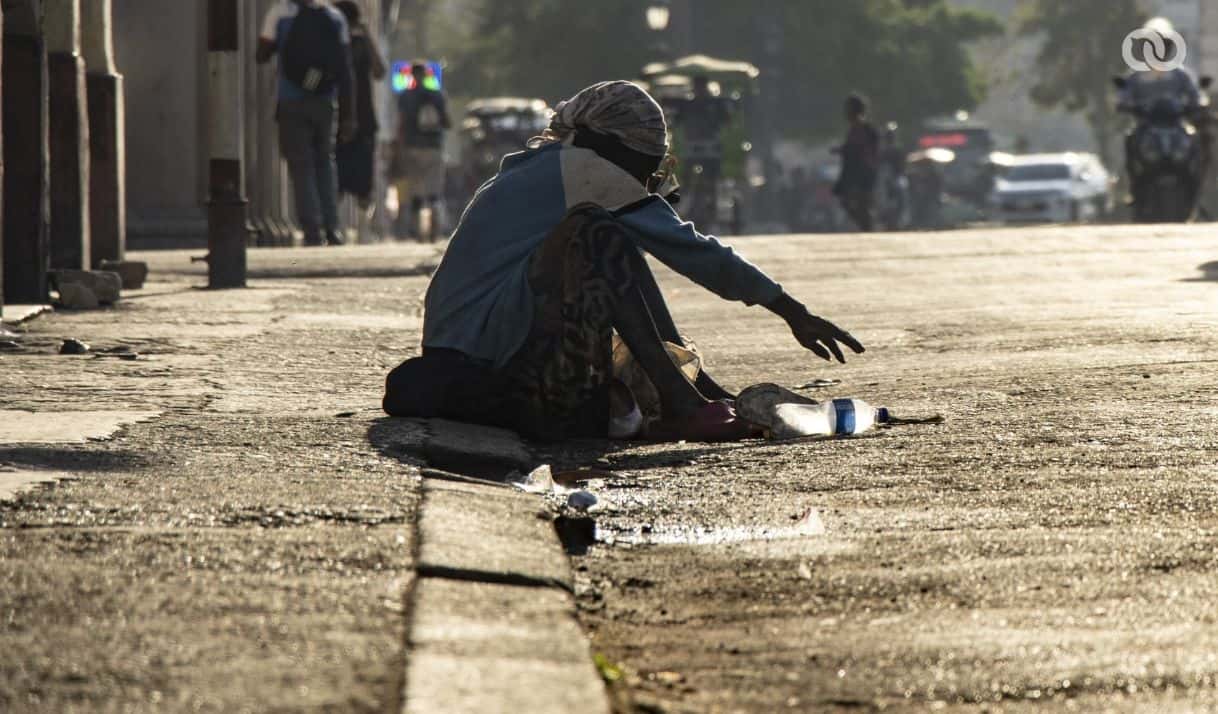
Beyond the figures and official explanations, the problem is measured in hours of waiting, in buckets carried up dark stairways, in food that cannot be cooked, and in entire days reorganized around a dry faucet.
“You spend more time without water than with it,” says Lucía.
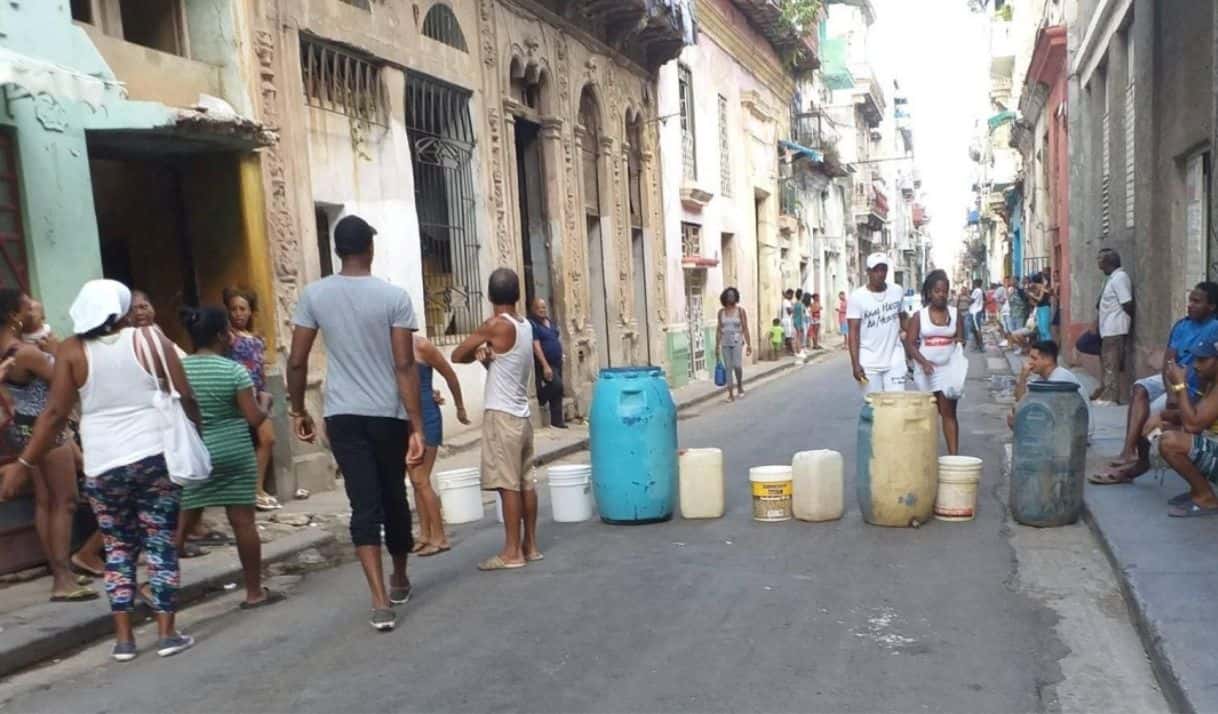
In several neighborhoods of Havana and other provinces, citizens have taken to the streets in recent years to protest the lack of water supply. They have blocked streets with buckets on the ground, placed improvised signs, and banged pots and pans to make visible a crisis that cuts across daily life. The protests denounce not only scarcity, but also abandonment of hydraulic infrastructure, the lack of official responses, and the unequal distribution of a basic resource.
While officials speak of new pumps, rescue plans, and redistribution of equipment, in many Havana households the routine remains the same: waiting.
Waiting for the electricity to return, for the pump to be turned on, for the water to rise.
And then waiting, once again, for it not to disappear.
This article was translated into English from the original in Spanish.




Comments
We moderate comments on this site. If you want to know more details, read our Privacy Policy
Your email address will not be published. Mandatory fields are marked with *
Todavía no hay comentarios.