

The Cuban countryside is facing an unprecedented production crisis, with drastic harvest and animal yield reduction in nearly every sector. In that context, the government has once again modified the agricultural legal framework. The changes have to do with the “wholesale and retail commercialization of agricultural and forestry products” and “production contracting” to replace the regulatory system in force since 2021.
According to the authorities, this is “a more flexible food distribution system, with participation by state and non-state producers, under the strategic planning of the State.”
Will it be enough to bring food to the table? A reading of the decree and resolution published on April 9, 2026, along with expert opinions, inspires more skepticism than confidence in positive results.
What’s New
The first and most relevant change for the individual producer is the elimination of the transport authorization once contractual deliveries to the State have been fulfilled. Under the repealed 2021 decree and its regulations, anyone wishing to market surplus goods elsewhere needed a permit issued by territorial authorities, a requirement that in practice generated bureaucracy, informal costs, and arbitrariness.
The new regulation replaces that authorization with an internal certification from the cooperative or company linked to the producer. It is a positive step, though insufficient, because it leaves intact the producer’s dependence on that cooperative or company to certify compliance.
Another change is the formal incorporation of the forestry sector into the agricultural commercialization system. The previous regulation only covered agriculture; forestry products operated under scattered rules. The unification makes technical sense and should facilitate oversight.
In addition, Public Procurement Committees for “social consumption entities” (hospitals, adult lunch halls, schools, etc.) are consolidated. While these already existed, what changes in 2026 is that now it specifies that the Committee must have an odd number of members and that the president decides whether the bidding process is open or closed.
The bidding mechanism works through calls under equal conditions for potential suppliers, evaluation of offers, and preservation of records for five years.
As for prices, there will be three categories: centralized, negotiated, and by agreement. Differentiated prices are also introduced for organic products and agroecological certification.
What Remains the Same: The State as Final Arbiter
These days, some interpretations have assumed that this package of regulations eliminates the State monopoly over agricultural commercialization by ending the exclusivity held by the state procurement system. However, that assessment is imprecise. This is not a deep reform that cedes control, but rather a partial flexibilization.
The language is that of controlled opening. It states as a principle the “regulation and control of the State with respect to production, contracting, the establishment of priorities in the destinations of agricultural and forestry products; the balances of these products, their prices, quality and safety in commercialization, access to and consumption of food under exceptional conditions, planting, and land use.”
In the opinion of economist Pedro Monreal, the new regulations “fall far short of being a market reform. They add degrees of flexibility to those initiated earlier, but while maintaining the state monopoly over agricultural trade.”
The provincial governor approves the network of commercialization establishments. The Contracting Committee, chaired by the governor or mayor, which already existed under the 2021 decree, now includes participation by the representative of Urban, Suburban, and Family Agriculture in price analysis, and sets prices for non-centralized products. Planning tools rooted in the Soviet model continue determining what is produced, how much, and for whom, at municipal, provincial, and national levels.
Although many countries regulate food chains, what is relevant in Cuba is that the new regulation expands the number of actors authorized to market products without changing the mechanisms by which the State defines what can reach the market and at what price.
According to Monreal, since the state enterprise is “a minor actor in production,” the State’s main mechanism “for imposing a centrally planned system” is commercialization.
The coexistence of private small and medium-sized enterprises with the state Acopio structure is designed under a principle of “harmonious coexistence and competitiveness regime”, but Acopio retains considerable structural advantages: its network of warehouses, markets, and distribution centers built over decades with public financing.
The new regulation maintains that companies in the agriculture system and “other forms of commercialization” manage wholesale markets, and that provincial governments set the minimum purchase limit to qualify as a customer. That threshold, which already existed in 2021, is one of the concrete mechanisms that can continue marginalizing small actors.
“The new regulations for agricultural commercialization essentially ensure monopolistic control over price formation and fixing by a State so dominant that it distorts market functioning,” Monreal explains.
For the expert, failing to “de-statize” the assets of state procurement companies through sale or lease “reflects the conservative posture [of the authorities] regarding agricultural reforms, overlooking that handing agricultural production to the private sector has been key for national food production.”
The Context the Regulation Cannot Ignore
Cuba has modified its agricultural legislation in short cycles during the last five years. Each time, greater “flexibility” is announced, but the result is a more complex legal framework than before, with more authorized actors but also more layers of supervision, registration, and certification.
The problem is not legal in origin, but structural: Cuban agricultural production has been in sustained decline for decades.
Cuba imports around 80% of the food it consumes, according to the Food and Agriculture Organization (FAO). In that context, a regulation that improves the logistics of marketing surpluses, which are increasingly smaller—has limited reach. The legal framework may appear more modern, but the underlying problem is that the land keeps producing less.
For that reason, experts such as economist Ricardo Torres believe that the new decree and accompanying resolution “do not alter the central problems” of the farm sector.
“Price setting continues under a predominantly administrative logic (…) [and the regulation] places too many responsibilities on weak territorial structures, ranging from balances and destination priorities to market control and price monitoring,” Torres wrote in the latest edition of Cuba Economic Review, a specialized bulletin of the Cuba Study Group.
In theory, the new policy is to facilitate faster delivery of what is produced to consumers with less bureaucratic intermediation. Eliminating transport authorization, formalizing institutional consumption through bidding, and requiring banking of transactions are measures with real potential, though their effect will depend on implementation—which in Cuba has historically been the weakest link in the regulatory chain.
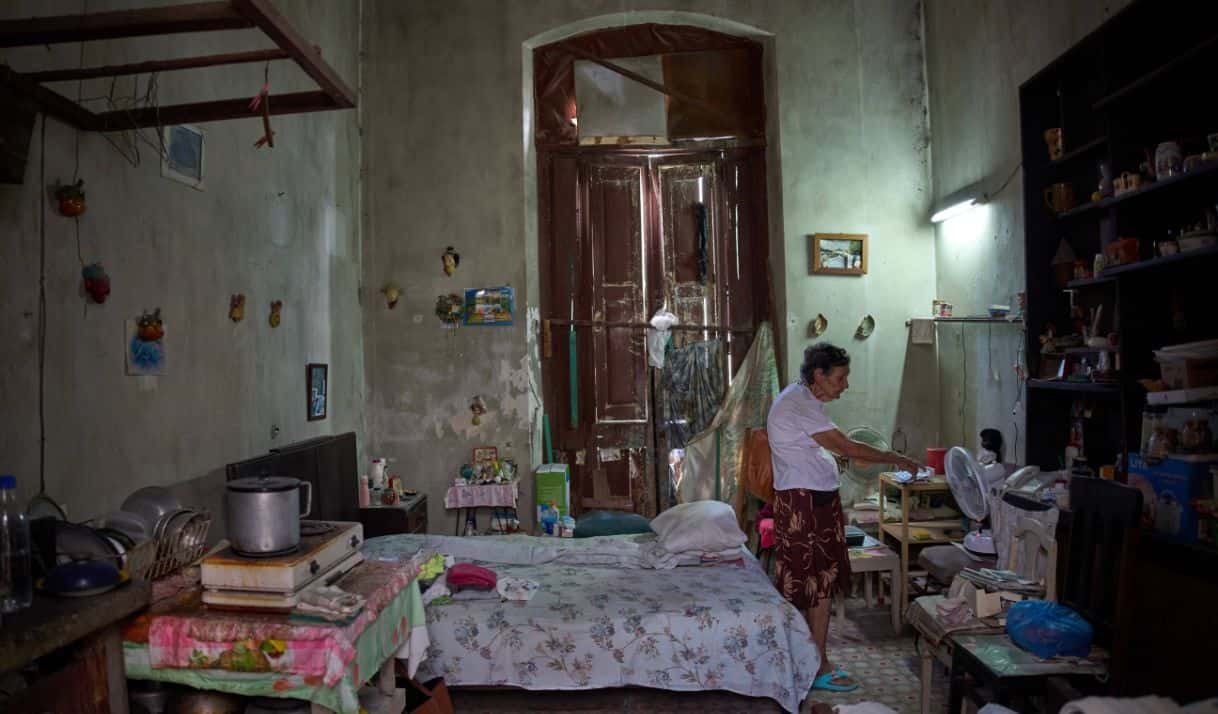
Meanwhile, food insecurity affects most families in the country. A survey carried out by Cubadata and the independent outlet Diario de Cuba between February 23 and March 13, 2026, found that 78.2% of the 1,788 Cubans who participated said that someone in their household skipped at least one meal a day because they did not have food.
This article was translated into English from the original in Spanish.




Comments
We moderate comments on this site. If you want to know more details, read our Privacy Policy
Your email address will not be published. Mandatory fields are marked with *
Todavía no hay comentarios.