
Faced with the largest and deepest crisis in the island’s history, the Cuban government has decided to review its price cap policy. This and other measures were announced by the designated president, Miguel Diaz-Canel, in a speech on June 17, 2026, during a plenary session of the Central Committee of the Communist Party.
“Price caps, in practice, failed to contain inflation. They often led to the disappearance of products, diverted into illegal markets, as well as higher prices, lower tax revenues and an impossible race between real prices and administrative decisions that always arrived too late,” Diaz-Canel explained.
However, the observations the ruler presented as a revelation had already been voiced by experts for many years. As recently as September 2025, the state press was announcing yet another round of price controls on agricultural products. Now, Díaz-Canel shared another of his “discoveries”: “If food is available on the free market, prices will inevitably go down.”
At the end of June 2024, the government imposed price caps on several essential products sold by private businesses. As El Toque reported at the time, government officials pressured private business owners during a meeting to enforce those controls.
“What we are proposing here is an orderly system, so that there is the greatest possible supply of goods and services at appropriate prices for the population, and so that everyone contributes what they are supposed to contribute,” Díaz-Canel explained during a session of the National Assembly in July 2024.
At that same Assembly meeting, Prime Minister Manuel Marrero Cruz described the economic situation as a “war economy” and added: “We need planning, and we need even more control.” Neither he nor Díaz-Canel offered a concrete strategy to increase production, attract investment, or correct the macroeconomic imbalances fueling inflation.
“It is highly inconsistent to promote the idea that price caps and bureaucratic inspections can effectively contain inflation in an economy with low productive capacity and enormous macroeconomic imbalances,” economist Pedro Monreal said in response to the 2024 control measures.
More Control, Fewer Products
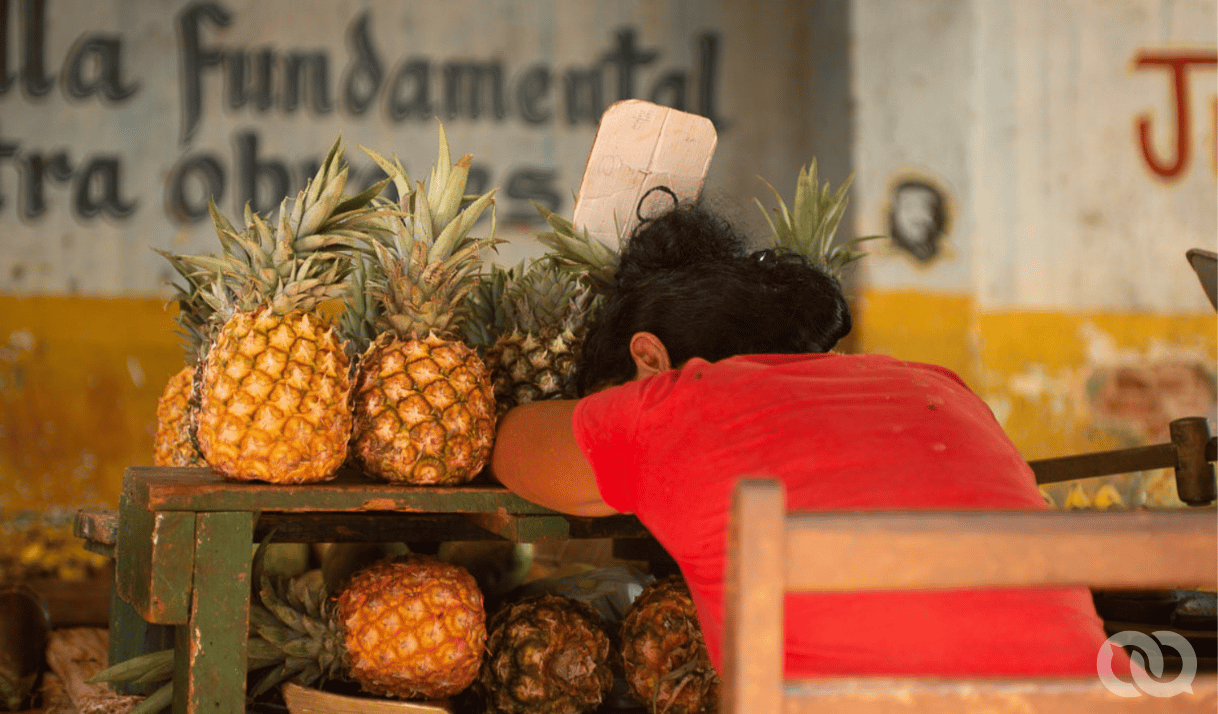
This is not a new issue. After Hurricanes Gustav and Ike in 2008, maximum prices were established for 16 products, but the measure led to reduced supply and a decline in the quality of products available in markets.
Later, during the initial expansion of the private sector, authorities questioned the prices set by new private businesses and approved Decree 318 in 2013, once again limiting farm product prices. Nevertheless, prices continued to rise.
In 2016, the policy was extended to non-agricultural cooperatives. Although more than 21,000 fines were issued in 2017 for violations of regulations, these actions did not translate into improvements in citizens’ well-being or a recovery in the purchasing power of wages, highlighting the limited effectiveness of price controls.
Experts have repeated their warnings for years. The only thing that seems to have changed is whom the State blames for shortages and inflation. In 2020, before private businesses even legally existed, the targets were street vendors and agricultural market workers. Angel Marcelo Rodriguez Pita, director of the Center for Local Development Research, warned at the time that the measure would “further suppress the domestic market.”
Ironically, government officials have acknowledged the contradictions in official policy while explicitly refusing to make deep reforms. During meetings with business owners, representatives of the Ministry of Finance and Prices admitted that the high prices in private stores are closely linked to the elevated import costs these businesses face. Nevertheless, in public discourse, the government has continued to attribute inflation mainly to private sector “speculation,” despite the fact that most economists point to the enormous fiscal deficit, the money circulating, and the collapse of domestic production as the fundamental causes.
Since late 2025, the offensive against the private sector has intensified. Following Prime Minister Manuel Marrero’s presentation of a plan to combat “economic distortions” and “organize the private sector,” authorities have detained some business owners on tax evasion charges, imposed travel restrictions on tax debtors, and approved new limitations on contractual relationships between state and private companies.
Several of those partnerships between entrepreneurs and the State had helped address critical shortages in the economy. In some regions, for example, private importers contributed to securing flour for bread production for the population. Even so, the government has insisted on restricting these links while demanding a greater role for the socialist state businesses—the very sector that has led decades of low productivity.
In previous meetings of the Ministry of Finance and Prices, Diaz-Canel had urged the population to help monitor prices because of the shortage of state inspectors. Both he and Marrero acknowledged the public’s “justified dissatisfaction” with the sustained rise in the cost of goods and admitted the lack of “concrete results” in the fight against inflation.
They also recognized an elementary truth: the only lasting solution is to produce more goods and services. However, official references to that goal usually devolve into propagandistic rhetoric and calls for political unity or popular participation, without explaining how to effectively increase supply in an economy marked by chronic blackouts, lack of financing, fuel shortages, and a continuing exodus of workers.
Meanwhile, the measures implemented by the government have contributed to further price pressures. The so-called distortion-correction package, announced at the end of 2025 and partially implemented in 2026, included fuel price increases and greater dollarization of certain markets. The result was a further rise in transportation costs and another surge in foreign currency exchange rates on the informal market.
After years of criticism, with inflation now having eroded wages to historic lows, production remaining stagnant, and more than one million Cubans having left the country in just a few years, the authorities are finally acknowledging mistakes that economists, entrepreneurs, and ordinary citizens have been pointing out for a long time.
The unanswered question is whether this acknowledgment will be accompanied by reforms capable of transforming an economy in free fall, or whether it will be merely another chapter in a long sequence of delayed lessons and incomplete corrections.
This article was translated into English from the original in Spanish.