

There are crises in which the economy slows down and prices tend to fall. But there are others in which the opposite occurs: the country produces less, products become scarce, and the cost of living keeps rising. Some economists believe this latter scenario is precisely what is beginning to happen in Cuba.
What Is Stagflation?
Stagflation is one of the most difficult economic crises to manage because it combines two problems at once: high and persistent inflation (a sustained rise in prices) and very low or negative economic growth. In practice, stagflation can mean shuttered factories, blackouts that slow businesses, falling investment, or shortages of goods, while prices for what’s available of food or transportation, for example, continue to increase.
Economists consider stagflation an especially unusual phenomenon because, in theory, a weak economy should reduce pressure on prices. In a stagflationary context, the economy slows down, money loses value, and life continues becoming more expensive.
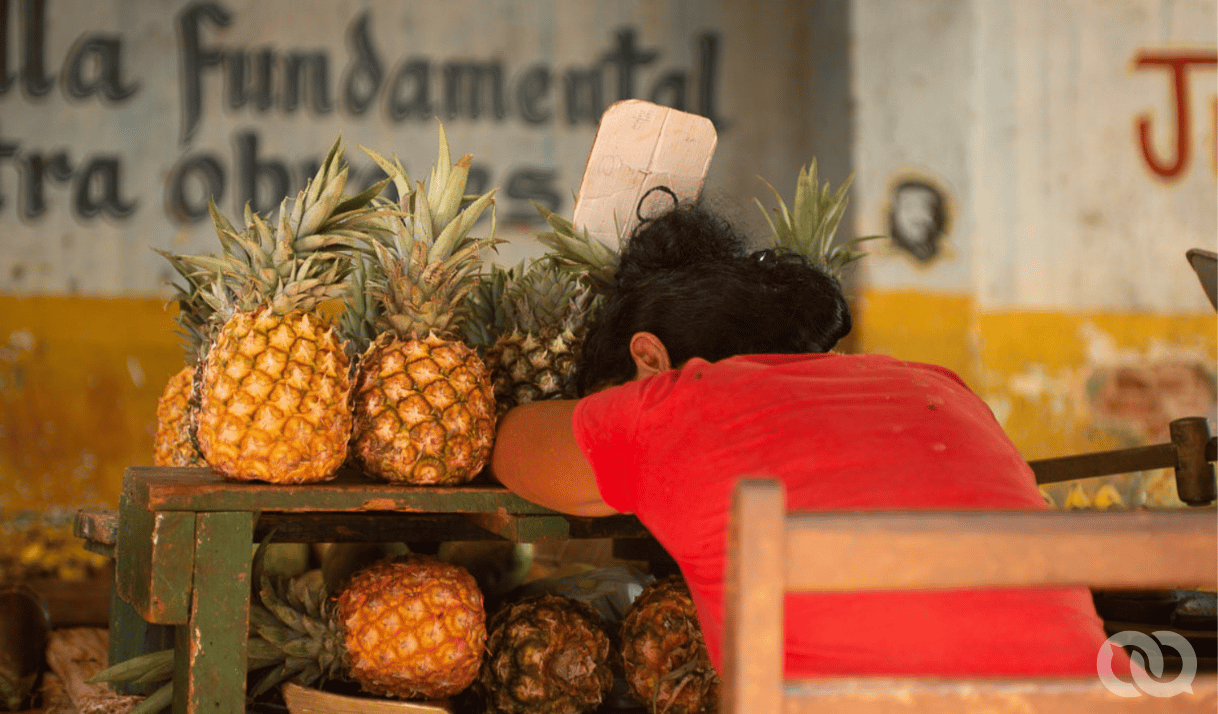
For example, a family may reduce its purchases because wages are no longer enough, yet still find that rice or cooking oil costs more every month. If a worker previously could partially fill a grocery bag with 8,000 pesos (16 USD) and now can only buy half as much, their income has lost real value even though the salary amount itself has not changed.
The combination of high prices, lower production, and declining purchasing power usually translates into more poverty, less ability to save, and a permanent feeling that “your money buys less and less”.
Why Do Some Specialists Believe Cuba Is Entering a Period of Stagflation?
At the beginning of May 2026, it was recorded for the first time this year that the cumulative increase in consumer prices (7.18%) exceeded that of the same period in 2025 (6.56%), according to official Consumer Price Index data.
Economist Pedro Monreal warns that this, “combined with the collapse of gross domestic product (GDP), would indicate uncontrollable stagflation.” “The likely fall in GDP in 2026, which could be at least 15%, would combine with a notable rise in prices that would not only wreck the economy and destroy social well-being, but also hinder economic policy,” the expert stated.
Monreal explains that the forecast of roughly 15% GDP contraction in 2026 is considered a decline comparable to the worst period of the “Special Period,” although “an even greater contraction is likely because the current crisis is more stubborn than the crisis of the 1990s.”
Although other projections are less severe, they also point to significant deterioration in the Cuban economy. The country appears as the worst-performing economy among the 33 analyzed by the Economic Commission for Latin America and the Caribbean for 2026, with an estimated GDP contraction of -6.5%. The forecast places the island far below the rest of the region, including the other two countries expected to post economic declines this year: Haiti (-1.4%) and Jamaica (-1.0%), whose contractions would be smaller.
If People Have Less Money, Why Does Everything Keep Getting More Expensive?
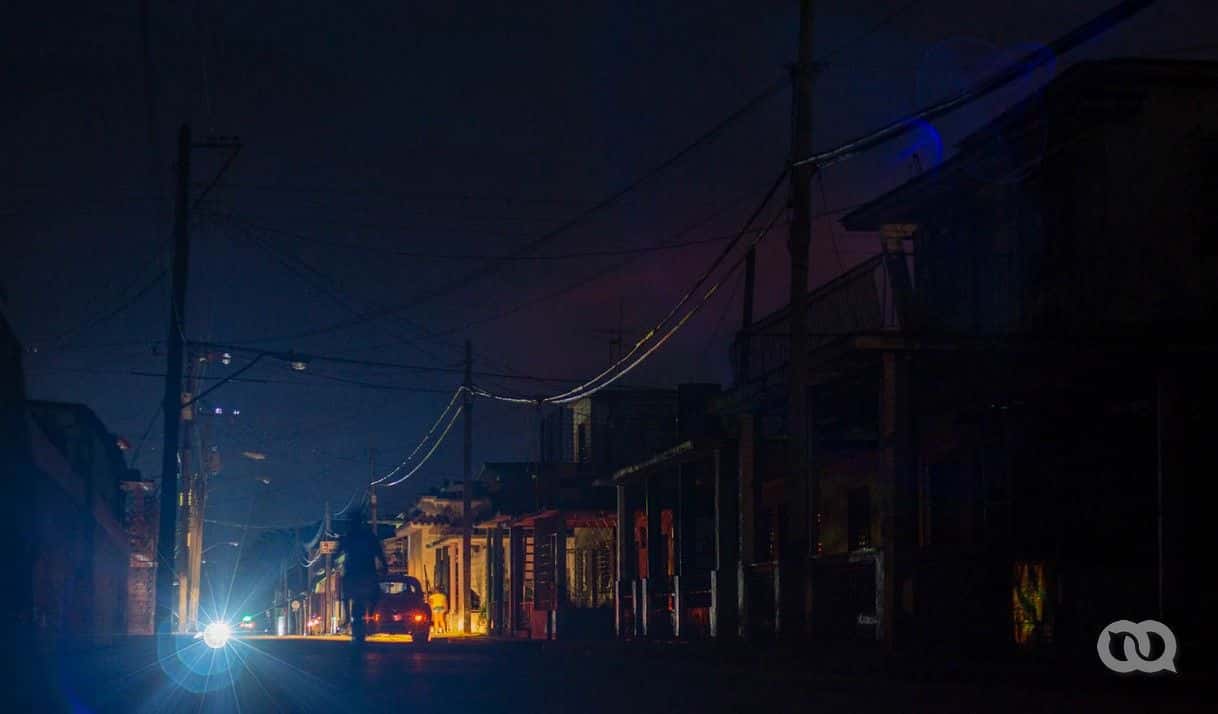
Because in Cuba not only has families’ purchasing power declined: the quantity of available goods and services has also fallen. The economy produces less, there are fuel shortages, frequent blackouts, and difficulties importing food, raw materials, or basic supplies. When fewer products are circulating, prices tend to rise even if the population has less purchasing power.
This is compounded by the sharp depreciation of the Cuban peso on the informal market. According to the Currency and Finance Observatory (OMFi), in April 2026 the dollar reached 535 pesos on elTOQUE’s reference rate, an increase of 45.4% compared to the same month in 2025. Meanwhile, the euro rose from 580 to 605 pesos, a monthly increase of 4.3% (+25 pesos).
OMFi also projects further depreciation of the peso in May, with an estimated exchange rate of 562 pesos per dollar.
Economist Pavel Vidal, senior researcher at OMFi, notes that “year-over-year data suggest a resurgence of inflationary pressures in 2026 amid the complex scenario facing the Cuban economy.” “Signals from the informal currency market in 2026 confirm that the disinflation process (a slower pace of price increases) and exchange-rate moderation observed since 2023 have come to a halt,” he explained.
According to official data cited by the Observatory, Cuba received 82% fewer international visitors in March 2026 than during the same month the previous year, further reducing the inflow of foreign currency into the economy. Vidal warns that the decline in tourism and reduced foreign currency inflows limit the country’s ability to import and stabilize the exchange market. In that context, demand for dollars and euros increases as a way to protect the value of money, which continues pushing exchange rates and inflation upward.
In an economy highly dependent on imports and in which many prices are calculated using the informal dollar rate as a reference, the depreciation of the peso ultimately drives up the cost of food, medicine, and transportation.
For example, if a truck needs more time or money to move goods due to fuel shortages, that cost is eventually reflected in the final price of products.
Why Is It So Difficult to Escape Stagflation?
Stagflation is one of the most complex economic scenarios because measures that help solve one problem can worsen the other. If a government tries to curb inflation by restricting spending, reducing the money supply, or tightening credit, the economy may sink even further: consumption falls, investment declines, and production decreases. But if it does the opposite and tries to stimulate the economy with more spending or liquidity, pressure on prices and the exchange market increases, according to economic analyses.
In Cuba, room for maneuver is even more limited because of the lack of foreign currency. The energy crisis and productive deterioration make it difficult to restore the supply of goods and services, while economic uncertainty discourages new investment, despite the government’s insistence on attracting Cuban investors living abroad.
Economists and international organizations agree that this type of crisis usually creates a difficult-to-break “vicious circle”: lower production causes greater scarcity; scarcity pushes up prices; inflation erodes purchasing power; and that, in turn, weakens the economy even further.
The International Monetary Fund has warned in various analyses that fighting inflation in contexts of low growth creates major tensions for governments and central banks, because policies aimed at stabilizing prices usually slow economic activity even more.
The difficulty increases in economies highly dependent on imports and affected by external or energy shocks.
This article was translated into English from the original in Spanish.




Comments
We moderate comments on this site. If you want to know more details, read our Privacy Policy
Your email address will not be published. Mandatory fields are marked with *
Todavía no hay comentarios.