No one should be imprisoned for expressing their ideas or for reporting on what those in power seek to conceal. Freedom of expression is a right, not a concession granted by the government. The imprisonment of journalist Henry Constantín once again demonstrates that the Cuban regime treats freedom of expression as a privilege conditioned on obedience.
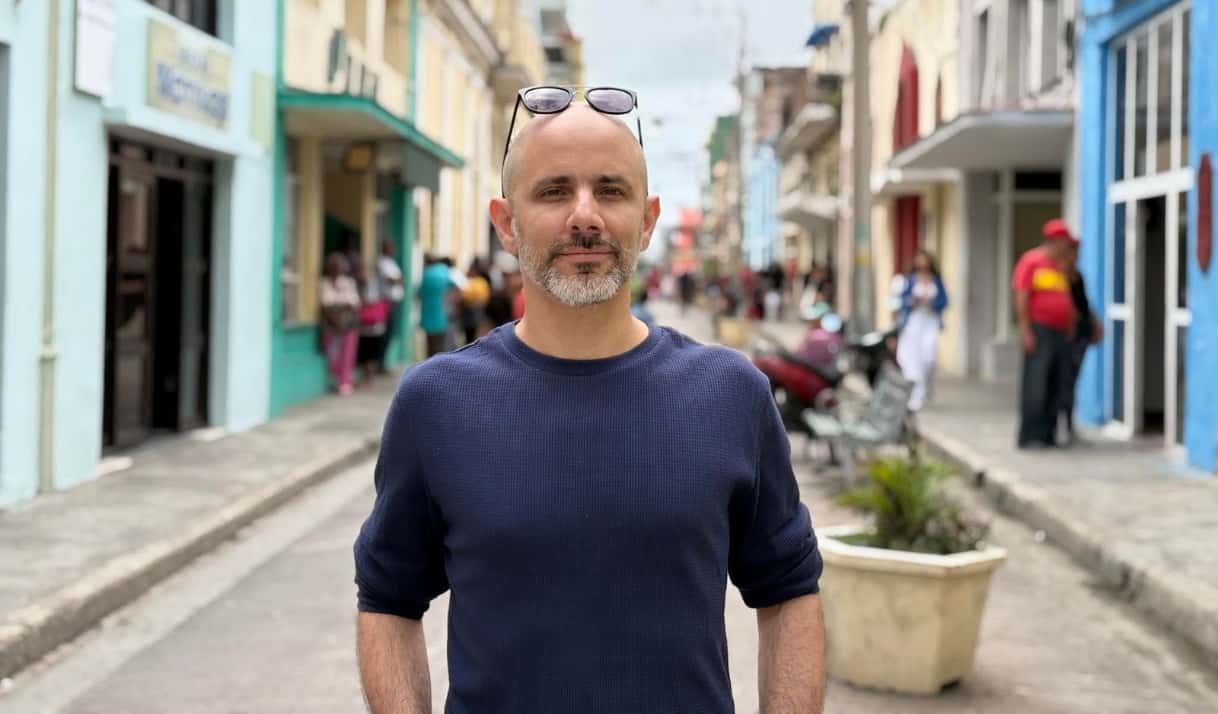
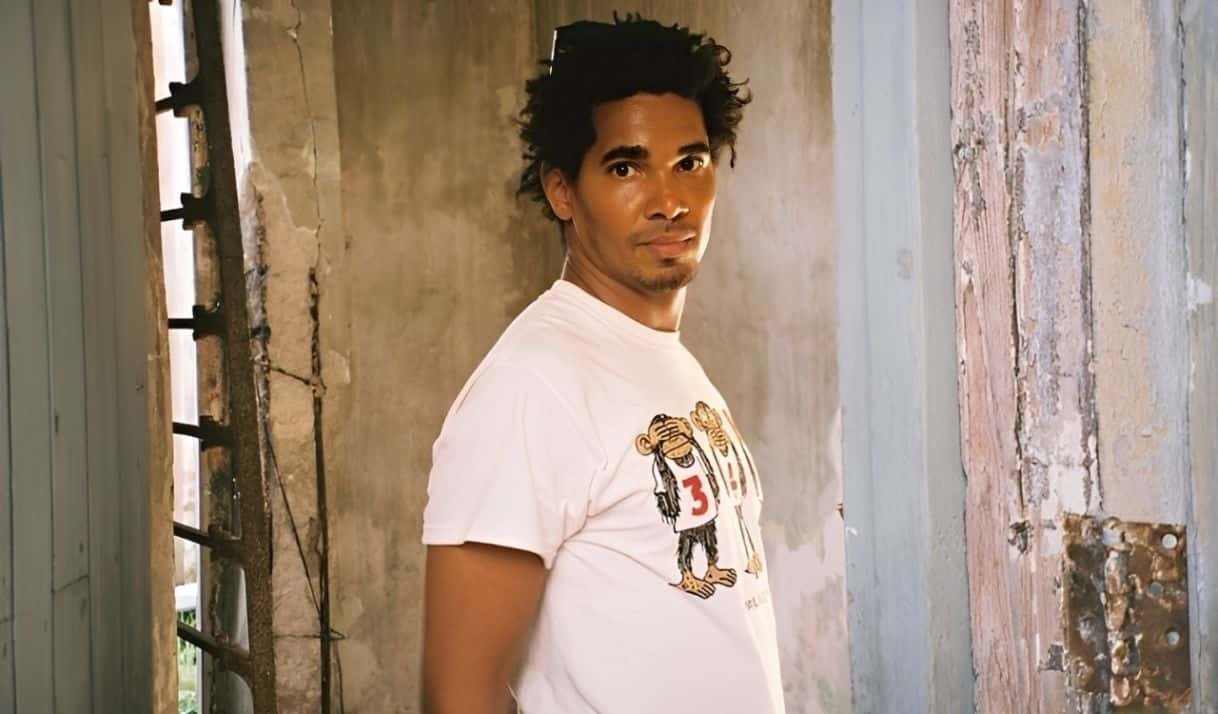
Henry Constantín, director of La Hora de Cuba and regional vice president of the Inter American Press Association (IAPA), was detained on September 16, 2026, in Camagüey. Authorities have ordered his transfer to Kilo 7 prison under pretrial detention. The official justification was that he failed to appear in response to a summons from the Directorate of Identification, Immigration and Foreigners. The formal charge: “disobedience.”
The offense is set forth in Article 189 of Cuba’s current Penal Code. But invoking a legal provision is not enough to make imprisonment legitimate. Even less so when we are talking about a country like Cuba.
According to information released about the case, Constantín’s defense was unable to file a writ of habeas corpus on Friday, September 18, because it was a “change of duties” day. They had to wait until Monday the 21st. As a result, the hearing to rule on the habeas corpus petition—which, under Cuba’s Criminal Procedure Law, should have been held before Friday the 25th—did not take place either.
Cuban judges are judges, formally speaking, from Monday through Thursday. On Fridays, they “change duties.” For that reason, the Provincial Court of Camagüey informed Henry’s relatives and defense attorneys that the essential habeas corpus hearing, which should have been held within 72 hours of the filing of the petition, would take place four or five days later—if they decided to hold it at all.
Such uncertainty is unacceptable. Habeas corpus exists to subject a deprivation of liberty to urgent judicial review. Its effectiveness depends on that review taking place as quickly as possible. Every delay prolongs the confinement and the risk faced by a person who has been unjustly detained.
Yet in the same country where an article of the Penal Code is quickly invoked to justify imprisoning a journalist, there is no urgency for a judge to assess the violation of his rights. It might sound like a euphemism, but it is not: many years ago, Cuban judges changed their duties. In many cases, they are mere legitimizers of a despotic power in which the law neither limits that same power nor, much less, guarantees the rights of citizens.
The Penal Code being used to prosecute Henry Constantín also provides penalties for officials who maliciously delay the processing of cases, unjustifiably fail to fulfill their duties, or issue rulings that violate the law. Despite this, none of the judges who have delayed reviewing Henry’s imprisonment share a cell with him. Because in a context like Cuba’s, the law is used to punish those who question those in power, but rarely reaches those who serve or exercise that power.
Faced with such a situation, the only option is disobedience, because disobedience is the only way to exercise one’s rights.
In the eyes of the Cuban regime, Henry Constantín and the rest of us independent journalists have been disobeying for years. For a government that demands absolute obedience, the simple act of reporting freely is insubordination. For that reason, anyone who wants to practice independent journalism in Cuba will have to disobey the regime that prevents it.
This is not an idea of our own. Martin Luther King Jr. wrote it from a jail cell in 1963. In his Letter from Birmingham Jail, he said: “One has a moral responsibility to disobey unjust laws.” And, invoking Saint Augustine, he recalled that “an unjust law is no law at all.” Four decades earlier, while being tried for sedition before a British colonial court, Mahatma Gandhi had said something similar: “Non-cooperation with evil is as much a duty as is cooperation with good.”
Both understood that unjust regimes relabel rights as crimes. What in a free society is called exercising freedom of expression is called “disobedience” in the vocabulary of totalitarianism. It is the Newspeak of power: labeling as a crime what in many democracies is considered a natural and universal right.
Likewise, the pretrial detention imposed on Henry Constantín marks a qualitative escalation. These are no longer the brief detentions of a few hours that he has endured so many times. The regime has decided that it will no longer tolerate his determination to continue exercising his rights. If it previously tried to silence him through electricity and internet cuts and detentions, it is now resorting to the most absolute form of deprivation: the complete loss of freedom. Moreover, it does so under the euphemism of “temporary” or “provisional.”
Pretrial detention is an exceptional precautionary measure that allows a person to be deprived of liberty before trial when there are specific risks that justify it, such as flight or obstruction of the investigation. It does not constitute punishment in advance, nor does it eliminate the presumption of innocence.
In Cuba, however, it is used for another purpose: to keep a person like Henry Constantín behind bars without having to bring him to trial and without exposing the regime imprisoning him to the public scrutiny that, for any political system, comes with putting a journalist in the defendant’s dock.
Henry Constantín is not in pretrial detention. He is being unjustly and illegitimately imprisoned.
We demand that pretrial detention not be used to prolong the repression of Henry Constantín for weeks or months. We demand his immediate and unconditional release so that pretrial detention does not become the instrument that allows the Cuban regime to achieve what it has so far failed to accomplish: breaking the journalist’s will and forcing him to choose between prison and exile.
Practicing journalism should never be considered disobedience. Because informing the public is not a crime.
This article was translated into English from the original in Spanish.





Comments
We moderate comments on this site. If you want to know more details, read our Privacy Policy
Your email address will not be published. Mandatory fields are marked with *
Todavía no hay comentarios.