

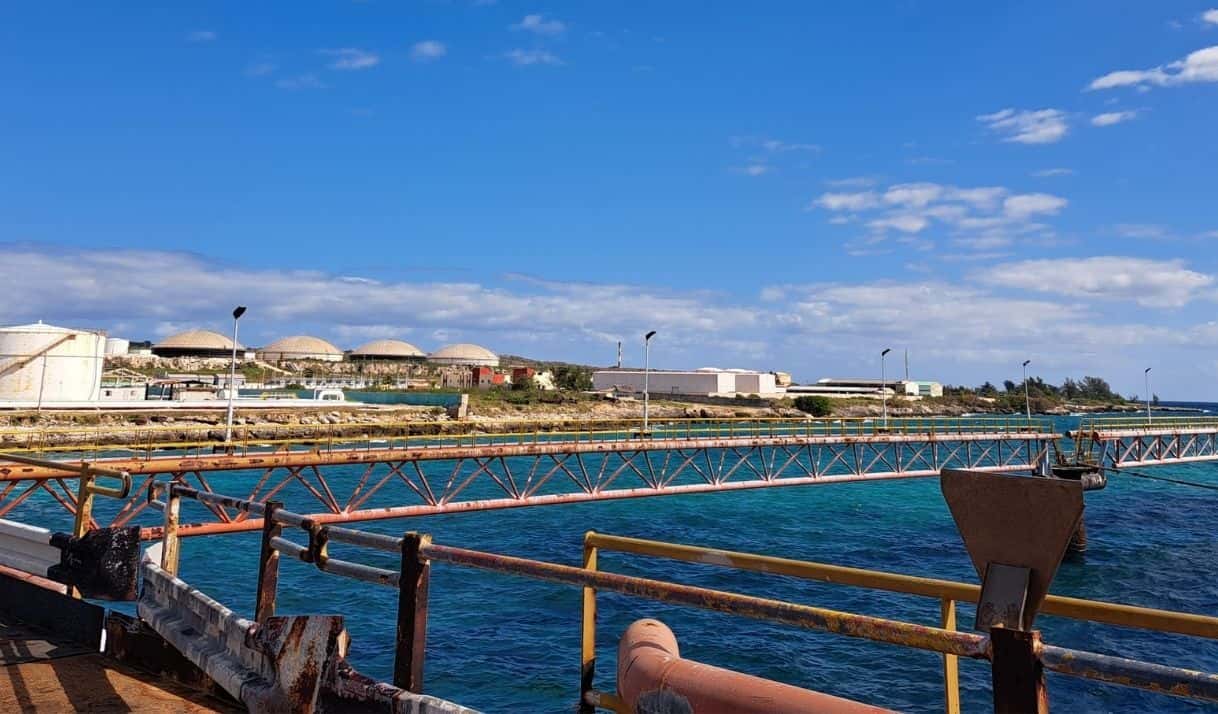
The vessel Anatoly Kolodkin, which departed from the Russian port of Primorsk carrying more than 700,000 barrels of crude oil, arrived on the island on the morning of Monday, March 30, 2026, with permission from the United States Coast Guard, according to the Interfax news agency, citing the Russian Ministry of Transport.
“At this time the ship is awaiting unloading at the port of Matanzas, about 100 kilometers from Havana,” reported Intefax.
US President Donald Trump said on Sunday, March 29, 2026, that he has “no problem” with the Russian oil tanker sailing off the coast of Cuba delivering its cargo to the island reported AP.
“There’s a tanker there. We don’t care if they receive a shipment because they need it (…) they have to survive,” Trump told reporters while flying back to Washington.
When asked whether a report by The New York Times—that the vessel would be allowed to reach Cuba—was true, the president replied: “I told them: if a country wants to send some oil to Cuba right now, I have no problem, whether it’s Russia or not.”
“It’s not going to have an impact. Cuba is finished. They have a bad regime. They have a very bad and corrupt government, and whether they receive a shipment of oil or not, it really won’t matter,” the US president added.
The Anatoly Kolodkin is sanctioned by the United States, the European Union, and the United Kingdom due to the war in Ukraine.
“We were surprised that the US government allowed it to enter, without any challenge from the Navy or even sending a message. And if that had happened, that signal would have been when the vessel was still in the Atlantic, not already inside Cuban territorial waters,” Jorge Piñon, a researcher at the University of Texas Energy Institute, told El País.
Piñón estimated that the unloading, refining, and distribution stages could take between 20 and 25 days.
Likewise, given the deteriorated condition of Cuba’s refineries, he estimated production of between 200,000 and 250,000 barrels of diesel, which would cover approximately 10 to 12 days of supply if consumption is limited to a minimum of 20,000 barrels per day.
On February 12, 2026, officials from the Russian Embassy in Havana told the outlet Izvestia that Russia was ready to send fuel to Cuba “in the near future” and “as humanitarian aid,” but gave no dates or quantities.
The last Russian shipment to the island, according to Reuters, occurred in February 2025..
Nationwide blackouts continue to wreak havoc on Cubans, who were already dealing with years of crisis. The lack of gasoline and basic resources has paralyzed essential services, state industries, and reduced public transportation operations to a minimum.
Power outages, which in some areas of the country exceed 12 hours, have sparked protests in neighborhoods of Havana, as well as in central and eastern Cuba.
This article was translated into English from the original in Spanish.







Comments
We moderate comments on this site. If you want to know more details, read our Privacy Policy
Your email address will not be published. Mandatory fields are marked with *
Anónimo