
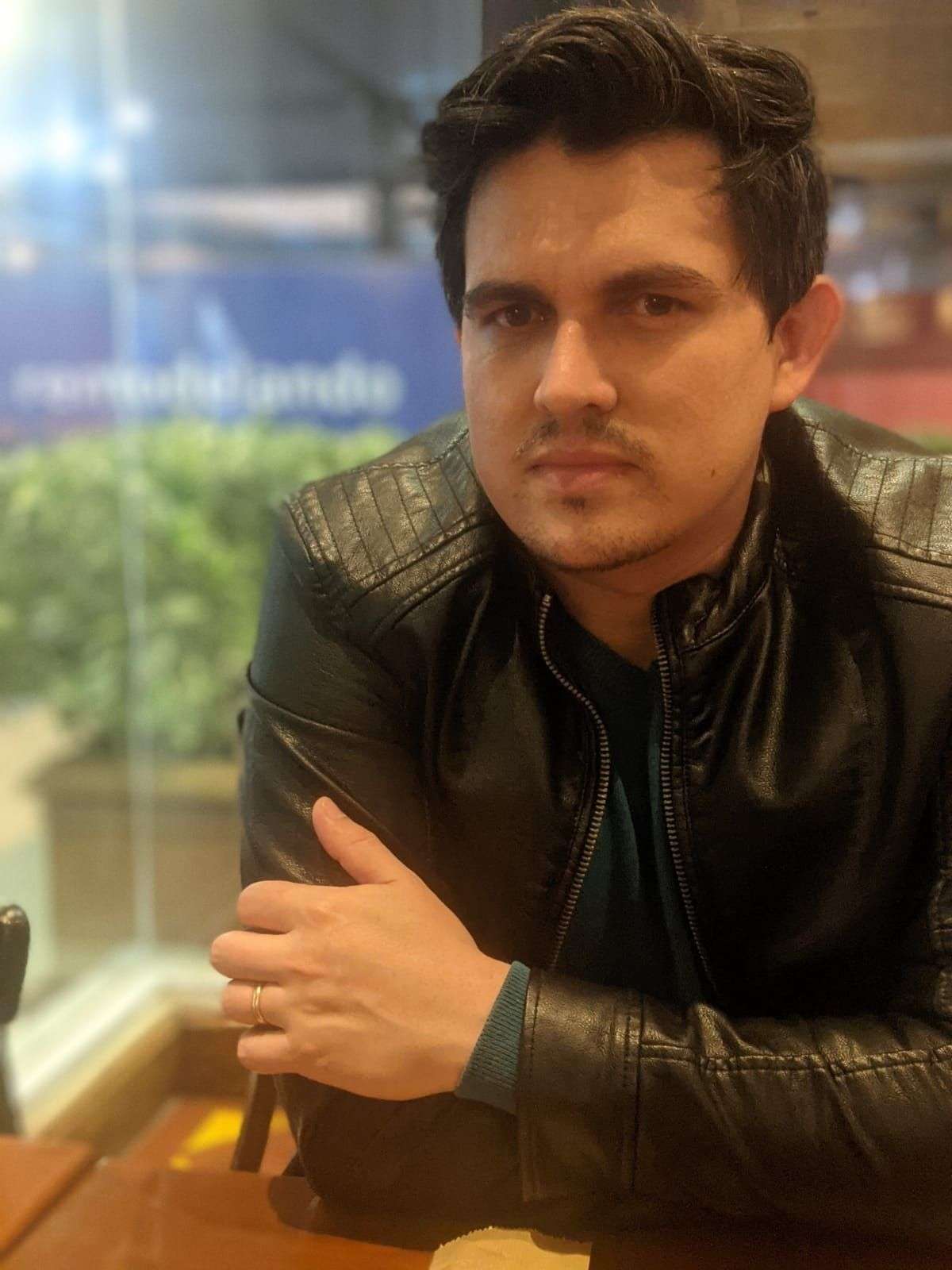
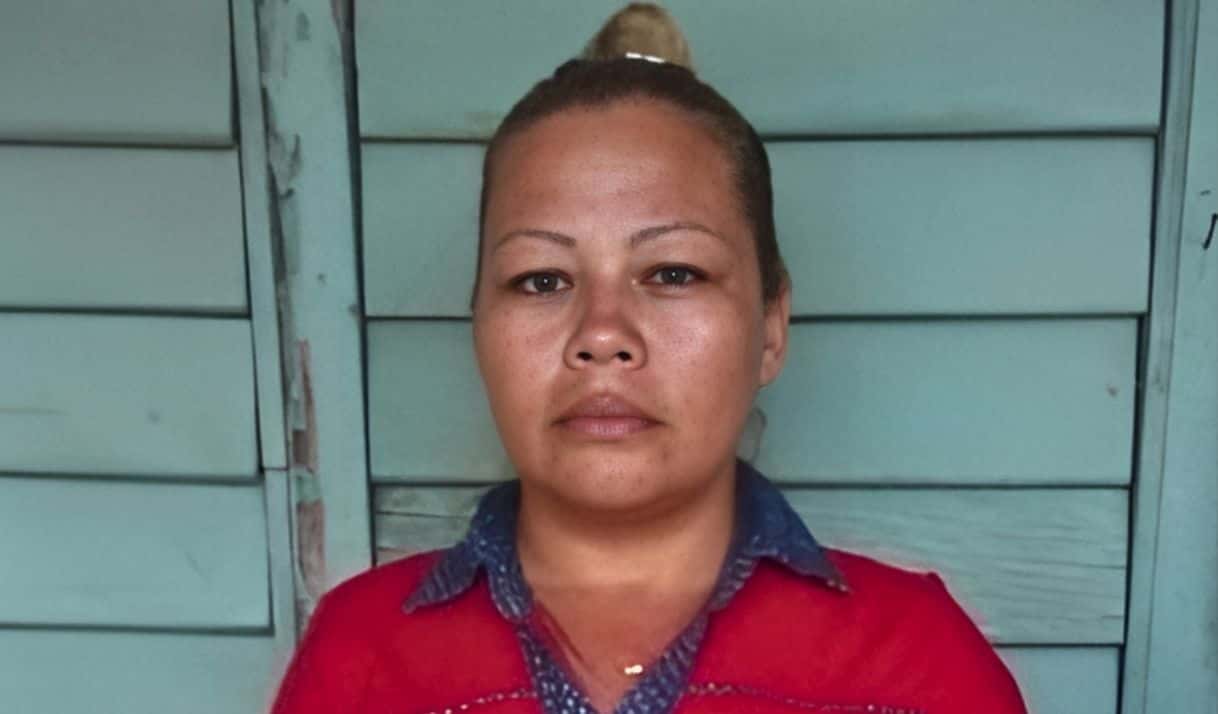
Jorge Luis Arias Garcia cannot remember a moment in his life that was not marked by repression by the Cuban State. Throughout his childhood, as he learned words, tastes, and emotions, he also became familiar with some of the darkest consequences the regime reserves for dissidents: arbitrary arrests, harassment, and assaults against his mother, activist Yaquelin Garcia Jaen.
“I’m 23 years old, and ever since I can remember my mother has been fighting for human rights here in Cuba. I’ve lived through many things. I’ve seen many things done against her and against Ariel, my sister Esther’s father,” he told El Toque from his home in Bayamo, Granma province.
Now Jorge’s two-year-old daughter is also growing up surrounded by absence: her grandmother Yaquelín has been held in pretrial detention since November 2024. She has spent one year and nine months separated from her family, without trial, because of her opposition to the government.
El Toque received statements from Yaquelín recorded inside the women’s prison known as “El Estalaje,” on the outskirts of Bayamo. In the recording, the 44-year-old woman says calmly that she would rather die than continue living in captivity, separated from her loved ones much longer.
She warns that she may begin a hunger strike if her legal situation is not resolved soon. “It’s either my freedom or my death. One of the two. Either they take me out alive or they take me out dead. I’m exhausted.”
YaquelIn GarcIa Jaen was one of the founders of the Ladies in White movement in Bayamo. She was also involved with the Democratic Municipal Circles of Cuba and, more recently, with Cuba Primero, an opposition organization based in Florida that says it has “the support of more than 80 members inside the island.”
On July 14, 2026, Granma’s Provincial People’s Court flatly rejected the habeas corpus petition filed by one of her attorneys, according to a ruling from the First Criminal Chamber obtained by El Toque. Her legal team has spent months trying to secure her release while she awaits trial.
For Jorge, her eldest son, the court’s latest denial became the turning point that prompted him to intensify efforts to publicize his mother’s case among activists and the independent press.
“I’ll do whatever it takes so she can be better and get out of the prison where the Cuban dictatorship has locked her up,” he says.
The Search and the Alleged Crimes
In February 2024, Yaquelín Garcia Jaen completed a five-year prison sentence for an alleged common crime, a case that, according to her family and human rights organizations, was politically motivated.
On November 8, 2024, State Security agents again burst into the family home.
“That morning, at seven o’clock, a group of officers arrived at my house. I was asleep. They arrested me and took me to the provincial investigative unit of the Interior Ministry, where I ended up detained for the alleged crime of incitement to commit a crime,” Yaquelin recalls.
Initially, however, the justification for her arrest was different. The officers who arrived at her home claimed they were searching for rice and sugar the family was supposedly hoarding. They searched everywhere, even beneath the mattresses, but found nothing. Even so, they took the dissident activist into custody.
At the time, the NGO Cubalex reported that authorities confiscated a coffee maker, an induction cookstove, cash, and her personal documents, and that the original charge against her was “illegal sale of food.”
“The proceedings were marked by several irregularities, including the absence of search and arrest warrants, the failure to formally inform her of the charges, and her incommunicado detention,” Cubalex denounced.
Alain Espinosa, an attorney with the Cubalex, told El Toque that the search amounted to “an unlawful home invasion and was therefore carried out illegally.” He added that “searches cannot be open-ended expeditions, where officers simply look around to see what they might find.”
After her arrest in November 2024, Yaquelin was taken to the El Estalaje prison. The alleged offense was then changed to “incitement to commit a crime,” as she explained in her statements to El Toque. Later, she was formally charged with “propaganda against the constitutional order” and “public disorder,” accusations that appear in the court’s July 2026 response to her habeas corpus petition.
Habeas corpus is the fastest legal remedy available in cases of arbitrary detention. Yaquelin’s defense filed the petition on the grounds that her pretrial detention had become illegal because she had already been imprisoned longer than the maximum sentence for the original charge of incitement to commit a crime, which carries a maximum penalty of one year.
In response, the court—composed of judges Ana Luisa Mendez Acosta, Haydee Maria Aponte Tornes, and Isabel Teresa Freixas Roblejo—argued that “once the investigation had progressed,” the original charge had been replaced with the offenses of propaganda against the constitutional order and public disorder. The first of those offenses carries a prison sentence of between four and ten years.
On that basis, the judges rejected the habeas corpus petition, ruling that the time Yaquelín had spent in pretrial detention “has not reached the minimum sentence” associated with the most serious charge against her: propaganda against the constitutional order.
Cubalex attorney Alain Espinosa said that the habeas corpus petition was filed because the prolonged pretrial detention violates her right to due process. He explained that Cuban law establishes an initial 90-day period for the preparatory phase of criminal proceedings, which may be extended for another 90 days and, in exceptional cases, for an additional period, provided those extensions are requested by the appropriate authority and properly justified in law and fact.
However, Espinosa says that in this case—as in many similar ones—those extensions are not properly documented in the case file, violating both Cuban law and international standards requiring that defendants be brought to trial within a reasonable period.
According to the attorney, pretrial detention in Cuba is, by law, an exceptional measure intended only to ensure that an accused person appears for trial. In Yaquelin’s case, he argues, that justification no longer makes sense after nearly two years.
“Whatever evidence they have failed to collect during all this time, they are not going to obtain now. Nor is there any reason to believe that she intends or is able to evade justice,” Espinosa said.
According to both Yaquelín and her legal team, the only evidence State Security has against her consists of telephone conversations about the Cuba Primero movement and a question she asked another activist about her son, who was imprisoned after the July 2021 protests.
“They have no solid evidence against me,” Yaquelin insists, “because I’ve been here for one year and nine months and they still haven’t been able to prosecute me, yet they continue to keep me in prison.”
She says that, at the very least, she hopes her public denunciations and a possible hunger strike will force the authorities to bring her to trial soon, because she currently finds herself in legal limbo.
“I want them to finally prosecute me and let me stand before the courts so I can see what they claim justifies locking me up all this time.”
Attorney Espinosa believes the rejection of Yaquelín’s habeas corpus petition reflects a pattern his organization has documented for years and demonstrates “the subordination of the judiciary” to the Ministry of the Interior, “particularly in guaranteeing impunity for those responsible for serious human rights violations.”
According to the Cubalex expert, the legal avenues still available include filing new motions requesting her release and additional habeas corpus petitions before Cuban courts, as well as seeking urgent action from the United Nations Working Group on Arbitrary Detention, submitting a complaint to the Committee Against Torture, and requesting precautionary measures from the Inter-American Commission on Human Rights.
A Father Imprisoned for Speaking Out
Yaquelín is not the only member of her family imprisoned for political reasons.
Ariel Eugenio Arzuaga Peña, her husband and Jorge’s stepfather, declared himself an opposition activist more than 15 years ago and, in 2011, was sentenced to six years in prison for the alleged crime of assaulting an authority.
He was arrested again in November 2024 after protesting his wife Yaquelín’s imprisonment. He remained incarcerated at Las Mangas prison in Granma until late April 2026, when authorities transferred him to Boniato, a maximum-security prison in Santiago de Cuba, far from Bayamo.
Since his transfer, the family says his prison conditions have deteriorated. His 17-year-old daughter, Esther Arzuaga García, said in a video sent toEl Toque:
“They’re abusing my father. They beat him, they take away his belongings, he’s extremely thin, and I fear for his life.”
The teenager attributes the abuse to both fellow inmates and prison guards. She says her 63-year-old father, who suffers from prostate problems, is being held alongside men serving long sentences for violent common crimes.
El Toque was unable to independently verify these allegations with officials at Boniato prison. However, reports of systematic abuse of prisoners in Cuba have been frequently documented by human rights organizations.
Enma Luisa Jaen, Yaquelin Garcia’s mother, said in another video sent to El Toque that State Security threatened to remove Esther from the family’s custody if they continued demanding the release of the imprisoned activist and her husband.
“They sent me a summons. I went, and they told me they were going to place her in juvenile custody because we were speaking out about what had really happened,” Enma Luisa recounts.
Esther summarizes what it has been like growing up as the daughter of two dissidents:
“It’s unfair that, as a minor, I’ve had to go through so much hardship and sacrifice because I haven’t been able to grow up with my parents—they’ve kept them imprisoned almost all my life.”
From Prison
Yaquelín also speaks about how much she misses her daughter during the phone call from prison that was sent to El Toque.
“I’ve missed every stage of my children’s lives,” she says. “I don’t think I should also have to die here in prison without having done anything except stand up for my rights as a human being and as a mother.”
According to her description, 14 women are forced to live together in cubicles measuring roughly 5.5 by 5.5 meters (18 by 18 feet), sharing a single bathroom. Frequent power outages make prison life even more difficult in the sweltering heat of eastern Cuba, intensified by the zinc roof overhead.
They also lack sufficient clean water. Water is available only twice a day, provided there is electricity. When there is a blackout, prisoners must haul water from a cistern that Yaquelin says she has seen cleaned only once during her one year and nine months of imprisonment.
The political prisoner is still suffering the aftereffects of the 18-day hunger strike she carried out between May and June after authorities refused to modify her pretrial detention. She continues to experience lower back pain, loss of balance, and cramps in her hands. She says she is waiting to recover a little more before deciding whether to begin another hunger strike now that her habeas corpus petition has also been rejected.
Yaquelin describes prison as “psychological torture” during a brief phone call with her son. From their home in Bayamo, Jorge tries to encourage her.
“Mom, I have great faith that soon you’ll be out here with your children, your mother, and your family.”
She replies that she hopes so, but laments that her family has endured “a trauma,” subjected to “constant provocations” by State Security in an effort to crush their defiance.
Jorge wants Yaquelín to know she is not suffering alone. “Everything you suffer, we suffer too, because we are your children,” he tells her.
The authorities’ repeated rejection of efforts to secure his mother’s release has not discouraged Jorge Arias Garcia. He said that he will continue publicizing the case so that “the world knows the name” of Yaquelin Garcia Jaen, hoping she will leave El Estalaje prison before she feels compelled to undertake another hunger strike.
This article was translated into English from the original in Spanish.