
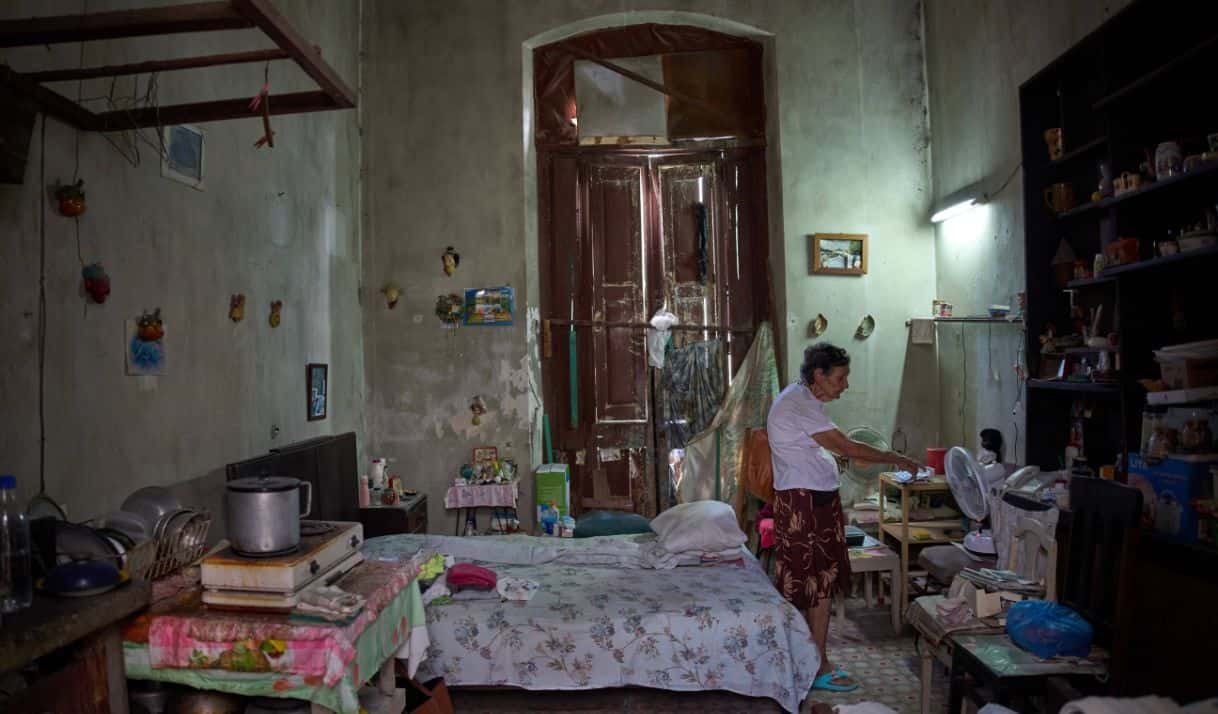
The Family Assistance System (SAF)—the state program that provides subsidized meals to elderly people living alone, people with disabilities, and families in vulnerable situations—is being shifted away from direct government management and toward the private sector in an attempt to address a coverage deficit the government has been unable to overcome.
The government has authorized private businesses, self-employed workers and nonprofit organizations to operate as providers within the Family Assistance System. The measure breaks with a model that relied primarily on cafeterias operated by state-run businesses.
The decision is part of two regulations published in the Official Gazette on August 4, 2026. They replace provisions that had been in force for barely a year, and will take effect in one week. The update comes at a time when Cuba is engulfed in a deepening food crisis.
Three New Ways to Provide the Service
The decision authorizes three alternatives that previously did not exist: state entities with employee cafeterias may dedicate part of their capacity to SAF beneficiaries; private businesses and self-employed operators with food service establishments. These may join the program as providers; and nonprofit institutions or associations may also participate. In rural or hard-to-reach areas where no food service establishments exist, the regulation allows the service to be provided through community meal homes or by private individuals operating from their own homes.
The opening is significant because it formally acknowledges that the state’s network of cafeterias is insufficient to meet demand. However, the regulation leaves a crucial question unanswered: how these new providers will be paid. The text merely states that prices will be set according to guidelines established by the Ministry of Finance and Prices, and that subsidies for beneficiaries will be financed by municipal and provincial Finance Departments.
It provides no details on payment amounts, rates, or compensation mechanisms, raising questions about whether the prices paid will cover the actual costs incurred by participating providers and what concrete incentives they will have—beyond a general reference to “approved tax benefits”—to join a program serving people with little or no ability to pay.
The Family Assistance System has existed for years under various names. It is overseen by the Ministry of Domestic Trade and coordinated with nine other state agencies—from the Ministry of Public Health to the National Institute of Sports—as well as provincial and municipal governments.
Access to the program, however, remains far from automatic. Section Three of the Agreement establishes four categories of eligible beneficiaries:
- Elderly people who live alone or with other elderly people and have no family support;
- People with disabilities who live alone and also lack family support;
- Adults from socially vulnerable families who lack the means to prepare food at home;
- And, in exceptional cases, pregnant women living in economically vulnerable households who require additional nutritional support.
Each application must be reviewed and approved by the Municipal Administration Council based on case files submitted by the municipality’s Department of Labor and Social Security. Applications may also be denied, in which case the reasons must be explained.
What the Regulations Require of Each Provider
The operational requirements state that each establishment must provide two meals a day that meet nutritional standards certified by the National Institute of Hygiene, Epidemiology, and Microbiology, along with a menu that includes rice, a main dish, soup or stew, root vegetables, salads, and dessert, with preference given to soft foods at lunchtime. For beneficiaries unable to travel, the regulations provide for home delivery through sanitary and safe food transport services. Those with limited mobility may also collect both daily meals in a single lunchtime visit.
Regarding infrastructure, facilities must have adequate food preservation equipment, running water, sufficient cooking capacity, functioning sanitary facilities, and be free of architectural barriers.
Beyond the issue of payment for new providers, the SAF program shifts much of the responsibility for supplying the program to local governments. It establishes that the Family Assistance System should rely primarily on local production and self-management, while goods allocated through the central government and donated supplies will be provided only “when available.”
The update reflects a broader trend in recent Cuban legislation: formally expanding the scope of social programs while incorporating the private sector as a provider of services the government can no longer adequately deliver on its own. Whether this opening will translate into tangible improvements for the elderly, people with disabilities, and vulnerable families who depend on these meal services will, as always, depend on whether the legal framework is backed by real resources and a genuine commitment to implementation at the local level. Under Cuba’s current conditions, that is an almost impossible challenge.
This article was translated into English from the original in Spanish.