In Cuba, and in its exile community, there are too many victims. Each story shakes us for a few days. It circulates on social media, sparks outrage, makes headlines. And then, almost always, little by little, it fades from view. Not because the injustice has been resolved, but because a new one is about to happen.
In authoritarian regimes, repression is not only exercised: it is managed, normalized. It is an endless succession of abuses that rarely reach a climax. There is no single scandal that changes everything, but rather many small scandals that accumulate without ever breaking the system.
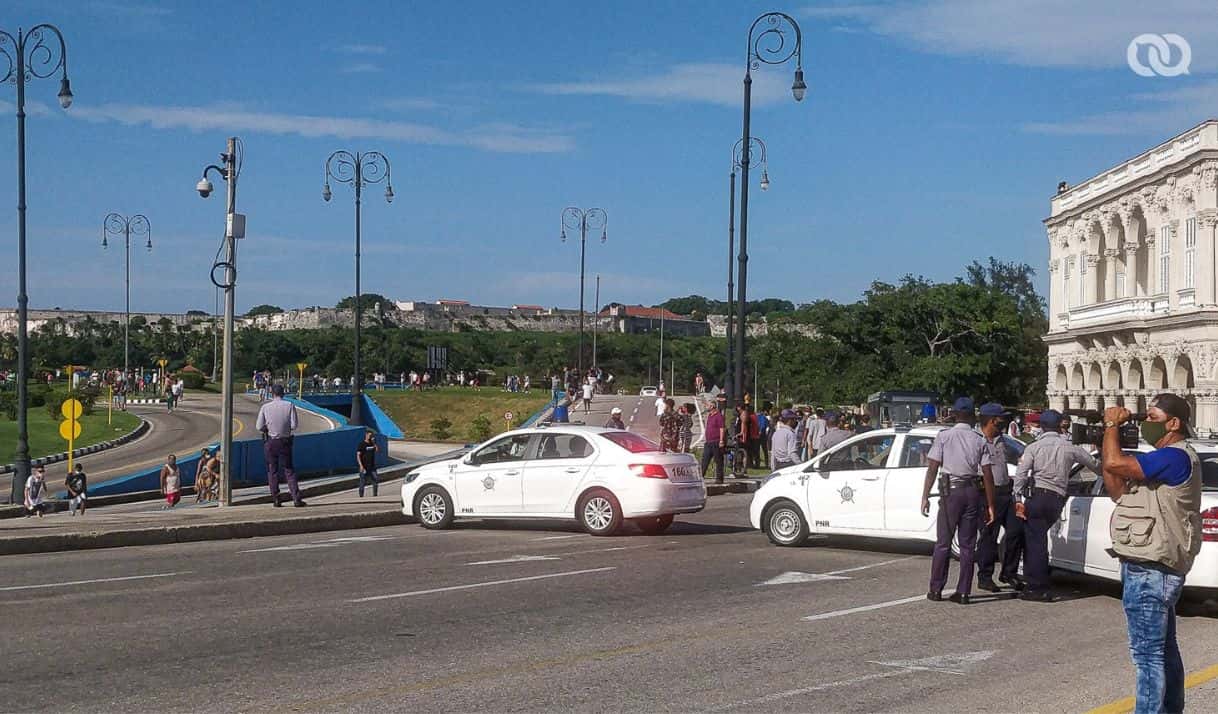
For decades, Cuban institutions have operated with the certainty that international complaints, reports from human rights organizations, or outrage on social media rarely produce real consequences. Prolonged impunity ends up generating a culture of power in which punishing dissent becomes the natural way the State functions. The machinery is also sustained by absolute control over the courts, the media, and public spaces where these injustices could become scandals. And the authorities know it: outrage usually lasts less than impunity.
While the world watches the latest injustice, previous ones begin to fade from public memory. When repression is constant and affects so many people at the same time, individual cases end up losing visibility.
Not because each one doesn’t matter, but because the next story is already waiting.
How do you break a system when no injustice manages to be the last?
M, the artist who went from performance and hunger strikes against the regime to years in prison. The rapper Maykel “Osorbo.” There are the hundreds sentenced after the July 11 protests, influencers and digital creators imprisoned for what they said in a video or a post; the young man who held up a sign on San Rafael Street and spent years in prison. Those who have died on hunger strike or in police custody. There are also the stories of Omara Ruiz Urquiola, Karla Pérez, Carlos Manuel Álvarez, Anamelys Ramos, among many others, exiled from their country. So many anonymous citizens punished with prison for a social media post, for using the flag, for writing a dissenting slogan on a wall.
And before them there were others. Those who have died at sea, others shot by border guards. Those who drowned, victims of irregular migration. Those executed for trying to leave. Those who did not survive because the ambulance never arrived or because the hospital lacked what was necessary in a country where the crisis also kills.
In many countries, a case of repression becomes a symbol. A name concentrates collective outrage and ends up marking a before and after. In the United States, the death of George Floyd at the hands of police in 2020 sparked massive protests against racism and police violence, drove reforms in several states, and placed the issue at the center of public debate for months. In Iran, the death of Mahsa Amini in police custody in 2022 triggered a wave of protests that spread across the country and drew sustained international attention. Other cases have had similar effects in different parts of the world.
In the Cuban context, by contrast, the names accumulate. It’s not that there haven’t been moments that concentrated collective outrage: the San Isidro Movement strike, the November 27, 2020 protest, or the social explosion of July 11, 2021. But while those episodes opened visible cracks in the system, the repressive machinery continued adding prisoners, exiles, banished individuals, the harassed, the punished.
Meanwhile, on the island remain the mothers who wait years for a release that never comes, parents who grow old visiting prisons, children who learn to live with absence. Families carrying a constant mourning.
There are the most visible denunciations. But there are also the stories barely known: families who have not told—out of fear, lack of information, or whatever the reason, what is happening to their political prisoners.
There are also the cases one knows up close. The pain of my friend, the analyst and lawyer Eloy Viera Cañive: his father died and he could not give him a final embrace. He cannot enter Cuba. He chose to denounce, with his own father’s support, the rot of a system that ended up condemning our island. In Spain, journalist Yadiris Luis Fuentes tries to rebuild her life after years of harassment by the political police. Reporter Yaima Pardo, now in the United States, has been falsely portrayed on state television as a “traitor,” accompanied by every possible insult. Journalist Jose Luis Tan Estrada had to travel through Central America to reach Mexico in order to go into exile, after years of harassment. Many Cuban journalists have had to leave the country in recent years. Most cannot return.
I could dwell on the personal story of any of my colleagues at El TOQUE, who from exile continue trying to tell the real story of Cuba. But behind each story lies the same wound: a country where telling the truth can cost you your freedom, your home, or your return.
And while families cope with absence, power remains intact, indifferent to the loneliness it leaves behind.
The State, accustomed for decades to acting with impunity, seems convinced that none of this will truly change things.
And so the tragedy becomes continuous.
Without end. Without justice.
I would like to end with a bit of faith. But I have more uncertainties than certainties. It is true that July 11, 2021, changed the game for the governing leadership: for many, masks fell, myths collapsed, and years of propaganda were exposed. Before and after that day, many Cubans put everything on the line to expose abuses and repression. But there have also been too many years reporting human rights violations, speaking with victims, and hearing, again and again, the same phrase: “nothing changes.”
Even so, amid the doubts, there is something that does not stop happening. Every day there are people who continue denouncing the Communist Party regime: activists, observatories, human rights organizations, members of civil society. Inside and outside the island. Those who bring their complaints to Washington or Brussels. Those who stand in front of an embassy and shout “dictators” while a political police camera points directly at their eyes. And so many fellow journalists who, despite pressure, exile, or the discredit organized by those in power, keep trying to tell Cuba’s story.
That deserves respect.
Does it bring us closer to day zero? And then what? How do you rebuild a country after so much damage? These are difficult and still open questions. But while the answers come, at least let’s try to make a little less the loneliness of those who dissent.
This article was translated into English from the original in Spanish.




Comments
We moderate comments on this site. If you want to know more details, read our Privacy Policy
Your email address will not be published. Mandatory fields are marked with *
Todavía no hay comentarios.